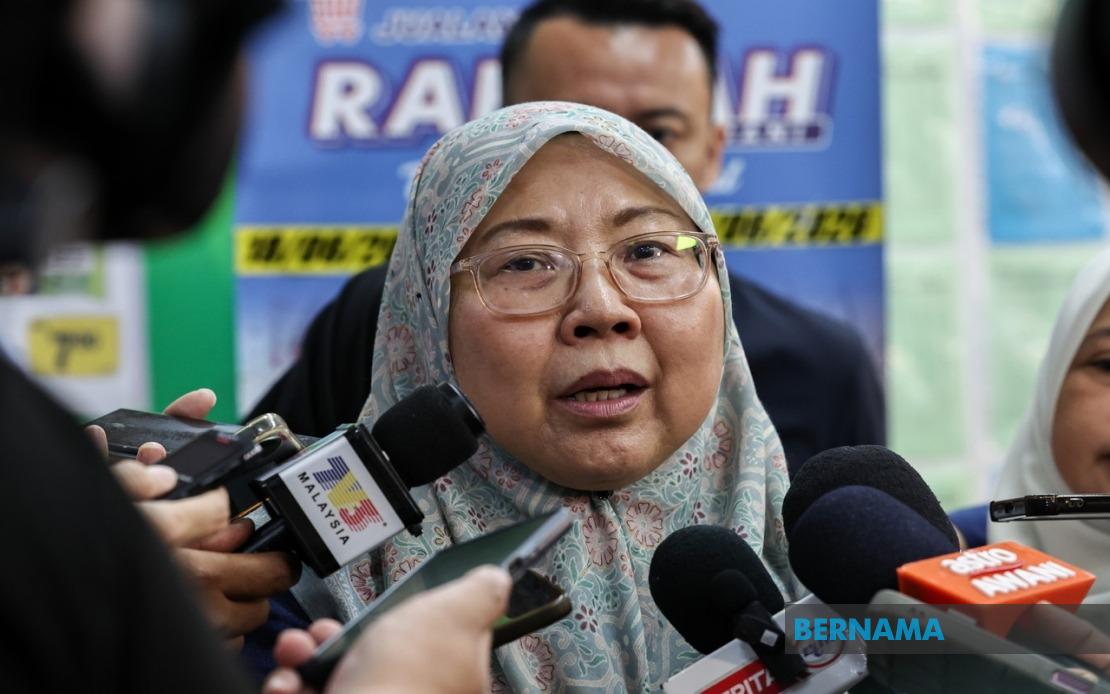
PKR's slate of candidates for the forthcoming state elections in Johor and Negeri Sembilan is virtually finalised, according to party secretary-general Datuk Dr Fuziah Salleh, who disclosed that the formal announcement would arrive within days. The party intends to contest 20 state seats in Johor alongside 16 in Negeri Sembilan, representing a calculated strategy to maximise its electoral footprint across both states in the coming weeks.
Fuziah outlined the party's deliberate approach to candidate selection, emphasising a mix designed to appeal across demographic lines. She stressed that PKR would present an equilibrium of veteran politicians with proven track records and newcomers entering the electoral arena for the first time, whilst ensuring adequate representation of female candidates and younger aspirants. The precise proportion of fresh faces would remain undisclosed until the formal launch, she indicated to gathered journalists whilst attending a separate economic initiative.
The candidate announcement strategy reflects broader coalition dynamics at work within Pakatan Harapan and its associated groupings. Internal disagreements over seat allocations have emerged between coalition components, particularly involving territorial claims that predate recent electoral cycles. One flashpoint concerns the Puteri Wangsa constituency, where Johor Amanah has contested PKR's presumed right to field a candidate, arguing the seat represented a temporary arrangement from the 2022 elections when it was temporarily loaned to MUDA before reverting to Amanah's control.
Dr Zuhan Zain, the Johor Amanah vice chairman, had previously signalled opposition to surrendering this seat to PKR without additional concessions or negotiations. This territorial dispute within the opposition coalition highlights persisting tensions over resource allocation despite their unified front against the dominant Barisan Nasional government. Fuziah acknowledged these frictions but indicated such complications would be resolved through established hierarchical channels within both parties' leadership structures, suggesting senior figures would broker any outstanding disputes before candidates were formally unveiled.
Separately, Fuziah addressed disciplinary proceedings involving Subang Member of Parliament Wong Chen, who had recently challenged PKR to remove him from the party following an internal investigation into his conduct. Rather than resolving the matter expeditiously at her level, she confirmed that PKR's formal Disciplinary Board would assume responsibility for determining appropriate action, deferring judgment to this specialised body. The case underscores occasional tensions between party leadership and elected representatives over matters of internal governance and accountability.
For Johor, election authorities have scheduled nomination day for June 27, with voting occurring on July 11 following the State Legislative Assembly's dissolution on June 1. The Johor assembly comprises 56 seats across the state, with pre-election configurations showing Barisan Nasional commanding the largest bloc of 40 seats, Pakatan Harapan holding 12, Perikatan Nasional retaining three, and the newer MUDA party possessing a single seat. This composition suggests Barisan Nasional entered the election as the incumbent with a commanding majority, though recent electoral trends in Malaysian states have demonstrated the volatility of voter sentiment.
Negeri Sembilan's electoral timeline follows a separate calendar, with voting scheduled for August 1. The nomination period commences on July 18, whilst early voting is provisioned for July 28. That state assembly consists of 36 seats total, and prior to dissolution on June 5, Pakatan Harapan controlled 17 seats whilst Barisan Nasional held 14 and Perikatan Nasional occupied five. The more competitive balance in Negeri Sembilan compared to Johor suggests a more contested election environment, where opposition parties harbour realistic expectations of gains.
These simultaneous elections across two significant Malaysian states carry implications beyond their immediate constituencies. Johor remains economically vital to Malaysia and politically important to Barisan Nasional's national calculations, whilst Negeri Sembilan's positioning as a swing state makes its outcome particularly consequential for coalition dynamics. The election results will substantially influence the trajectory of Malaysian politics heading into potential federal-level contests and signal whether Pakatan Harapan maintains momentum from recent electoral successes or encounters setbacks.
PKR's emphasis on candidate diversity through blending experienced figures with newcomers reflects calculated efforts to broaden electoral appeal whilst managing internal party tensions. The inclusion of women and younger candidates responds to demographic shifts in voter preferences and addresses longstanding critiques regarding underrepresentation of these constituencies within party hierarchies. Such strategies, however, must navigate coalition coordination challenges where multiple parties compete for the same territories whilst maintaining unified messaging against common opponents.
The finalisation of candidate lists represents a critical juncture in these electoral campaigns, as nomination day approaches and public scrutiny intensifies around party choices. Voters in both states will soon evaluate the candidates presented before them, assessing whether PKR's blend of experience and fresh perspectives resonates with their priorities. The resolution of outstanding seat disputes and disciplinary matters will also influence internal party cohesion during the campaigning period, potentially affecting the unified front required to effectively challenge incumbent administrations.

