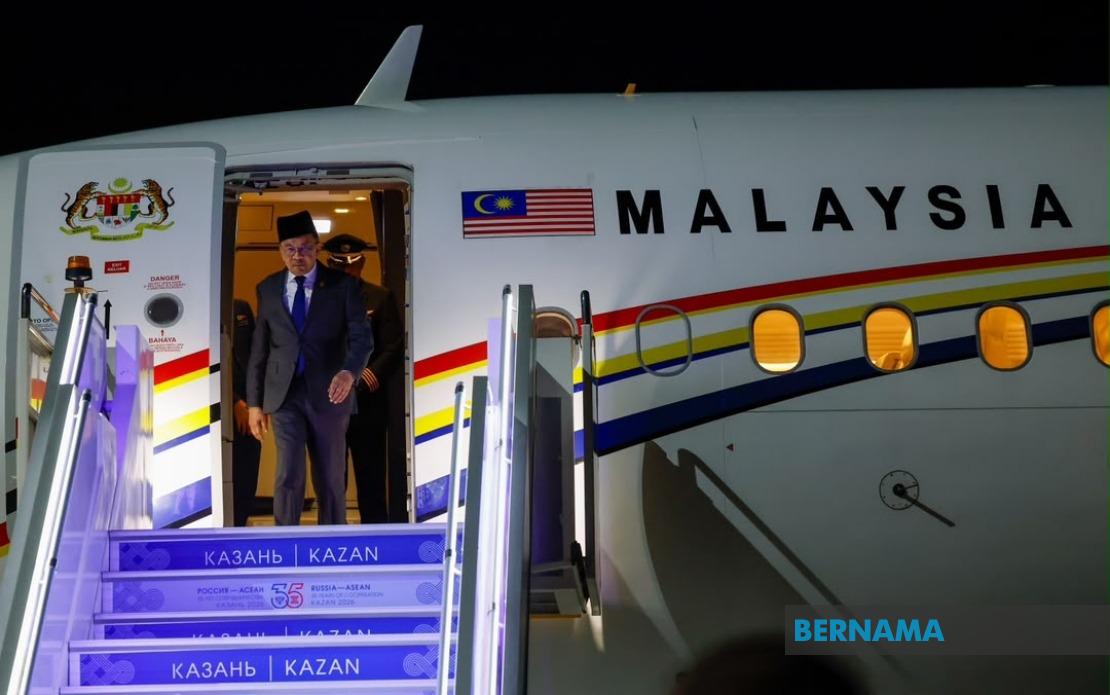
Prime Minister Datuk Seri Anwar Ibrahim has touched down in Kazan to begin a two-day working engagement centred on the ASEAN-Russia Commemorative Summit, scheduled for June 17-18. The Malaysian leader arrived at Kazan International Airport late on June 16, accompanied by a delegation that included Minister of Investment, Trade and Industry Datuk Seri Johari Abdul Ghani and Minister of Economy Akmal Nasrullah Mohd Nasir, along with officials from his office and the Foreign Ministry. The timing of this visit underscores Malaysia's active role in steering ASEAN's engagement with major external powers as geopolitical realignments continue to reshape the region.
The summit carries particular significance for the bloc, as it commemorates thirty-five years since ASEAN and Russia formally established their diplomatic relationship in Kuala Lumpur during 1991. This milestone provides both sides with a structured opportunity to take stock of three and a half decades of interaction and to recalibrate their strategic partnership for the coming years. For Malaysia, the visit reflects the country's commitment to deepening ASEAN's connections with Russia at a time when multilateral engagement remains essential for regional stability and prosperity.
During his stay in the Tatarstan capital, Anwar is slated to hold discussions with Russian President Vladimir Putin and the Rais of the Republic of Tatarstan, conversations that will likely touch on bilateral matters of mutual concern. These bilateral engagements complement the broader multilateral framework of the summit and offer opportunities to advance specific Malaysian interests within the wider ASEAN context. The prime minister will also coordinate with fellow ASEAN leaders to ensure cohesive positioning on shared priorities and regional challenges.
The summit agenda spans an ambitious range of cooperation domains. Trade and investment feature prominently, reflecting the economic imperatives driving both ASEAN and Russia to strengthen commercial ties amid global supply chain disruptions. Energy cooperation assumes critical importance given Russia's substantial hydrocarbon reserves and Southeast Asia's growing energy demands, particularly as nations transition toward more diverse sources of supply. Food security has emerged as a pressing concern across the region, especially given inflationary pressures and climate-related disruptions to agricultural output, areas where Russian agricultural expertise and resources could prove valuable.
Beyond traditional sectors, the partnership encompasses digital economy initiatives and science and technology collaboration, domains where both ASEAN and Russia seek to build capacity and competitiveness. Cultural and educational exchanges form another pillar, aimed at fostering mutual understanding and deepening people-to-people connections that underpin any enduring strategic relationship. Tourism cooperation, too, figures in discussions, offering economic benefits to Southeast Asian economies whilst broadening Russians' engagement with the region beyond governmental channels.
The summit is expected to produce four outcome documents that will shape the architecture of future cooperation. The Kazan Declaration commemorates the 35-year milestone and reaffirms the commitment of both sides to the relationship. Separate joint statements on energy and cultural cooperation provide targeted frameworks for sectoral advancement. Most significantly, the Comprehensive Plan of Action to Implement the ASEAN-Russia Strategic Partnership 2026-2030 establishes concrete operational guidelines for the next five years, transforming aspirational dialogue into actionable collaboration mechanisms.
This represents Anwar's third visit to Russia since he assumed office in November 2022, indicating sustained diplomatic engagement despite the geopolitical complexities characterising relations between Southeast Asia and Moscow. His September 2024 attendance at the Eastern Economic Forum in Vladivostok and his May 2025 official visit to Moscow both preceded substantive discussions on trade, investment, agriculture, education, aerospace and energy cooperation. The pattern of consecutive engagements demonstrates Malaysia's deliberate strategy to maintain stable relations with Russia whilst balancing the country's broader diplomatic portfolio.
Malaysia's participation in this summit reflects broader ASEAN strategic calculations regarding engagement with major powers outside the immediate region. As regional organisations increasingly navigate great power competition, maintaining dialogue channels with Russia serves ASEAN's interests in preserving strategic autonomy and avoiding alignment pressures. The summit provides a platform for Malaysia to advocate positions on dialogue and peace, particularly relevant given ongoing international tensions, whilst simultaneously pushing economic resilience and practical cooperation agendas.
The emphasis on food and energy security in the summit discussions resonates deeply with Southeast Asian concerns. Many ASEAN members remain vulnerable to global supply disruptions and price volatility in essential commodities. Russian cooperation in these sectors offers potential diversification benefits and could enhance regional resilience against future shocks. For Malaysia specifically, deepening energy partnerships aligns with the country's economic diversification efforts and long-term sustainability objectives.
The summit also addresses ASEAN's overarching commitment to maintaining centrality in regional affairs. By convening with Russia and producing binding cooperative frameworks, ASEAN reinforces its role as the primary institutional forum for regional dialogue and cooperation. This institutional maintenance proves crucial in an era when powerful external actors often seek to bypass ASEAN structures in favour of bilateral engagement. Malaysia's active leadership in this process contributes to preserving ASEAN's relevance and influence.
Looking forward, the Comprehensive Plan of Action through 2030 signals both sides' intention to sustain engagement beyond rhetorical commitments. Implementation of these frameworks will require dedicated institutional capacity and political will from ASEAN member states and Russia alike. Malaysia, as a leading ASEAN voice, will likely play a significant coordinating role in translating these aspirations into tangible outcomes across the designated cooperation areas.
The visit arrives amid a broader recalibration of Southeast Asian foreign policy orientations. As the region confronts rising strategic competition and economic uncertainties, deepening Russia engagement offers one dimension of a sophisticated balancing strategy. Malaysia's approach, reflected in Anwar's multiple visits and substantive agenda-setting, demonstrates how medium-sized powers can maintain consequential relationships with multiple major actors whilst protecting core national interests and regional cohesion.