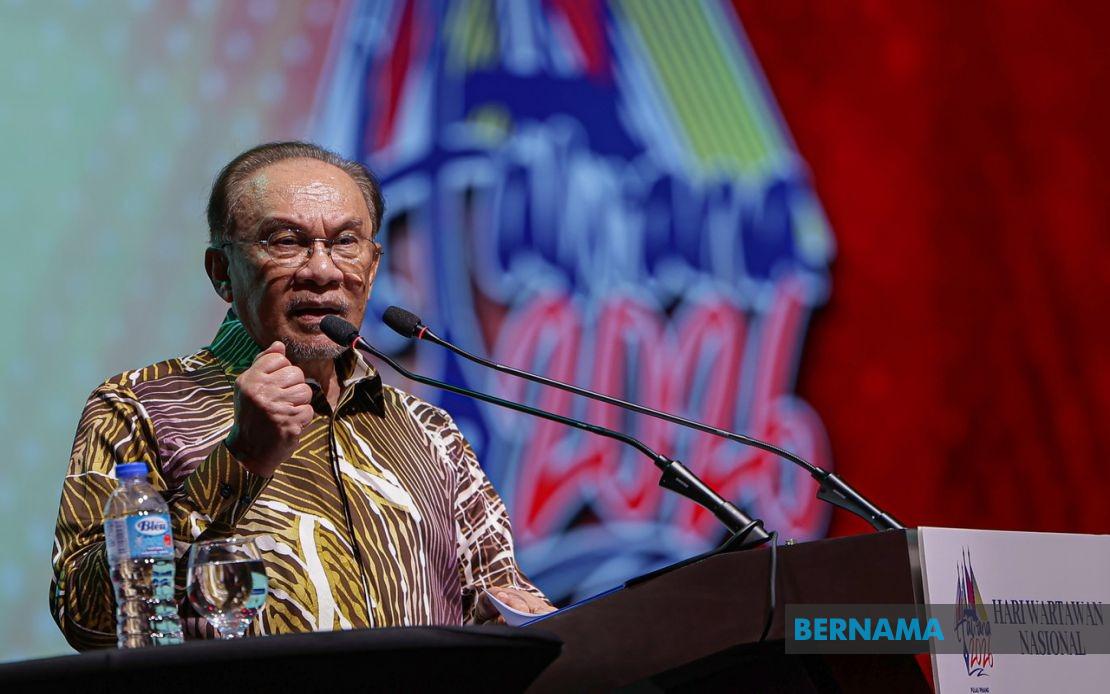
Prime Minister Datuk Seri Anwar Ibrahim has publicly endorsed the appointment of Tan Sri Nallini Pathmanathan as the new chairman of the Malaysian Media Council, believing her extensive judicial credentials and unquestionable integrity will restore public trust in the self-regulatory body. Speaking at the National Journalists' Day celebration in Butterworth on June 20, Anwar stressed that Nallini's background as a former Federal Court judge had been instrumental in the selection process, which involved meticulous deliberation by decision-makers keen to elevate the council's standing.
The Prime Minister's vocal backing carries significant political weight in Malaysia's media landscape, where public perception of regulatory institutions remains fragile following years of debates over editorial independence and government influence. By framing Nallini's appointment as a carefully vetted choice based on professional qualifications rather than political expediency, Anwar sought to position the Media Council as an institution capable of operating at arm's length from executive pressure. His remarks suggest an administration conscious of the need to rebuild confidence in media governance structures at a time when digital platforms and independent news outlets have increasingly challenged traditional regulatory frameworks.
Nallini's elevation represents a notable shift in the composition of Malaysia's media oversight hierarchy. Her appointment was unanimously endorsed by Malaysian Media Council board members during a May 26 meeting, indicating broad consensus among stakeholders about her suitability for the role. The deliberate emphasis on unanimous support underscores an effort to present the decision as reflecting institutional wisdom rather than partisan positioning, a distinction crucial for an organization tasked with policing journalistic standards across a politically fractious media ecosystem.
The Malaysian Media Council itself was formally established under the Malaysian Media Council Act 2025, marking a legislative milestone in the country's approach to journalism regulation. Unlike its predecessors, this body operates as a dedicated self-regulatory mechanism explicitly charged with upholding journalistic standards, investigating public complaints against media outlets, promoting ethical conduct in reporting, and safeguarding media freedom as an essential democratic function. This institutional architecture represents an implicit acknowledgment that media credibility cannot be sustained through top-down government control alone, but requires independent oversight credible to journalists, publishers, and the broader public.
The appointment ceremony brought together a cross-section of Malaysia's communications establishment, signaling organizational solidarity around the new direction. Penang Chief Minister Chow Kon Yeow and Communications Minister Datuk Fahmi Fadzil both attended the Butterworth event, alongside senior officials from the Communications Ministry and representatives from Bernama, the national news agency. This gathering reflected the government's investment in presenting Nallini's leadership as a turning point for media governance, with multiple high-ranking officials lending their presence to validate the transition.
For Southeast Asian media watchers, Malaysia's institutional evolution holds broader implications regarding how regional democracies balance press freedom with regulatory oversight. The creation of dedicated self-regulatory bodies staffed by respected jurists rather than political appointees represents one model for reconciling competing claims about media accountability and editorial independence. Nallini's judicial background specifically positions her to navigate complex questions about where permissible criticism ends and damaging misinformation begins, decisions that have become increasingly contentious across the region as social media has fragmented information ecosystems.
The Council's mandate extends across multiple critical functions that will shape Malaysian journalism for years to come. Beyond investigating individual complaints, the body bears responsibility for articulating professional standards applicable to a media landscape increasingly fragmented between traditional outlets, online platforms, and hybrid entities operating across multiple channels. This standardization challenge is particularly acute in Malaysia, where ethnic and religious sensitivities intertwine with political competition, creating pressure on journalists to navigate multiple constituencies with competing information demands and cultural expectations.
Anwar's public support for Nallini also reflects a strategic recalibration of how his administration manages its relationship with media institutions. Rather than seeking direct control over journalistic output, the government appears willing to delegate regulatory authority to an independent body perceived as professional and impartial. This approach potentially reduces immediate political friction by depoliticizing individual editorial decisions while maintaining government influence through appointments to the Council's board and through legislation shaping its mandate and enforcement powers.
The timing of the appointment carries additional significance given ongoing regional discussions about media freedom, digital regulation, and the role of artificial intelligence in news production. As Southeast Asian governments grapple with how to manage information flows in an increasingly digital environment, Malaysia's investment in a credible self-regulatory institution staffed by respected judges signals an alternative to more overtly restrictive regulatory models. Whether this institutional innovation succeeds depends substantially on Nallini's ability to make difficult decisions that satisfy neither government nor media entirely, but that command respect from both constituencies and the broader public.
Looking forward, the Council under Nallini's leadership faces the substantial task of earning legitimacy through consistent, transparent decision-making on contentious complaints. The organization must develop jurisprudence on emerging issues ranging from social media accountability to false information in digital spaces while respecting editorial judgment on matters of public interest. Success will ultimately be measured not by how many government officials attend its events, but by whether journalists, publishers, and citizens come to view it as a credible forum for resolving disputes about responsible journalism in a polarized media environment.

