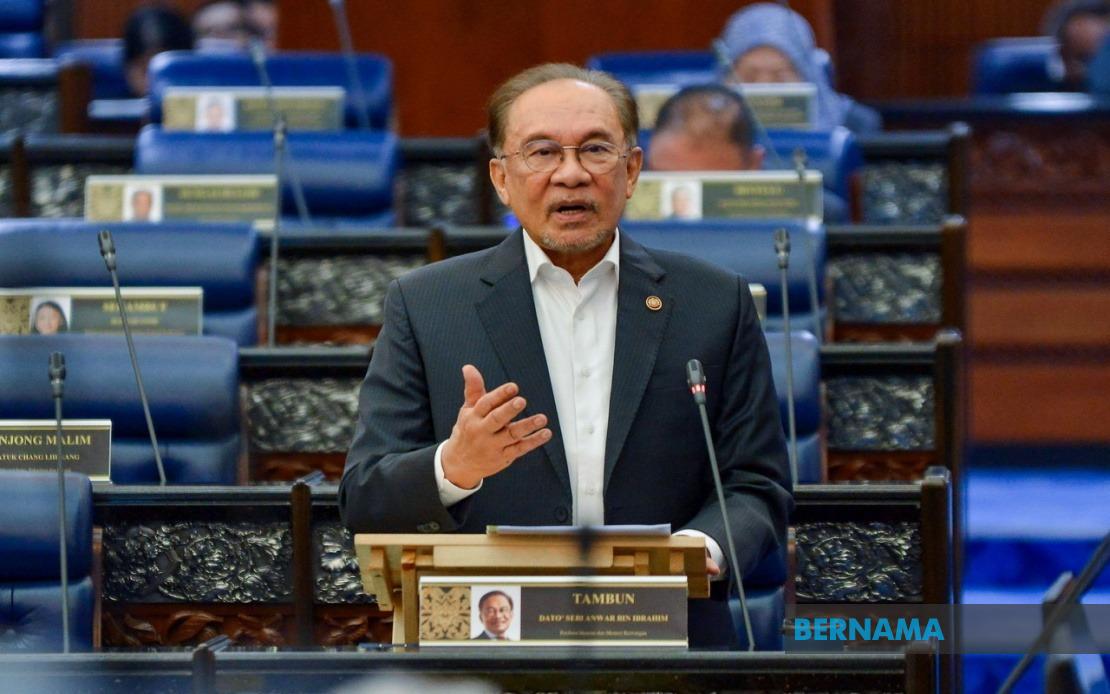
Prime Minister Datuk Seri Anwar Ibrahim has directed the Transport Ministry to initiate comprehensive discussions on the strategic utilisation of ports located along the Malaysia-Thailand border and in Penang as part of broader efforts to strengthen regional infrastructure and enhance logistics capabilities across the frontier zone. The directive emerged from bilateral conversations between Anwar and Thai Prime Minister Anutin Charnvirakul during the latter's recent official visit to Malaysia, where both leaders explored mechanisms to deepen cross-border cooperation in transport and trade facilitation.
During Ministerial Question Time at the Dewan Rakyat on July 14, Anwar elaborated on the scope of discussions with his Thai counterpart, emphasising that port infrastructure ranked prominently among the strategic issues examined by both governments. The conversation reflected a mutual recognition that enhanced port connectivity could serve as a catalyst for accelerating economic integration and improving the efficiency of goods movement across the shared border, benefiting businesses and consumers in both nations.
The Prime Minister highlighted that while transport discussions encompassed multiple dimensions, the conversation had specifically addressed the potential of newly operational port facilities to maximise the economic benefits flowing from border corridor development initiatives. He indicated that railway connectivity, an equally critical component of the transport infrastructure agenda, had also been featured prominently in the bilateral dialogue, signalling a holistic approach to regional connectivity that extends beyond maritime channels alone.
Among the specific port facilities identified for discussion are the Sanglang port and the Perlis Inland Port (PIP), both of which represent relatively recent additions to Malaysia's cross-border logistics infrastructure. These facilities are positioned as key nodes in a developing network designed to facilitate smoother trade flows and reduce transit times for goods moving between Malaysia and Thailand. The focus on these particular ports reflects strategic thinking about how existing infrastructure investments can be optimally leveraged to unlock broader regional economic potential.
The Malaysia-Thailand border region has long been recognised as a zone of significant untapped economic potential. By strengthening port facilities and coordinating their usage between the two countries, planners believe it is possible to create a more seamless logistics ecosystem that reduces bottlenecks and encourages greater cross-border commerce. For Malaysian stakeholders, particularly those in northern states like Perlis and Kedah, improved port infrastructure could translate into enhanced export competitiveness and reduced shipping costs.
Beyond pure logistics considerations, Anwar's comments suggest that both governments view enhanced port cooperation as part of a broader strategy to integrate the border region more deeply into regional trade networks. The emphasis on maximising economic spillovers indicates recognition that infrastructure development in border areas can generate benefits that extend well beyond the immediate vicinity, potentially stimulating investment and employment across wider geographic areas in both countries.
The Transport Ministry's assignment to spearhead these discussions positions it as the primary institutional vehicle for converting political intention into concrete policy and operational arrangements. Successfully negotiating port usage protocols, tariff structures, and operational standards will require sustained technical dialogue between Malaysian and Thai authorities responsible for port administration, customs, and maritime regulation. The complexity of such negotiations should not be underestimated, as harmonising procedures across jurisdictional boundaries typically involves navigating differing regulatory frameworks and operational priorities.
Railway connectivity, mentioned alongside port development in Anwar's parliamentary remarks, represents another pillar of the cross-border infrastructure agenda. The recent inauguration of a new transport route, referenced by the Prime Minister, suggests that Malaysia and Thailand have already begun implementing tangible improvements to their connectivity, with port and rail discussions building upon this foundation. Integrated transport solutions that combine rail and maritime capabilities could prove particularly valuable for bulk commodity movements and container traffic.
Tourism considerations also feature in the broader development strategy for the border corridor, according to Anwar's statement. Enhanced transport infrastructure frequently generates secondary benefits by facilitating easier movement of tourists and visitors between neighbouring countries. The Malaysia-Thailand border region could potentially emerge as a more cohesive tourism destination if transport barriers are diminished and travel becomes more convenient for visitors exploring both sides of the frontier.
For Malaysia, which positions itself as a regional logistics hub, the outcomes of these port utilisation discussions carry significance extending beyond bilateral relations. The approaches developed for Malaysia-Thailand cooperation could establish precedents for similar arrangements with other neighbours and contribute to Malaysia's broader vision of strengthening its role in Southeast Asian supply chains. Improved northern corridor connectivity, in particular, could enhance Malaysia's appeal as a transit point for goods moving between major Southeast Asian economies.
The cross-border logistics challenge encompasses both physical infrastructure and regulatory harmonisation. Transport ministry officials undertaking these discussions will need to address practical questions about port capacity, dredging requirements, container handling facilities, and customs clearance procedures. These technical matters often prove more consequential than high-level political commitments in determining whether infrastructure improvements actually translate into increased trade flows.
Stakeholder coordination will be essential for success. Malaysian port authorities, chambers of commerce, trucking associations, and import-export businesses all possess valuable perspectives on the operational requirements and commercial opportunities that enhanced border port facilities could generate. Thai counterparts will similarly need to engage their logistics sector comprehensively to ensure that any agreed arrangements align with commercial realities and actually facilitate trade rather than merely adding bureaucratic layers.
The timeline for these discussions remains unspecified, but the explicit assignment of responsibility to the Transport Ministry suggests the government intends to advance progress within a defined period. Whether Malaysia and Thailand can convert infrastructure potential into functional logistics advantages will ultimately depend on the effectiveness of ongoing ministerial-level engagement and the willingness of both nations to make necessary accommodations in their respective regulatory and operational frameworks.

