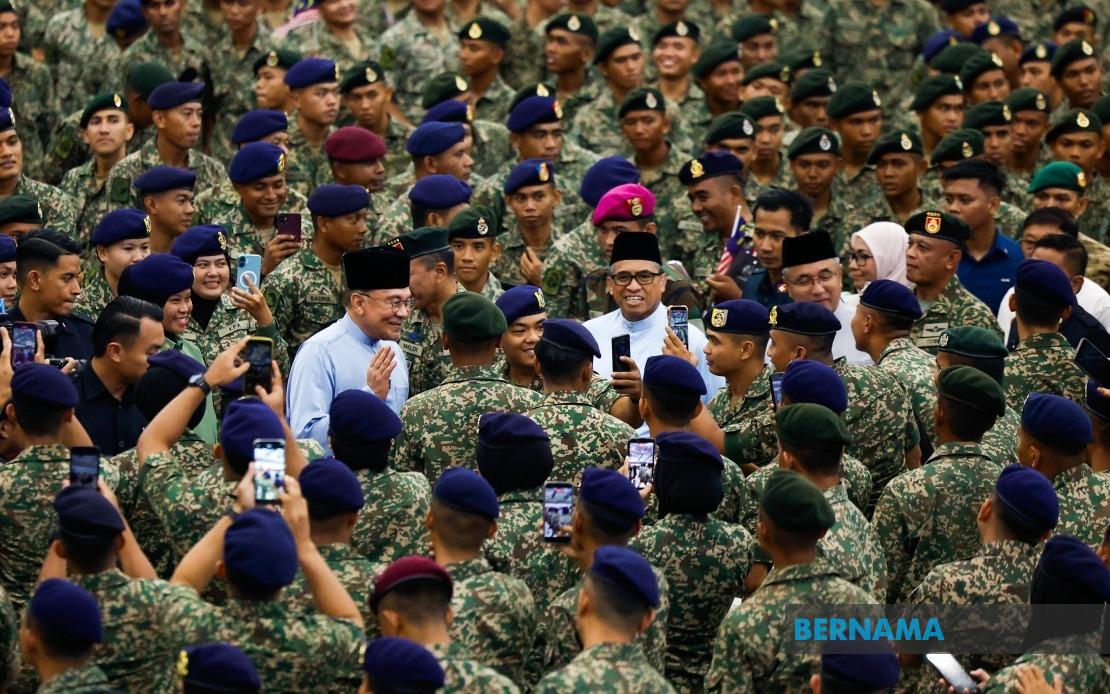
Prime Minister Datuk Seri Anwar Ibrahim defended the government's decision to withhold a sensitive Royal Commission of Inquiry report on Lembaga Tabung Haji for the past three years, arguing that premature disclosure could have triggered a financial crisis within the institution that manages hajj savings for millions of Malaysian Muslims. Speaking in Port Dickson, Anwar explained that publishing the RCI findings immediately after the inquiry concluded would have risked undermining public confidence in TH and potentially sparked panic-driven mass withdrawals from the fund, destabilising an institution critical to the nation's Islamic financial ecosystem.
The Prime Minister's rationale reflects a delicate balance between government transparency and pragmatic crisis management in the financial sector. Releasing unfavourable findings about TH's management or governance failures at a time when the institution lacked adequate safeguards and credible leadership could have precipitated the very institutional collapse that regulators sought to prevent. Anwar argued this was not a case of indefinite secrecy but rather strategic timing, allowing TH to rehabilitate itself under new stewardship before public scrutiny intensified. This approach echoes risk management practices employed in international financial regulation, where authorities sometimes stagger disclosure of problematic audit findings to permit corrective action before markets react.
Central to Anwar's defence is the transformation of TH's governance structure over the past three years. The appointment of Tan Sri Abdul Rashid Hussain as chairman marked a significant institutional reset, bringing managerial credibility and operational stability that had been lacking during the period covered by the RCI's investigation. Under this new leadership, TH has not only arrested its operational decline but has earned international recognition, securing the Best Haj Management award for the most recent hajj season. This achievement demonstrates that institutional rehabilitation was possible and that the intervening period allowed TH to build genuine recovery momentum rather than merely papering over structural problems.
Yet the Prime Minister's position has drawn scrutiny from coalition partners who prioritize transparency. Representatives from Pakatan Harapan's component parties—including Amanah secretary-general Muhammad Faiz Fadzil, DAP national vice-chairman Syahredzan Johan, and PKR deputy secretary-general Saifuddin Shafi Muhammad—issued a joint statement asserting that the Cabinet should formally decide on public disclosure. Their position reflects the political sensitivities surrounding government accountability and the risk that strategic non-disclosure, however well-intentioned, erodes public trust in institutional governance. They contend that Malaysians have a fundamental right to understand what went wrong at TH and what the official inquiry revealed, regardless of timing considerations.
This disagreement touches on fundamental questions about democratic accountability and the proper scope of government discretion in information control. The coalition partners argue that transparency and accountability represent core MADANI Government principles, making it difficult to justify continued withholding of findings that directly affect millions of Muslim Malaysians and the broader financial system. Their statement emphasizes that comprehensive public disclosure allows Malaysians to evaluate whether institutional reforms are genuine and sufficient, rather than accepting government assurances about the adequacy of changes undertaken away from public view.
Anwar indicated that the government intended to release the RCI report imminently, pending consultation with the Chief Secretary to the Government regarding whether Cabinet approval was required before disclosure. This suggests the decision to publish had essentially been made, with procedural mechanisms determining the timing and format of release. The Prime Minister's acknowledgement that TH deserves public accountability, coupled with the institution's demonstrated recovery, created political space for disclosure that would have been impossible when TH's viability remained uncertain. The strategic sequencing—stabilize first, disclose second—reflects a pragmatic approach to governance communication.
For Malaysian depositors and the broader Muslim community relying on TH, the impending report release carries significant implications. Understanding the nature and scale of governance failures, asset mismanagement, or regulatory lapses will inform how Malaysians evaluate the credibility of institutional safeguards now in place. Transparency about what occurred during the investigation period provides essential context for assessing whether current reforms address root causes or merely treat symptoms. This is particularly important given TH's quasi-religious status and its central role in fulfilling the Islamic pillar of hajj for hundreds of thousands of Malaysians annually.
The delayed disclosure also reflects broader trends in how Malaysian governance institutions manage sensitive information. Financial institutions worldwide occasionally face similar dilemmas between immediate transparency and prudential stability. However, the three-year gap in this case raises questions about whether the threshold for disclosure should have been lower or whether public communication about ongoing institutional rehabilitation could have maintained confidence while signalling accountability. The government's decision prioritized stability over transparency, betting that demonstrable institutional improvement would ultimately serve public interests better than early disclosure of problems without corresponding solutions.
Looking forward, the actual contents of the RCI report will determine whether the government's strategic patience was justified. If findings confirm serious governance lapses adequately addressed through current reforms, Anwar's defence will likely hold credibility. Conversely, if the report reveals ongoing institutional problems or inadequate remedial action, public criticism of the delayed disclosure could intensify. The coalition partners' insistence on Cabinet deliberation ensures that the final decision on release and format remains subject to broader political consideration rather than unilateral executive discretion, preserving institutional checks on information management decisions.
For Malaysian governance more broadly, this episode illustrates the persistent tension between institutional stability and democratic accountability. The government's rationale reflects rational crisis management, yet the delayed disclosure raises legitimate concerns about the scope of permissible state discretion in withholding information from public scrutiny. As Anwar prepares the report for release, he must simultaneously convince Malaysians that the three-year delay was protective rather than obstructive, and that the institutional reforms undertaken justify the strategic decision to prioritize confidence-building over immediate transparency.

