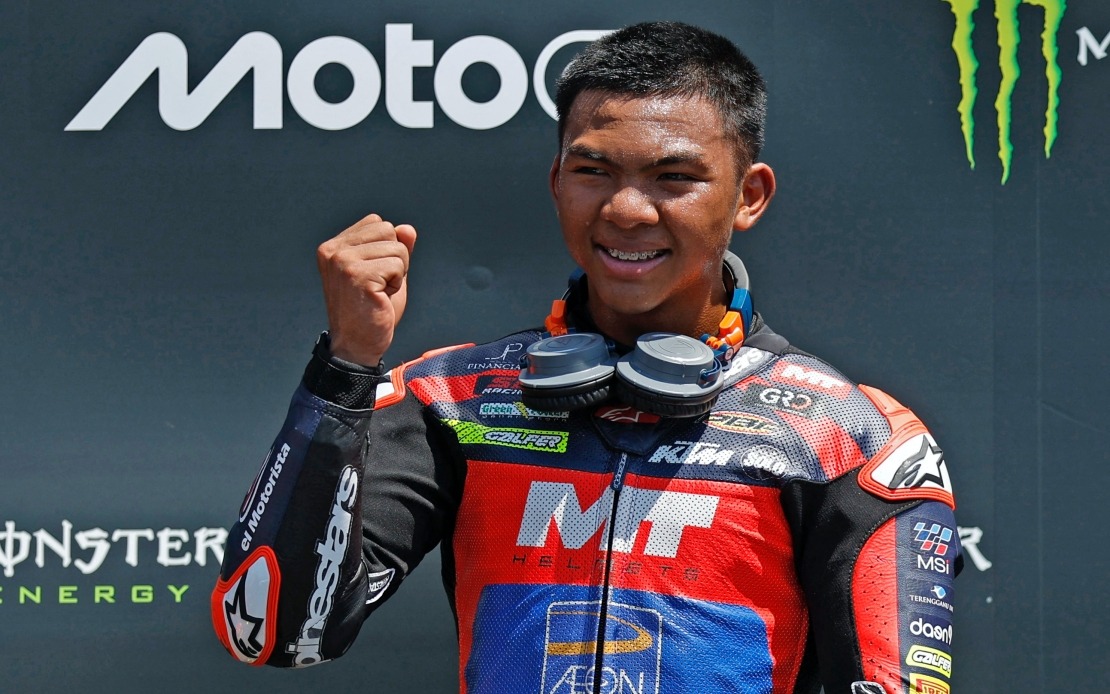
Prime Minister Datuk Seri Anwar Ibrahim has extended his congratulations to motorcycle racing talent Hakim Danish Ramli following the teenager's triumph at the Czech Moto3 Grand Prix held at Brno Circuit. The prime minister took to social media platform X to express his support, posting: "Congratulations Hakim Danish! The journey is still long, carry on with more wins." The message reflected not only personal acknowledgement of the achievement but also broader national recognition of a sporting milestone that carries significant meaning for Malaysian motorsport.
Hakim Danish's victory at the Brno circuit represents a watershed moment for Malaysian Moto3 racing, effectively ending a prolonged period without success in the prestigious motorcycle racing category. The 18-year-old pilot, racing under the AEON Credit-MT Helmets-MSi banner, has now delivered a result that Malaysian motorsports enthusiasts have awaited for a full decade. This dry spell makes the current achievement particularly resonant, coming at a time when interest in two-wheeled motorsport remains strong across the Southeast Asian region, where motorcycle culture deeply influences sporting preferences.
Prior to this Czech success, Hakim Danish had demonstrated steady progress throughout the current season, accumulating experience and points across multiple race weekends. His performance at the Italian Grand Prix in Mugello last month yielded a third-place podium finish, indicating that the capability to challenge established competitors was already evident. The progression from a third-place result to outright victory over the course of several weeks demonstrates the rider's capacity for continuous improvement and adaptation to different circuit characteristics and competitive pressures. Such development is crucial for young talents seeking to establish themselves in progressively higher categories of motorcycle racing.
The significance of this breakthrough is underscored by historical context. Malaysia's previous success in the Moto3 category belonged to Khairul Idham Pawi, who claimed victories at the Argentina Grand Prix and German Grand Prix during the 2016 season. That four-year gap between consecutive national winners highlights the competitive intensity of modern Moto3 racing and the challenge of consistently producing world-class talent capable of converting race opportunities into podium finishes. For a nation with strong motorcycle racing traditions, particularly in Southeast Asia, the reemergence of a Malaysian victor carries implications beyond individual achievement.
Hakim Danish's age represents another compelling dimension to his breakthrough performance. At just 18 years old, he is navigating the demanding schedule, mental pressures, and physical demands of international motorcycle racing while simultaneously developing the technical skills necessary to compete against rivals from established racing nations. Youth combined with competitive success suggests potential for sustained contributions to Malaysian motorsport in the years ahead. The trajectory of young riders through Moto3 frequently indicates their prospects in subsequent categories, making current performance an indicator of potential future competitiveness at higher levels of the sport.
The Czech Grand Prix victory also reflects the infrastructure and support systems now available to Malaysian motorcycle racing competitors. The involvement of professional teams, sponsorship structures, and technical expertise surrounding Hakim Danish's campaign demonstrates the evolution of the sport's ecosystem within Malaysia. Success at international level increasingly depends not merely on individual talent but on comprehensive team support, engineering excellence, and strategic resource allocation. The combination of these elements that enabled the Brno triumph suggests that Malaysian motorsport organizations have developed sufficient capacity to compete effectively on the global stage.
From a broader sporting perspective, Hakim Danish's achievement carries implications for motorsport development across Southeast Asia. Success by regional competitors at international level typically generates increased interest and investment in motorsports infrastructure, attracting sponsors and generating grassroots participation. Malaysia's position as a regional economic center with established racing infrastructure means that success stories like this tend to have multiplier effects, encouraging development of supporting ecosystems including training academies, engineering programs, and competitive pathways for emerging riders.
The prime minister's public acknowledgement of the victory also underscores how Malaysian government maintains engagement with sporting achievements across diverse disciplines. The recognition from national leadership provides both validation of individual accomplishment and broader affirmation that motorsport represents a valued national endeavor. Such endorsement frequently translates into continued support for athlete development programs and international racing participation, enabling talent to maintain competitive engagement at elite levels.
Looking forward, Hakim Danish faces the challenge of consolidating this initial Moto3 victory into a consistent pattern of competitive performance throughout the remainder of the season. Securing additional podium finishes and competitive results will be essential for building a resume that attracts attention from higher categories and better-resourced teams. The transition from Moto3 to Moto2, and eventually to MotoGP, represents the conventional progression pathway, and early success provides foundation for pursuing advancement through these increasingly competitive tiers.
The long-term trajectory of Malaysian motorcycle racing will largely depend on whether Hakim Danish and other emerging riders can sustain competitive presence internationally while simultaneously inspiring subsequent generations to pursue racing careers. The ten-year interval between Malaysian Moto3 victories suggests that producing world-class talent requires sustained investment and support. The current breakthrough therefore serves not as final achievement but as important milestone within ongoing endeavor to establish Malaysia as consistent source of competitive motorcycle racing talent on international circuits.

