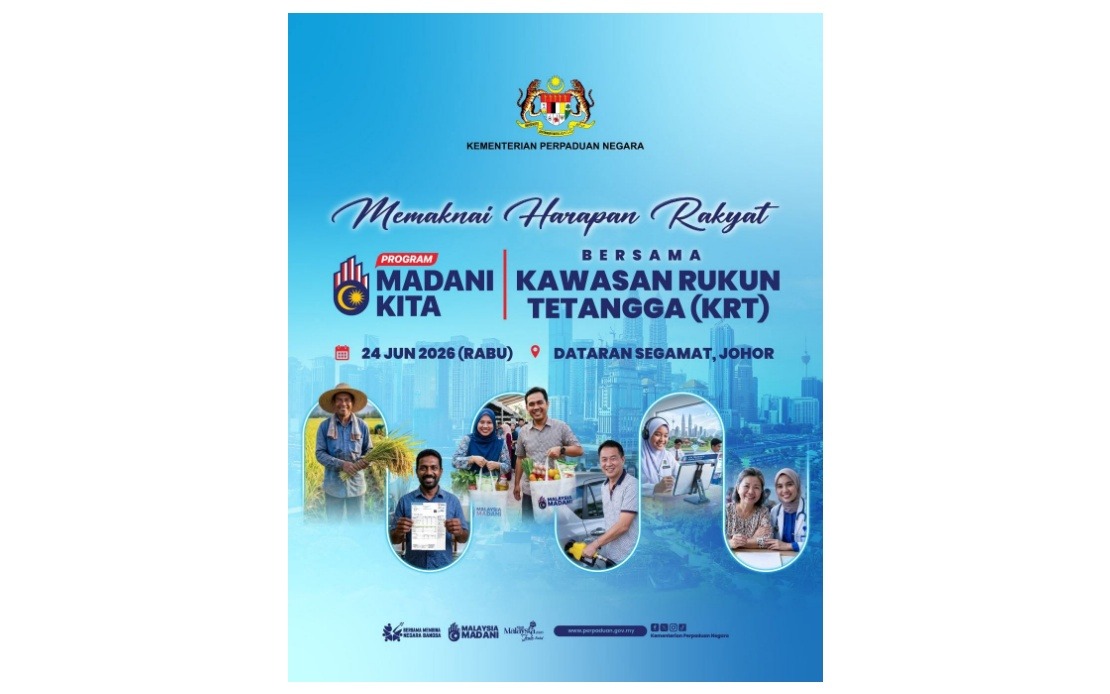
Prime Minister Datuk Seri Anwar Ibrahim is returning to Johor for a second appearance within three days, with his itinerary centred on Segamat, a district situated roughly 200 kilometres south of the state capital. The visit underscores the government's intensifying campaign efforts as the 16th Johor state election draws near, demonstrating the administration's commitment to direct engagement with constituents in key electoral battlegrounds across the peninsula's southernmost state.
The timing of Anwar's return to Johor follows his announcement of Pakatan Harapan's full slate of candidates for the forthcoming state election, which took place at an event in Bukit Gambir, Tangkak on Monday. The coalition fielded a combined 56 candidates across all state constituencies, comprising 20 representatives from PKR, 19 from Amanah, and 17 from DAP. This diversified distribution reflects the ongoing power-sharing arrangement within the ruling coalition and demonstrates the parties' geographic strength in different regions of the state.
During his Segamat visit, Anwar is scheduled to officiate the MADANI KITA programme at Dataran Segamat beginning at 5 pm. The initiative, which incorporates the traditional Rukun Tetangga community structure, represents the government's strategy for grassroots engagement at the neighbourhood level. Such programmes are designed to function as platforms for reinforcing social cohesion, bridging racial and communal divides, and disseminating government policies and development initiatives directly to residents in a structured yet accessible format.
The MADANI KITA framework carries particular significance in Malaysia's current political context, as it attempts to operationalise the government's broader MADANI development philosophy through localised community structures that have existed in Malaysian neighbourhoods for decades. By revitalising and formalising these Rukun Tetangga units as conduits for government communication, the administration seeks to reconnect with grassroots constituencies and demonstrate tangible commitment to community welfare beyond electoral cycles.
Following the official launch, Anwar will participate in a more informal gathering titled "Jom! Makan Durian" at the Yayasan Bazaar site in Segamat at 6.30 pm. This programme juxtaposes the formal institutional engagement of the earlier event with an unstructured social setting, allowing the Prime Minister to interact with community members in a relaxed atmosphere centred around a quintessential Malaysian cultural experience. The durian-focused event reflects a deliberate strategy to humanise political leadership and foster emotional connections with voters beyond policy announcements.
The duality of Anwar's Segamat agenda—combining formal governance messaging with informal social interaction—reflects contemporary political communication strategies in Malaysia. By oscillating between institutional platforms and casual community settings, the government attempts to address diverse communication preferences and reach different demographic segments within the electorate. The juxtaposition also serves to position the administration as simultaneously serious about governance and connected to everyday Malaysian life.
The electoral timetable for the Johor state election has been firmly established. The Election Commission designated June 27 as nomination day, allowing candidates to formally register their candidacy. Early voting is scheduled for July 7, accommodating voters such as security personnel and those unable to vote on polling day. The actual election will take place on July 11, providing the commission with a compressed campaign period of approximately two weeks following nominations. This condensed timeline intensifies the importance of high-profile visits by senior leadership such as Anwar, who must balance his role as Prime Minister with campaign commitments.
Segamat's significance in the broader Johor electoral landscape merits consideration. As a district with substantial rural and semi-urban populations, it represents the demographic composition that remains crucial to electoral outcomes in the state. Anwar's focused attention on this particular area suggests that Pakatan Harapan's strategists view it as either contested terrain requiring reinforcement or a stronghold requiring activation of support. The choice of neighbourhood-level programming rather than large rally-style events indicates a sophisticated targeting approach aimed at converting community structures into electoral machinery.
Anwar's intensive Johor engagement reflects the heightened stakes surrounding the state election. Johor has historically served as a significant power base, and electoral performance there carries implications beyond state-level governance. Strong or weak results in Johor ripple through national political calculations, influencing parliamentary mathematics and coalition dynamics at the federal level. For the Pakatan Harapan government, demonstrating electoral viability in this crucial state becomes essential for validating its governance mandate and preparing ground for any future national electoral contests.
The government's emphasis on direct Prime Ministerial engagement in Segamat, combined with the launch of neighbourhood-level initiatives like MADANI KITA, illustrates a strategic pivot toward grassroots rather than celebrity-driven campaigning. This approach represents an acknowledgement that electoral victory in Malaysia increasingly depends on sustained community-level presence and visible government service delivery, rather than occasional high-profile visits alone. The integration of traditional Rukun Tetangga structures into formal government communication channels also suggests recognition that established community institutions possess legitimacy and access that new platforms cannot replicate.

