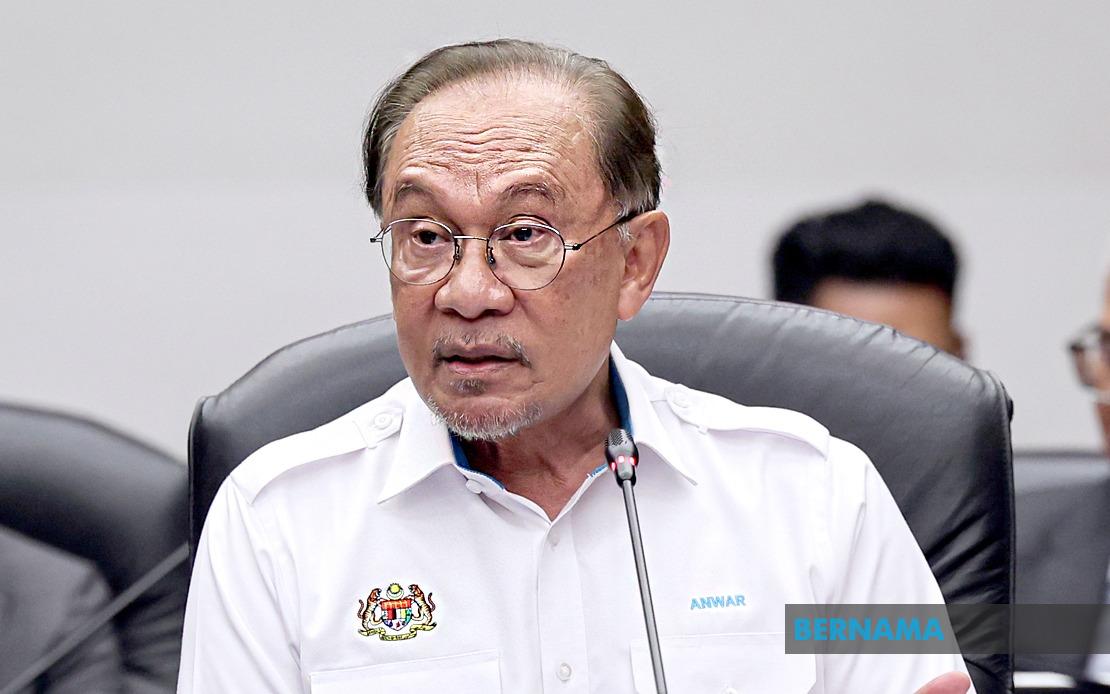
Prime Minister Datuk Seri Anwar Ibrahim has directed the Immigration Department to launch an immediate and comprehensive investigation into a fatal collision involving one of its vehicles on Jalan Sultan Ismail, signalling zero tolerance for any breaches of procedure or negligence that may have contributed to the tragedy.
The crash, which unfolded in the early hours of Wednesday morning at approximately 1 am near the Maju Junction traffic-light intersection, resulted in the deaths of three family members: a 53-year-old man and his two daughters aged 25 and 12, who were pronounced dead at the scene. A fourth family member, the man's 55-year-old wife, sustained serious injuries including head trauma and fractures to her arms and legs, and remains under treatment in the high-dependency Red Zone at Kuala Lumpur Hospital.
In remarks shared on Facebook, Anwar emphasised that the investigation must be thorough and unsparing in its assessment. He stated that should the probe uncover evidence of negligence or violations of legal standards, the department must pursue appropriate corrective measures without hesitation or compromise. This decisive language reflects mounting public concern about road safety involving government-operated vehicles and the responsibilities incumbent upon state agencies when deploying heavy transport for official operations.
The vehicle involved was an unladen Isuzu Black Maria operated by the Immigration Department. Police reports indicate the lorry was en route from the Kuala Lumpur Immigration Office to the Chow Kit district as part of a planned enforcement operation targeting undocumented migrants. The collision raised immediate questions about driver conduct, vehicle maintenance, adherence to traffic regulations, and operational safety protocols governing departmental vehicles during night-time operations.
This incident arrives amid broader scrutiny of road safety practices affecting government fleets across Malaysia. While immigration enforcement operations are routine and necessary, the deployment of heavy vehicles during early morning hours when visibility is reduced and fatigue among drivers may be heightened warrants examination of operational guidelines. The tragedy underscores the potential human cost when institutional procedures fail to prioritise the safety of both operational personnel and members of the public.
The Maju Junction intersection, situated along the busy Jalan Sultan Ismail corridor in central Kuala Lumpur, represents a complex traffic zone where multiple vehicle streams converge. The circumstances surrounding how the collision occurred—whether attributable to driver error, vehicle malfunction, inadequate traffic control, or environmental factors—will become clearer as investigators piece together evidence from the scene, witness statements, and vehicle data.
Anwar's intervention at the highest executive level underscores the political dimensions of such incidents in Malaysia. When fatal crashes involve state vehicles, public expectations crystallise around whether government institutions will conduct genuine accountability or engage in defensive institutional responses. By explicitly conditioning departmental action on investigative findings, the Prime Minister has effectively signalled that findings of wrongdoing will not be shelved or minimised through bureaucratic procedures.
For the Immigration Department, this investigation represents a critical test of institutional integrity and commitment to operational excellence. The department operates with considerable public sensitivity, given its responsibilities for border control and enforcement of migration law. A fatal crash involving departmental personnel raises questions about whether operational pressures—such as urgency in mounting raids against undocumented migrants—have compromised safety standards that should apply regardless of operational tempo.
The tragedy also carries implications for families and communities affected by road accidents in Malaysia more broadly. Government vehicles, precisely because they are operated by state employees conducting official business, carry a particular responsibility to observe safety standards scrupulously. When such vehicles cause civilian deaths, the incident reverberates beyond individual families to influence broader public perceptions of state competence and accountability.
Moving forward, the investigation's scope should encompass not merely the immediate circumstances of the crash but also systemic factors: whether the driver had undergone adequate safety training, whether fatigue management protocols existed for night-time operations, whether the vehicle had been maintained to required standards, and whether broader departmental procedures governing vehicle operations were sufficient. Malaysian road safety advocates will likely scrutinise whether this investigation yields concrete recommendations that prevent similar incidents.
The condolences extended by the Prime Minister acknowledge the immeasurable grief experienced by the affected family. Yet for many Malaysians, genuine acknowledgment of such tragedy must extend beyond expressions of sympathy to encompass institutional reforms that make recurrence less probable. The investigation ordered by Anwar represents an opportunity to extract lessons from this devastating incident that could enhance safety practices across government agencies operating heavy vehicles.

