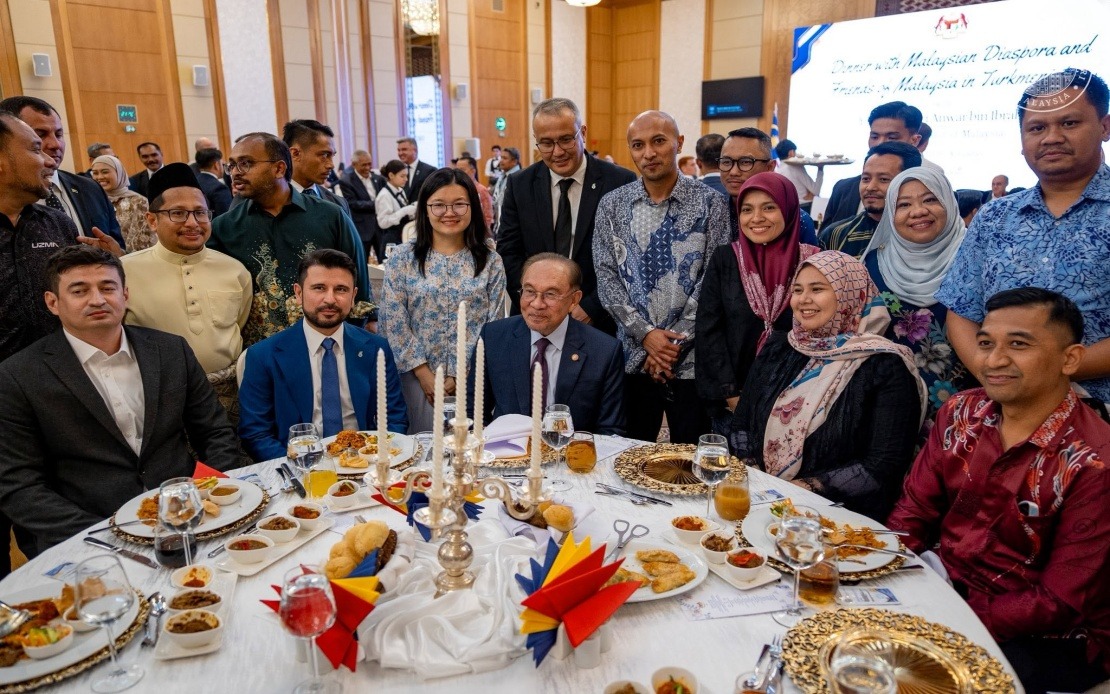
Prime Minister Datuk Seri Anwar Ibrahim has used his official visit to Turkmenistan as an opportunity to reconnect with Malaysians living in Ashgabat, underscoring the MADANI Government's commitment to maintaining meaningful engagement with its citizens scattered across the globe. The visit serves as a reminder of how Malaysia's leadership continues to prioritize the diaspora, a demographic that often plays a crucial role in fostering economic ties, cultural exchange, and diplomatic goodwill in regions where formal government presence may be limited.
During the meetings in Ashgabat, Anwar emphasised the importance of Malaysians abroad staying connected to their homeland and remaining informed about the country's ongoing development initiatives. This messaging reflects a broader strategy to transform the diaspora into active stakeholders in Malaysia's growth narrative, rather than viewing them merely as expatriates who have moved beyond national concerns. By keeping overseas Malaysians engaged with developments at home, the government seeks to leverage their networks, expertise, and resources for mutual benefit.
In remarks shared on social media, the Prime Minister described the encounter as warm and spiritually uplifting, noting that despite the geographical distance between Ashgabat and Kuala Lumpur, the sense of national unity and shared purpose transcended physical borders. This sentiment reflects a deeper understanding that diaspora communities, particularly those in less commonly visited Central Asian capitals, often feel a profound connection to home precisely because of their isolation from it. Anwar's presence in Ashgabat validated their experiences and demonstrated that Malaysia's government recognises their contributions regardless of their location.
Anwar characterised overseas Malaysians as unofficial ambassadors, highlighting their role in constructing Malaysia's international reputation and expanding the nation's influence through personal networks and professional endeavours. This framing elevates the status of the diaspora beyond simple expatriate classification, acknowledging that every Malaysian abroad carries responsibility for representing the country's values, stability, and progress. In an increasingly interconnected world, such grassroots diplomacy conducted by citizens scattered across continents can be as valuable as formal diplomatic channels.
The Prime Minister's visit to Turkmenistan, his first official journey to the Central Asian nation, extends beyond conventional economic and trade discussions. Anwar made clear that the engagement encompasses a holistic vision of bilateral cooperation encompassing political friendship, mutual understanding, and exploration of collaborative opportunities benefiting both nations. This approach signals Malaysia's intent to deepen relationships with countries in Central Asia, a region historically less prioritised in Malaysia's foreign policy compared to Southeast Asian or Gulf states.
The visit follows Turkmenistan President Serdar Berdimuhamedov's official visit to Malaysia in December 2024, establishing a pattern of high-level reciprocal engagement that strengthens institutional links between the two governments. Such exchanges are essential for building trust and identifying areas of convergence in policy priorities. For Malaysia, engaging Central Asian nations opens pathways to new markets, investment opportunities, and potential collaborations in energy, trade, and infrastructure development.
From a Southeast Asian perspective, Malaysia's outreach to Central Asia reflects a strategic diversification of partnerships beyond traditional regional groupings. As the region faces evolving geopolitical dynamics and economic shifts, establishing footholds in emerging markets and maintaining diplomatic presence across diverse regions bolsters Malaysia's capacity to navigate global challenges independently. The diaspora, in this context, becomes an invaluable resource for maintaining soft power and cultural influence.
For Malaysian nationals living in Central Asia, government acknowledgment through high-level visits carries practical significance. It signals that Malaysia's diplomatic apparatus extends concern and support to all citizens regardless of posting location. This engagement often translates into improved consular services, business networking opportunities, and cultural initiatives that help diaspora communities maintain identity while integrating successfully into their host societies.
The emphasis on diaspora engagement also reflects broader demographic trends affecting Malaysia's future. As younger Malaysians increasingly pursue opportunities abroad for education and career advancement, maintaining their connection to home becomes strategically important for long-term national development. Brain drain concerns, while inevitable in globalised economies, can be partially mitigated through proactive government engagement that makes returning or contributing remotely more attractive.
Anwar's visit demonstrates how diplomatic missions can serve multiple constituencies simultaneously. While ostensibly focused on advancing Malaysia-Turkmenistan relations, the engagement with local Malaysians fulfils domestic political objectives by showcasing government attentiveness to citizen welfare and demonstrating inclusive governance that extends beyond national borders. This dual-purpose diplomacy optimises resource allocation and sends coherent messaging about national priorities.
Looking forward, the momentum established through this visit may catalyse expanded cooperation between Malaysia and Turkmenistan across sectors including trade, energy, technology, and education. The presence of Malaysian professionals and businesses in Central Asian hubs like Ashgabat can facilitate commercial transactions and joint ventures more effectively than diplomacy alone. Government backing for such initiatives, communicated through high-level engagement, encourages business confidence and creates ecosystem conditions for private sector growth.
The gathering in Ashgabat ultimately illustrates a recognition that national interest extends beyond territorial boundaries in an age of mobility and globalisation. Malaysian policymakers increasingly understand that citizens abroad constitute an extended projection of national capability and influence. By nurturing these relationships and positioning diaspora members as partners in national development, Malaysia enhances its soft power and creates networks that generate returns across diplomatic, economic, and cultural domains for decades to come.

