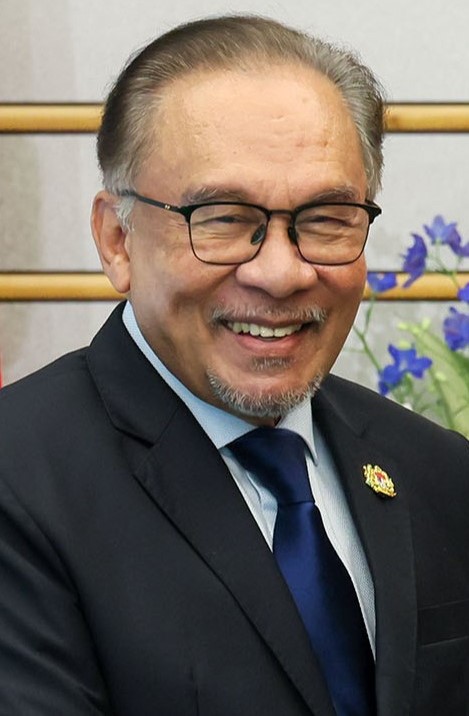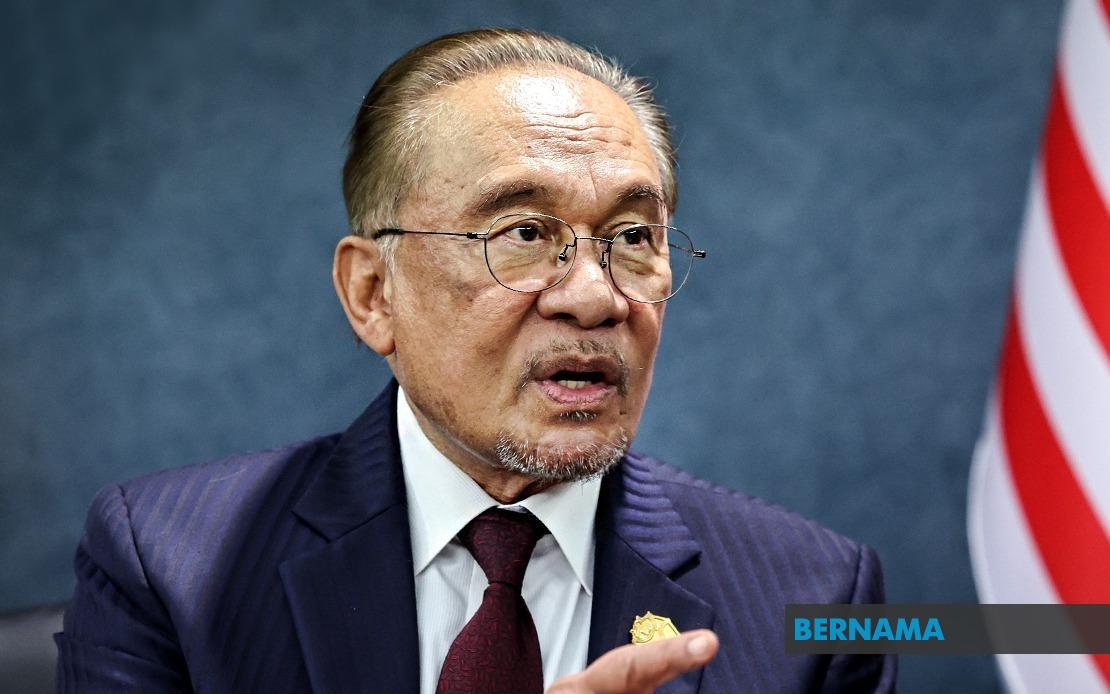
Prime Minister Datuk Seri Anwar Ibrahim took to the stage at Kazan IT Park to address the ASEAN-Russia Business Forum, delivering remarks to assembled business leaders and government officials from across the ten-member Southeast Asian bloc and Russia. The address formed a centrepiece of the broader ASEAN-Russia Commemorative Summit, with Anwar, who holds the concurrent portfolio of Finance Minister, positioned as a key voice representing Malaysia's interests in deepening economic and diplomatic ties with Moscow.
The venue for the forum proved symbolically significant. Kazan, nestled at the confluence of the Volga and Kazanka rivers some 800 kilometres east of Moscow, serves as the capital of Russia's Republic of Tatarstan. Home to approximately 1.3 million people, the city carries the informal designation of Russia's "third capital" following Moscow and St Petersburg. Beyond its geographic and demographic importance, Kazan represents a cultural crossroads—a centre where Russian and Islamic traditions intermingle. This positioning renders the city particularly apt for hosting discussions between ASEAN and Russia, given the religious and cultural diversity present across Southeast Asia.
Anwar's participation extended beyond the business forum itself. Following his address, he attended the gala dinner held at the prestigious Tatar State Academic Theater, where he took part in a courtesy call with Russian President Vladimir Putin. These interactions underscore Malaysia's active engagement within the ASEAN framework and its commitment to strengthening bilateral relations with Russia at the highest diplomatic levels.
The commemorative summit carries particular weight this year, marking 35 years since ASEAN and Russia first established formal dialogue relations in 1991. The relationship has evolved considerably over three decades. Russia's elevation to full ASEAN Dialogue Partner status in 1996 represented a significant milestone, cementing its role as a strategic interlocutor for the bloc. More recently, in 2018, the partnership was further strengthened when it attained the designation of Strategic Partnership, signalling mutual commitment to expanding cooperation across political-security, economic, and socio-cultural domains.
The economic dimensions of ASEAN-Russia engagement merit particular attention for Malaysian observers and policymakers. In 2024, the aggregate value of trade between ASEAN and Russia reached USD18.1 billion, reflecting the substantial commercial relationship underpinning political dialogue. Complementing this trade flow, Russian foreign direct investment in ASEAN totalled USD92.97 million, equivalent to RM367.90 million. These figures illustrate both the scale of existing commercial activity and, implicitly, the significant untapped potential for deepening economic integration between the two sides.
For Malaysia specifically, Russia occupies an important but not dominant position within its European trading networks. As of 2025, Russia ranked as Malaysia's ninth-largest trading partner among European nations, with bilateral trade valued at RM8.72 billion or USD2.04 billion. This positioning reflects Malaysia's diversified approach to European engagement, spreading commercial relationships across multiple partners rather than concentrating dependency on any single nation. The composition of this bilateral trade reveals complementary economic structures: Malaysian exports to Russia concentrate in electrical and electronic products, machinery, equipment and component parts, alongside processed food goods. Conversely, Malaysian imports from Russia centre on petroleum products, minerals, chemicals and chemical-based products—commodities where Russia possesses substantial competitive advantages and natural resource endowments.
The timing of this summit occurs within a broader context of evolving geopolitical alignments. Malaysia and other ASEAN members have long pursued deliberate strategies of balanced engagement with major powers, seeking to maintain equidistant relationships rather than alignment with particular blocs. The ASEAN-Russia summit provides a platform for reinforcing this approach, demonstrating that Southeast Asian nations maintain active diplomatic and economic engagement with diverse partners across the globe. For Malaysia, participation reaffirms its commitment to pragmatic, interest-based foreign policy.
Kazan's history and cultural character add additional layers of significance to the venue selection. The city boasts more than a thousand years of recorded history, during which it has developed into one of Russia's most significant centres of Islamic culture and heritage. This dimension connects meaningfully with ASEAN, which encompasses several predominantly Muslim nations and regions. The cultural bridge that Kazan represents between the Russian and Muslim worlds thus creates natural resonances with Southeast Asian interests and values, facilitating dialogue across civilisational lines.
The business forum component of the summit warrants attention as a mechanism for fostering practical commercial engagement beyond high-level political rhetoric. By convening business representatives and government officials in a dedicated forum, the summit creates structured opportunities for identifying partnership opportunities, discussing regulatory frameworks, and establishing networks that can translate political commitment into concrete economic activity. For Malaysian enterprises, such forums offer valuable intelligence on Russian market conditions, regulatory landscapes, and potential partnerships.
Looking ahead, the maintenance and development of ASEAN-Russia relations will require sustained attention from Malaysian policymakers. While current trade volumes are substantial, the trajectory suggests room for growth, particularly as both sides identify sectors offering comparative advantage and mutual benefit. Enhanced cooperation in digital technologies, energy, agriculture, and manufacturing could unlock additional value. The strategic partnership framework provides the institutional architecture for such expansion, requiring only concerted effort and commitment from both parties to realise potential.
The gathering in Kazan ultimately reflects a broader reality shaping contemporary international affairs: that engagement and dialogue across traditional geopolitical divides remain not merely possible but essential. For Malaysia and other ASEAN members, maintaining robust relationships with Russia while simultaneously engaging Western partners, China, India, and other powers represents a sophisticated balancing act. The ASEAN-Russia summit and Prime Minister Anwar's participation in its proceedings demonstrate Malaysia's continued commitment to this calibrated, multi-directional approach to foreign policy.