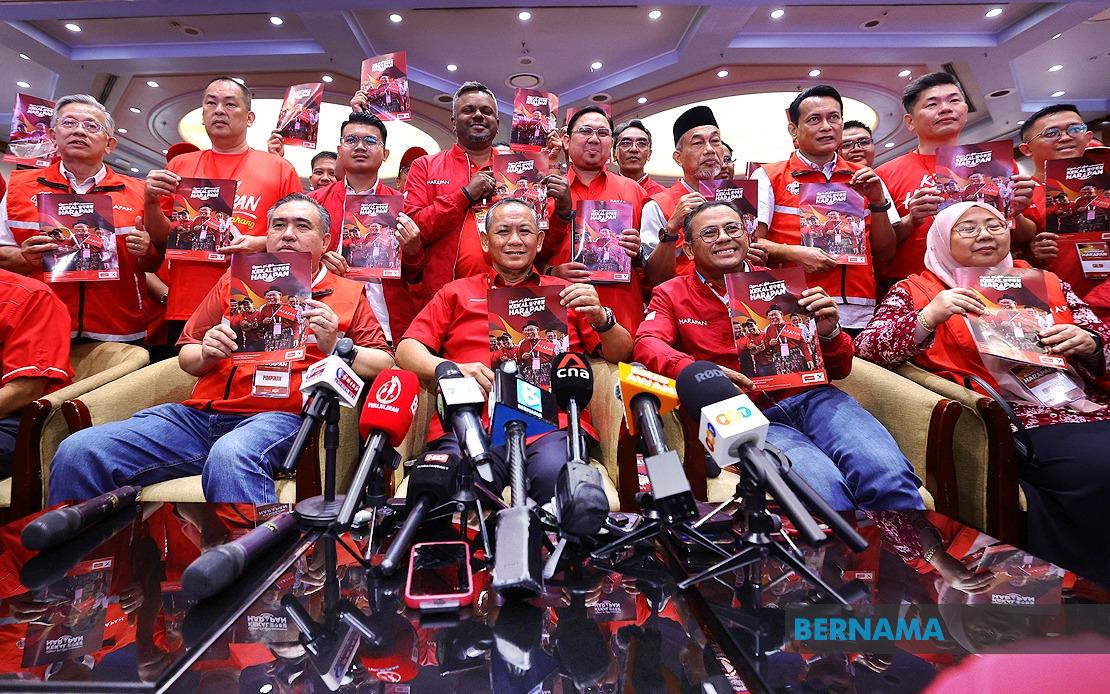
Prime Minister and Pakatan Harapan chairman Datuk Seri Anwar Ibrahim is set to campaign for the ruling coalition in Negeri Sembilan this Wednesday, throwing his weight behind the party machinery ahead of the state election. The PH Negeri Sembilan chairman Datuk Seri Aminuddin Harun confirmed that Anwar will participate in a series of campaign stops in Sikamat and Paroi, appearing alongside senior party leadership to energise the grassroots push across the state.
Anwar's late entry into the Negeri Sembilan campaign represents a calculated deployment of the prime minister's political capital at a crucial moment in the contest. His absence from the manifesto launch ceremony on July 20 had prompted questions about his commitment to the state-level battle, but coalition insiders sought to downplay any suggestion of internal friction or lack of focus on the eastern Selangor state. Aminuddin stressed that the Prime Minister's participation remains firmly on track and that his involvement should be viewed as part of a broader strategic effort.
The PH manifesto unveiled in Seremban earlier that week sets out an ambitious agenda spanning eight key policy domains. The document emphasises strengthening administrative stability as a foundation for governance, while prioritising household welfare through targeted social programmes. Economic competitiveness features prominently, reflecting anxiety about Negeri Sembilan's economic trajectory and the need to attract investment and create quality employment. The manifesto commits to raising educational standards, expanding affordable housing stock, nurturing youth entrepreneurship, and advancing women's participation across sectors.
Tourism development and heritage preservation rank among the coalition's stated priorities, reflecting Negeri Sembilan's rich Minangkabau cultural legacy and its potential as a regional attraction. Modern agricultural practices and food security also feature in the platform, signalling PH's intent to engage rural constituencies. Strategic infrastructure investment and social cohesion emerge as bookend commitments, framing the manifesto around themes of national unity and practical development.
Aminuddin, who is himself contesting the Linggi seat, sought to reassure voters that PH had done its preparatory work and was ready to deliver on promises made to the electorate. His framing positioned the manifesto launch as evidence of serious preparation rather than hollow electioneering, an implicit contrast with potential rival offerings. The emphasis on promising and delivering reflects PH's ongoing effort to rebuild trust with Malaysian voters following previous electoral setbacks and governance challenges.
The campaign for the 16th Negeri Sembilan state election has drawn prominent figures from across the coalition's component parties. DAP secretary-general Anthony Loke, the PH candidate for Chennah, has been visibly engaged, alongside Selangor Menteri Besar Datuk Seri Amirudin Shari who is coordinating PH's electoral strategy. PKR secretary-general Datuk Dr Fuziah Salleh and Amanah vice-president Datuk Dr Mohd Hatta Md Ramli underscore the cross-party coordination behind the push, highlighting how state elections serve as testing grounds for national coalition cohesion.
For Malaysian observers and the broader Southeast Asian region, Negeri Sembilan represents a mid-term gauge of ruling coalition stability. Having consolidated power nationally following the 2022 federal elections, PH faces the challenge of translating that mandate into consistent state-level performance. Negeri Sembilan, as a traditionally competitive state with no clear dominant force, offers neither a sure victory nor a certain defeat—making it a genuine contest that could yield insights into voter sentiment and coalition effectiveness.
The electoral timeline adds urgency to the campaign efforts. Early voting is scheduled for July 28, providing a compressed window for persuasion and mobilisation. The main polling date of August 1 will determine whether PH can hold or expand its ground in the state assembly. For a coalition that has invested considerable political capital in manifesto promises and programmatic governance, the stakes extend beyond Negeri Sembilan to signal broader competence and capacity to voters nationwide.
Anwar's personal involvement carries symbolic weight beyond the immediate campaign context. The Prime Minister's presence validates the campaign for party members and signals to voters that the federal government takes state contests seriously. In Malaysian political culture, where the federal executive commands attention, PM participation can shift perceptions of importance and urgency. His Wednesday appearance in Sikamat and Paroi will likely generate media coverage and provide momentum as polling day approaches.
The coalition's multi-point manifesto reflects an attempt to construct a broad tent appeal across diverse constituencies and concerns. By addressing everything from administrative stability to youth development, PH aims to position itself as a comprehensive governing force with solutions spanning economic, social, and cultural domains. However, the challenge lies in execution and translating these policy commitments into tangible improvements in voters' lives, a task that will test both the state government's capacity and the coalition's credibility.

