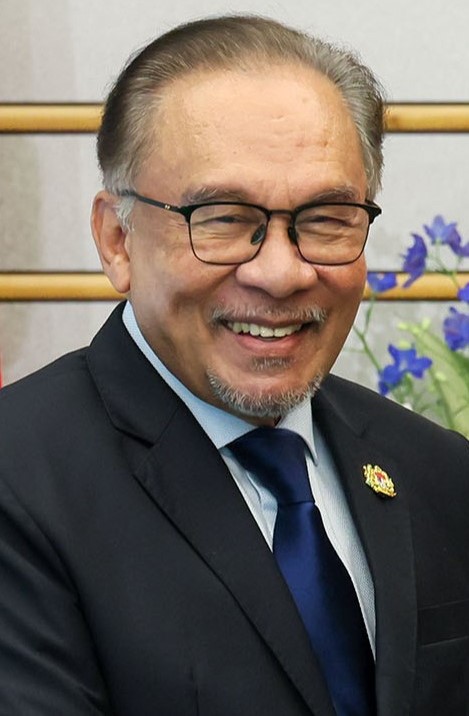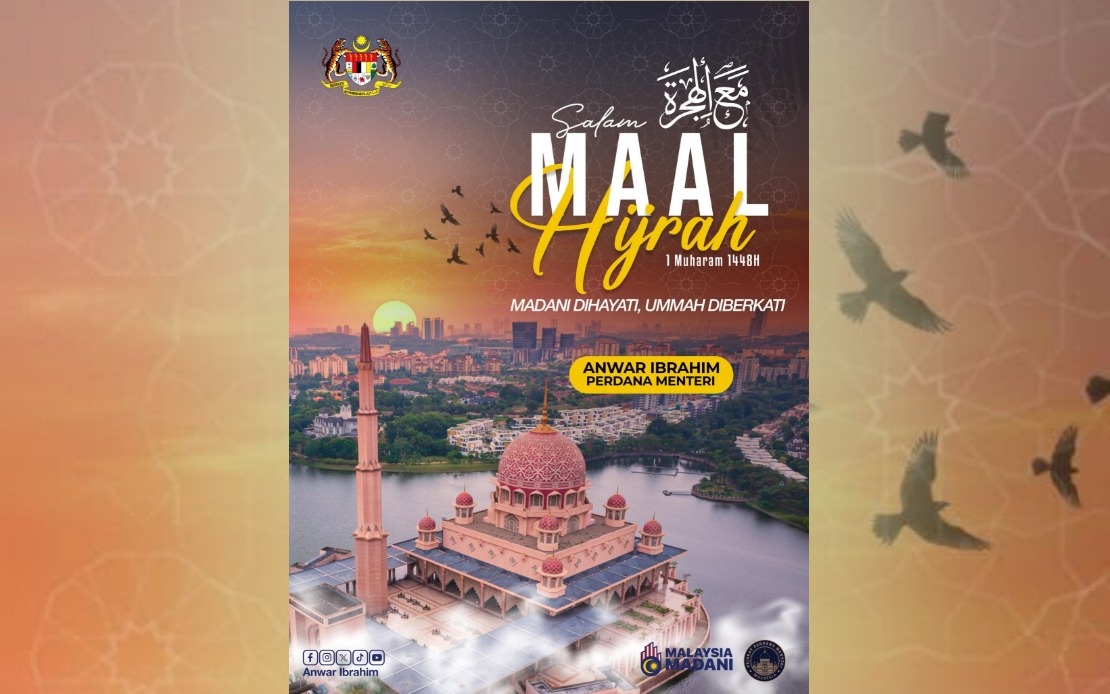
Prime Minister Datuk Seri Anwar Ibrahim has underscored that the spiritual essence of Hijrah must be channelled through collective consensus and national unity to advance transformative reforms centred on justice, truth, prosperity and security. Speaking on the occasion of Maal Hijrah 1448H, Malaysia's observance of the Islamic calendar's new year, Anwar drew parallels between the Prophet Muhammad SAW's historical migration to Madinah and the contemporary imperative for collaborative nation-building. His remarks highlight an emerging theme in his administration's messaging: that durable institutional change requires broad-based participation rather than top-down imposition or isolated initiatives.
The Prophet's Hijrah to Madinah, Anwar noted, demonstrates that transformative achievement emerges not from individual prowess but from coordinated effort undergirded by shared purpose and faith. He specifically highlighted the pivotal roles played by younger figures like Saidina Ali Abi Talib, women such as Asma bint Abu Bakar who facilitated the migration, and numerous companions who organised and participated in the journey. By invoking these historical examples, Anwar positioned contemporary Malaysian governance within a broader Islamic historical narrative—one in which diversity of roles and contributions strengthens rather than weakens collective outcomes. This framing carries particular resonance in a multiethnic nation where competing interests and sectional concerns frequently complicate policymaking.
The Prime Minister cautioned that translating Hijrah's spiritual message into practical governance remains inherently difficult in the modern context. He acknowledged that Malaysia's pluralistic social fabric presents distinct challenges absent from seventh-century Arabia, requiring deliberate cultivation of consensus across networks of vastly differing worldviews, religious traditions, and socioeconomic circumstances. Anwar's emphasis on difficulty serves an important rhetorical function: it manages expectations about the pace of reform while simultaneously lowering blame for partial implementation. More substantively, it suggests that his administration recognises the political fragility of multiparty coalitions and the necessity of building legitimacy beyond narrow support bases.
Critically, Anwar rejected the notion that reform can be achieved through rhetorical flourishes, catchy slogans, or isolated efforts by individual leaders or organisations. Instead, he articulated a vision wherein success demands sustained patience, measured progress, and genuine cooperation spanning political, religious, and civil society actors. This framing implicitly critiques both his predecessors' governance approaches and contemporary opposition rhetoric that relies heavily on sloganeering. For Malaysian readers familiar with the administration's MADANI framework, Anwar's message reinforces that the government's agenda is fundamentally collaborative in nature rather than authoritarian or purely technocratic.
The Prime Minister explicitly stated that willingness to undertake reform grounded in Hijrah's foundational lessons must constitute a collective enterprise rather than the prerogative of any single political party or faction. This stance carries significant implications for Malaysian governance, particularly given the country's history of competitive multiparty politics and the current coalition government's need to maintain internal cohesion. By delegitimising purely partisan reform efforts, Anwar signals openness to input from non-governmental constituencies and frames the reform agenda as transcending traditional left-right or ruling-opposition divides. Such positioning proves strategically valuable in a political environment where his Pakatan Harapan coalition governs with limited parliamentary supermajorities.
Anwar's theological anchoring of these arguments in Quranic verse—specifically verse 100 of Surah An-Nisa concerning divine reward for those who migrate for Allah's sake—attempts to invest the governance philosophy with religious legitimacy. By linking contemporary institutional reform to revealed Islamic principles, the Prime Minister positions his administration's practical policymaking within a sacred framework. For Muslim-majority Malaysia, this rhetorical move carries particular weight, suggesting that governance choices align with fundamental Islamic values rather than constituting mere political expediency. Simultaneously, the invocation of specific Quranic passages potentially alienates non-Muslim constituencies, though Anwar's broader emphasis on universal principles like justice and security attempts to bridge this gap.
The Department of Islamic Development Malaysia (Jakim) selected the theme "MADANI Dihayati, Ummah Diberkati" (MADANI Embraced, The Ummah Blessed) for the National Maal Hijrah Celebration 1448H/2026M, intentionally connecting the government's signature MADANI development framework to Islamic historical consciousness. This thematic linkage transforms an annual religious commemoration into an occasion for reinforcing the administration's broader governance narrative. The choice to frame Islamic civilisational development through the lens of the Madinah state's establishment arguably positions Malaysia's contemporary institution-building as a latter-day iteration of the same trajectory initiated by the Hijrah. For observers tracking the government's ideological direction, this symbolic association merits attention as potentially indicative of deeper shifts in how the administration conceptualises the relationship between Islamic principles and secular governance structures.
The conceptual framework Anwar presents—Hijrah as sacrifice, struggle, brotherhood, and unity—translates abstract religious concepts into actionable governance principles. Sacrifice implies willingness among political actors to subordinate narrow interests to collective welfare; struggle acknowledges that reform proves inherently difficult and non-linear; brotherhood invokes solidarity across religious and communal lines; and unity emphasises consensus-building across fractious constituencies. These translations demonstrate how Islamic theological categories can be mobilised within secular policy discussions, a technique increasingly common across Muslim-majority democracies grappling with questions of governance legitimacy and institutional design.
For Southeast Asian observers, Anwar's remarks reflect broader regional trends wherein Islamic discourse increasingly intersects with democratic governance rather than remaining confined to religious institutions or oppositional movements. Malaysia's experience navigating this intersection—imperfectly and incompletely though it may be—carries relevance across the region, particularly in countries like Indonesia and the Philippines where similar tensions between religious identity and institutional pluralism characterise political discourse. Anwar's invocation of collaborative reform rooted in Islamic principles suggests one possible pathway for reconciling religious nationalism with democratic inclusivity, though implementation challenges remain formidable.
The Prime Minister's messaging also responds to domestic political pressures requiring him to demonstrate that his administration possesses both Islamic credibility and commitments to substantive reform. By tethering reform discourse to Hijrah's spiritual foundations, Anwar addresses constituencies concerned that his government lacks sufficient Islamic bona fides while simultaneously assuring secular and non-Muslim Malaysians that reform efforts remain grounded in universal principles rather than narrow communal interests. This delicate balancing act reflects the perpetual challenge facing Malaysian leaders attempting to govern coalitionally in a nation where religious identity and political allegiance remain deeply intertwined.