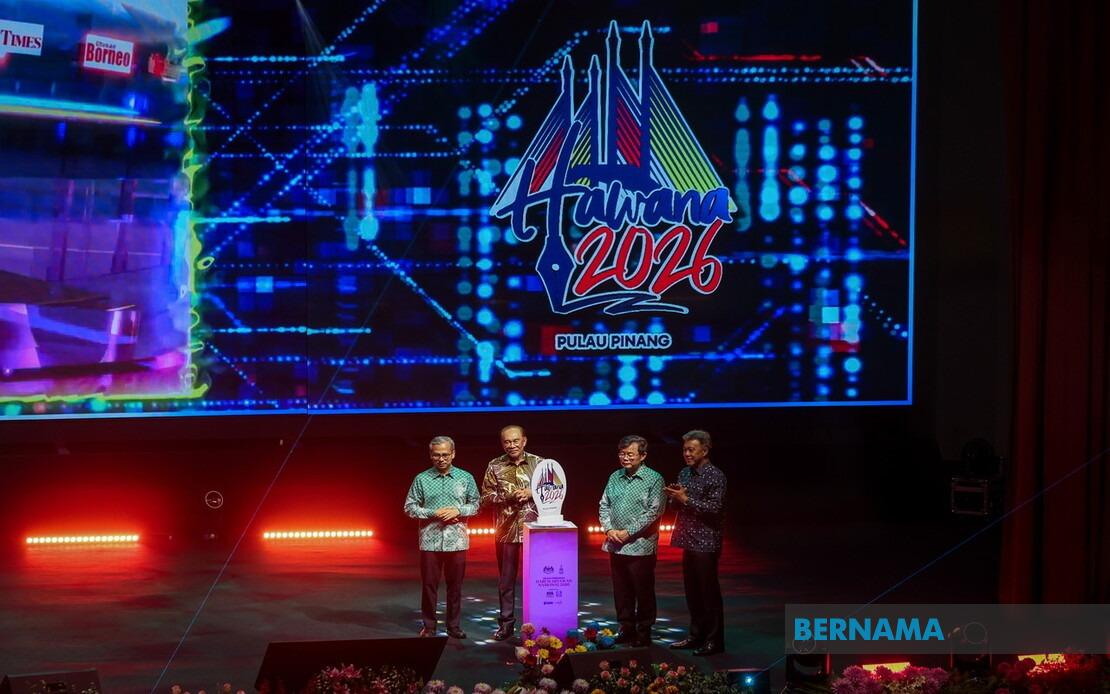
Prime Minister Datuk Seri Anwar Ibrahim has delivered a nuanced message about the state of Malaysian journalism, acknowledging both the vital role media plays in democratic society and the intricate challenges it faces in an increasingly digital landscape. Speaking at the National Journalists' Day (HAWANA) 2026 main event in Butterworth on June 20, Anwar expressed his gratitude to local media practitioners who continue to discharge their duties with integrity, recognising their longstanding contributions to the nation's information ecosystem and public discourse.
The contemporary media environment presents unprecedented complexity. Anwar highlighted that journalists today operate amid rapid technological advancement and the proliferation of artificial intelligence, factors that fundamentally reshape how news is gathered, processed, and disseminated. These tools offer efficiency and reach but simultaneously create novel ethical quandaries around verification, attribution, and the potential for manipulation. The Prime Minister's acknowledgment of this tension suggests government awareness that generic calls for responsibility must grapple with the practical realities facing newsrooms transitioning to digital workflows while maintaining credibility.
Central to Anwar's remarks was his assertion that media practitioners serve an essential bridging function between government and citizenry. By explaining complex policies and developmental initiatives through accessible reporting, journalists help the public grasp how national priorities such as economic diversification, digital infrastructure expansion, and energy transition will affect their lives. This conception positions journalism not merely as a watchdog monitoring power but as an educational institution that contextualises governance decisions within broader societal goals.
Yet Anwar articulated a tension that merits careful consideration. He stressed that freedom of expression must coexist with responsibility, guided by ethical principles that ensure information is accurate, credible, and reliable. This formulation reflects an understanding that absolute press freedom divorced from accountability risks enabling the spread of misinformation, conspiracy theories, and divisive content that could destabilise institutions and undermine public confidence. The challenge lies in operationalising this balance without allowing governments or powerful interests to weaponise "responsibility" as justification for censorship.
The Prime Minister introduced a philosophical dimension rarely heard in Malaysian political discourse by arguing that ethics and values ultimately determine the truthfulness and rightness of what is conveyed, beyond mere factual accuracy. This suggests that journalism requires not only empirical verification but also moral judgment about context, impact, and societal consequence. It reflects a sophisticated view that facts alone are insufficient without interpretation guided by professional values and consideration of broader implications.
Anwar explicitly connected this ethical framework to Malaysia's broader development agenda. He cautioned against allowing economic priorities, digitalisation initiatives, energy transitions, and artificial intelligence advancement to proceed at the expense of foundational values. This messaging appears intended to reassure that rapid national modernisation will not compromise social cohesion or institutional integrity. For Malaysian readers concerned about pace of change, this serves as an implicit commitment that progress will be tempered by ethical consideration.
The HAWANA 2026 gathering itself demonstrated the breadth of Malaysia's media landscape and regional diplomatic engagement. Hosting over 1,000 practitioners from Malaysia and international delegations from Timor-Leste, Cambodia, and Laos underscores how journalism associations function as professional networks that transcend borders. The signing of a memorandum of understanding between Malaysia's national news agency Bernama and Timor-Leste's TATOLI suggests structural frameworks for sharing professional standards and best practices across Southeast Asia, potentially strengthening regional media capacity.
Anwar's emphasis on balancing freedom with responsibility carries particular resonance for Southeast Asia, where many nations grapple with defining appropriate boundaries for press freedom. Malaysia's own experience with media regulation, including periodic controversies around press freedom, provides context for understanding why a prime minister would articulate this principle explicitly. The message suggests that government leadership recognises freedom and responsibility as mutually reinforcing rather than antagonistic values.
The awards presented during the event further illuminated the government's values. Honouring Datuk Suhaimi Sulaiman for his contributions to broadcasting development and posthumously recognising the late Azlan Idris for his service to Bernama Radio reflected acknowledgment that institutional memory and professional lineage matter. These individuals embodied long careers in media before the digital revolution fundamentally altered the industry, symbolising continuity between journalistic traditions and contemporary practice.
Districts like Butterworth hosting such a high-profile event also carries implicit messaging about regional inclusion in Malaysia's national narrative. Penang Chief Minister Chow Kon Yeow's attendance, alongside Communications Minister Datuk Fahmi Fadzil, suggested cross-party commitment to supporting media institutions. This political consensus, at least on the surface, indicates media development transcends partisan divisions and is treated as a shared national concern.
For Malaysia's media practitioners, Anwar's remarks provided tacit government validation of their professional role while simultaneously outlining expectations for ethical conduct. The emphasis on responsibility without heavy-handed censorship language suggests a preference for industry self-regulation and professional standards-setting. However, the repeated invocation of balance between freedom and responsibility hints that government will continue monitoring how press freedom is exercised, particularly regarding content that might undermine institutional stability.
The broader implication for Malaysian journalism involves negotiating increased scrutiny alongside expanded technological capabilities. As social media and digital platforms democratise information dissemination, traditional media outlets face both competition and opportunity. Anwar's message implies that professional news organisations maintaining rigorous ethical standards possess comparative advantage in an information-saturated environment where credibility becomes the scarcest resource. This recognition that ethics constitute competitive advantage rather than mere constraint potentially incentivises industry-wide commitment to professional standards.
Looking forward, the HAWANA 2026 event and Anwar's remarks suggest Malaysia is positioning itself as a regional model for media professionalism that harmonises democratic freedoms with institutional stability. Whether this aspiration translates into sustained support for independent journalism and transparent regulatory frameworks will prove crucial to validating such positioning in coming years.

