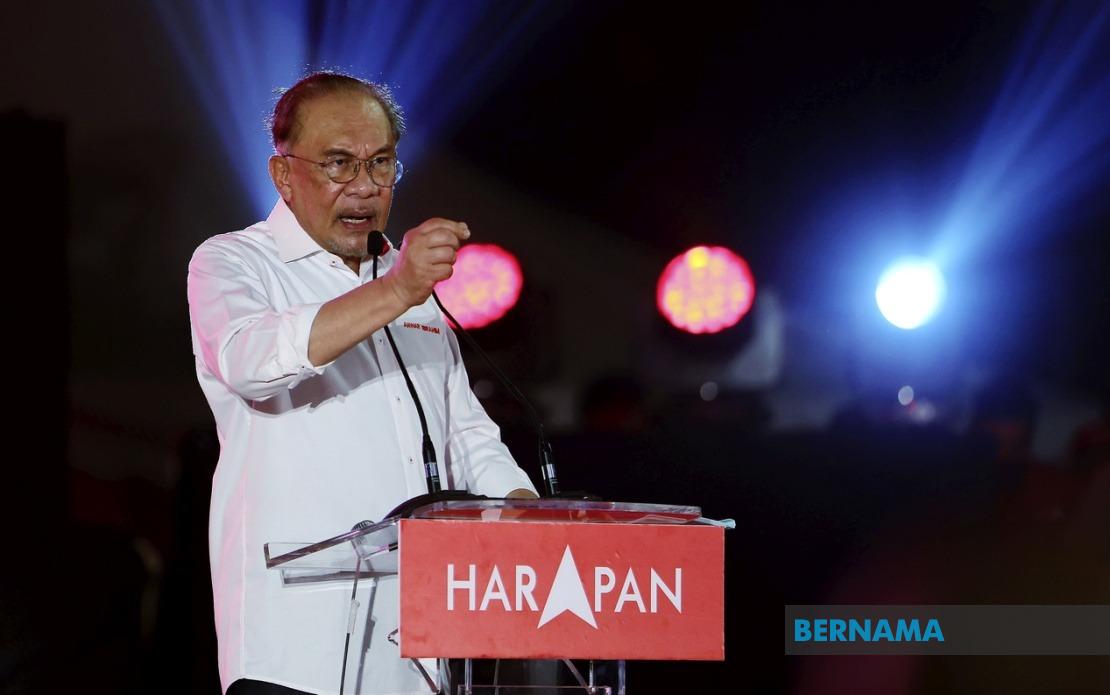
Prime Minister Datuk Seri Anwar Ibrahim delivered a pointed message to political rivals in the Negeri Sembilan state election campaign on July 14, urging competitors to avoid weaponising sensitive constitutional and royal matters in their bid to win voter support. Speaking at the Pakatan Harapan candidate announcement ceremony in Kuala Pilah, the PH chairman emphasised that while democratic contestation requires vigorous debate, such competition must operate within boundaries that protect the nation's foundational institutions.
Anwar's intervention reflects growing concerns about the tenor of electoral discourse in Malaysia's states, where campaign rhetoric has occasionally ventured into territory that touches on constitutionally protected institutions. His statement came as PH prepared to field 36 candidates across the Negeri Sembilan assembly seats, blending established political figures with newcomers from the coalition's three component parties: PKR, DAP, and Amanah. The announcement itself demonstrated the coalition's strategy of presenting both continuity through incumbents and renewal through fresh candidates.
The Prime Minister drew a deliberate distinction between permissible political conflict and conduct that breaches democratic norms. He acknowledged that competing visions and policies form the essence of democratic practice, yet emphasised that such competition cannot justify inflammatory rhetoric or deliberate attempts to sow discord among communities. His framing suggested anxiety about preserving social cohesion while maintaining robust political competition—a delicate balance that increasingly preoccupies Malaysia's political leadership across the spectrum.
Anwar specifically cautioned against what he termed "slander," indicating that campaigns relying on false or misleading characterisations of opponents or institutions cross ethical lines. This language suggests awareness of campaign tactics that had drawn criticism in previous electoral contests, where certain groups deployed unsubstantiated claims to energise support. The Prime Minister's emphasis on institutional integrity rather than specific political grievances allowed him to make his point without directly naming parties or individuals.
The gathering itself underscored PH's confidence heading into the Negeri Sembilan contest. Present alongside Anwar were DAP secretary-general Anthony Loke, Amanah president Datuk Seri Mohamad Sabu, and other senior coalition figures. Loke's appearance carried particular significance given his appointment as DAP leader and his own candidacy for the Chennah state seat, representing the party's continued presence in the state. Incumbent Menteri Besar Datuk Seri Aminuddin Harun secured PH's nomination for the Linggi seat, signalling the coalition's determination to retain its hold on the state administration.
Anwar praised Aminuddin's stewardship, characterising him as a pragmatic administrator capable of collaborative engagement with the federal government. This endorsement served multiple purposes: it legitimised the Menteri Besar's record ahead of voters, positioned him as the face of the state-federal coordination that benefits Negeri Sembilan, and implicitly framed a vote for Aminuddin as consistent with national development priorities. Such framing has become standard in Malaysian state elections, where sitting governments attempt to link state performance with broader national progress narratives.
The Prime Minister's call for clean, integrity-driven leadership reflected PH's broader post-2022 positioning as a reformist coalition committed to institutional strengthening and ethical governance. However, this rhetoric carries different weight depending on voter perspective—supporters view it as evidence of genuine commitment to governance standards, while critics sometimes characterise such pronouncements as selective invocation of principles. The Negeri Sembilan campaign would test whether PH's messaging resonated with state voters or whether other considerations dominated their electoral calculus.
Anwar's insistence that Negeri Sembilan must advance in tandem with federal development initiatives revealed assumptions about how state elections interface with national governance. This argument assumes that voters prioritise synchronisation between state and federal administrations, yet state elections frequently turn on local grievances and personalities rather than coordinated development philosophy. The statement nonetheless signalled PH's desire to frame the election as part of a coherent national project rather than as an isolated provincial contest.
The composition of the 36-candidate slate reflected careful calibration designed to appeal to different voter constituencies. The inclusion of both established figures commanding deep political networks and fresh candidates capable of energising younger or disaffected voters suggested PH strategists believed the election would hinge on mobilising multiple demographic groups. The candidate selection process itself had likely involved negotiations among the coalition's component parties, each seeking adequate representation and strong positions.
Anwar's emphasis on stewardship toward the next generation conveyed awareness that Malaysian voters increasingly prioritise long-term governance outcomes and opportunities for youth. This intergenerational framing moved beyond immediate partisan competition to situate the election within a longer arc of institutional and economic development. Whether such messaging could cut through more parochial campaign concerns remained uncertain as the election campaign intensified.
The warning against constitutional overreach represented an implicit acknowledgment of Malaysia's ongoing tensions surrounding the balance between democratic politics and institutional safeguards. Federal and state elections have occasionally featured campaigns that tested the boundaries of permissible political speech, particularly regarding sensitive matters relating to constitutional arrangements, religious authority, or royal prerogatives. Anwar's July 14 statement served as an advance marker establishing the boundaries he expected the campaign to respect.
For Malaysian and Southeast Asian observers, the Negeri Sembilan campaign offered a case study in how mature democracies attempt to manage the inherent friction between popular sovereignty and institutional protection. Anwar's intervention suggested that despite Malaysia's sometimes turbulent political history, significant actors still valued explicit commitment to democratic norms and constitutional propriety. Whether this restraint would characterise the entire campaign, or whether rival forces would test those boundaries, would become clear as voting day approached.

