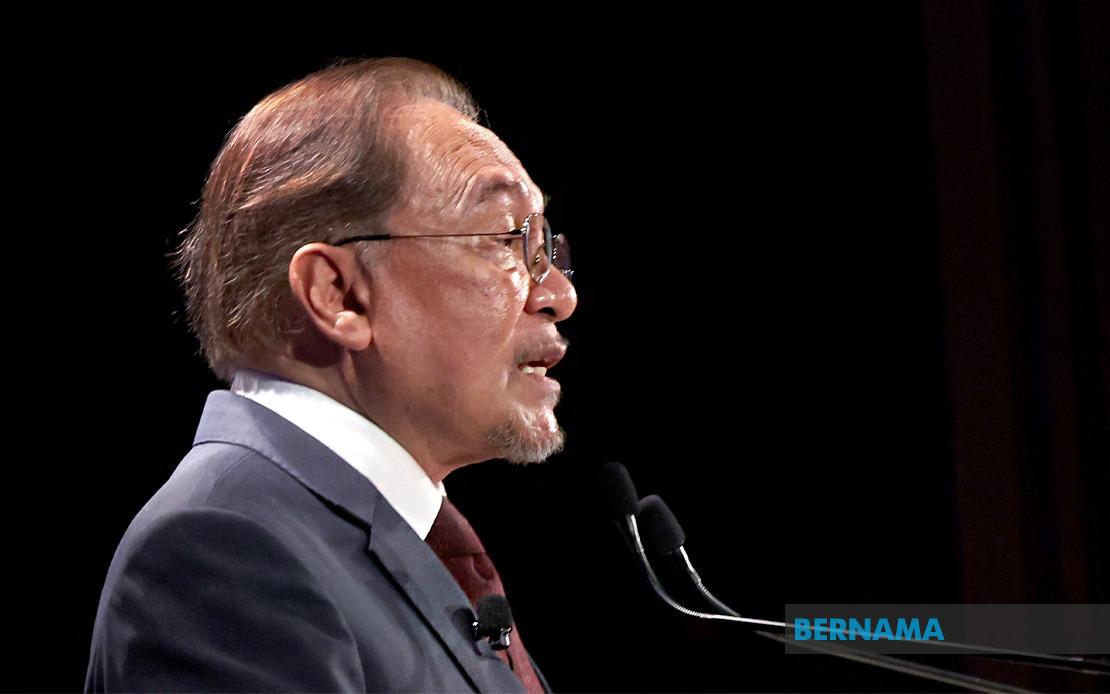
Prime Minister Datuk Seri Anwar Ibrahim is making the most of his concluding day in Turkmenistan with a comprehensive schedule of diplomatic engagements, reflecting Malaysia's commitment to deepening relations with this strategically positioned Central Asian nation. The final leg of his official visit to Ashgabat, the capital, encompasses a series of high-level meetings designed to strengthen bilateral cooperation across multiple sectors and chart a course for future collaboration between Kuala Lumpur and Ashgabat.
The day commences with ceremonial protocols befitting a state visit. Turkmenistan President Serdar Berdimuhamedov will host a formal welcoming ceremony at the Presidential Palace, providing the customary pomp and circumstance that accompanies high-level diplomatic encounters. Following the ceremony, Anwar and Berdimuhamedov will engage in a one-to-one meeting, a setting that typically allows leaders to address sensitive matters and explore common ground without the formality of larger delegations. This format provides crucial space for candid discussion on matters requiring executive-level attention.
The bilateral meeting proper will follow, serving as the substantive platform for comprehensive dialogue. The two leaders are expected to traverse a broad spectrum of concerns central to the relationship. Trade and investment frameworks will undoubtedly feature prominently, given Malaysia's significant economic interests in Turkmenistan. The oil and gas sector, agriculture and commodities markets, energy infrastructure, tourism development, educational exchange, digital transformation, and science and technology cooperation represent the intended focal points of discussion. These sectors reflect both nations' economic priorities and offer tangible opportunities for mutual benefit.
Beyond bilateral matters, Anwar and Berdimuhamedov will address the wider regional and international landscape. The discussion is anticipated to encompass developments within ASEAN, allowing the Turkmen leader insights into Southeast Asian political and economic dynamics. Conversely, Malaysia gains perspective on Central Asian affairs and Turkmenistan's strategic positioning within that region. Such exchanges serve the broader purpose of enhancing mutual understanding in an increasingly interconnected world.
The formal outcomes of these discussions will be crystallized through several binding documents. A joint statement will encapsulate the shared vision and commitments of both governments. An Air Services Agreement will facilitate enhanced connectivity between the two nations, easing business travel and tourism flows. A memorandum of understanding between Malaysia's Foreign Ministry Institute and its Turkmen counterpart will institutionalize scholarly and diplomatic exchange. Additionally, agreements between the Ministry of Transport and Turkmenistan's transport authority will address logistics and infrastructure cooperation. These instruments represent concrete manifestations of strengthened bilateral engagement.
The scientific and technological dimensions of the partnership will receive formal acknowledgement through a memorandum of understanding between the Academy of Sciences Malaysia and the Academy of Sciences of Turkmenistan. This agreement opens pathways for research collaboration, knowledge exchange, and joint initiatives in scientific advancement. Furthermore, multiple documents targeting the oil and gas sector underscore the energy dimension of the relationship, particularly reflecting Petronas' longstanding operational presence in the country and future collaboration prospects.
The schedule incorporates a cultural and religious component reflective of Turkmenistan's Islamic heritage and Malaysian values. After a Presidential Palace luncheon, Anwar is scheduled to perform Friday prayers at the Turkmenbashi Ruhy Mosque, demonstrating respect for local customs and religious observance. This gesture, while ceremonial, carries symbolic weight in affirming shared spiritual values and cultural bridges between the nations.
A Malaysia-Turkmenistan Forum, jointly inaugurated by both leaders at the Chamber of Commerce and Industry of Turkmenistan, will provide a platform for private sector engagement. Business delegations from both countries will seize this opportunity to identify partnership possibilities, negotiate contracts, and explore investment channels. The forum represents a mechanism through which commercial ties can be nurtured at the grassroots entrepreneurial level, complementing government-to-government engagement.
Anwar's delegation reflects the economic and diplomatic importance attached to this mission. Minister of Investment, Trade and Industry Datuk Seri Johari Abdul Ghani brings expertise in commercial frameworks and investment policy. Minister of Economy Akmal Nasrullah Mohd Nasir contributes perspectives on macroeconomic coordination. Supporting officials from the Prime Minister's Office and Foreign Ministry ensure seamless diplomatic protocol and institutional continuity.
Turkmenistan's status as the White Marble City—a designation underscored by its Guinness World Record for the concentration of white marble-clad buildings numbering over 500—provides a distinctive backdrop for these negotiations. Ashgabat's monumental architecture, characterized by extensive gold-leaf detailing and sweeping avenues, reflects the nation's modernization aspirations and architectural ambitions. The city's physical transformation mirrors broader Central Asian development patterns.
Geographically, Turkmenistan occupies a crucial position straddling Central Asia, bordered by Kazakhstan and Uzbekistan to the north, Afghanistan to the southeast, Iran to the south and southwest, and the Caspian Sea to the west—the world's largest inland body of water. This geographic positioning renders Turkmenistan strategically significant for regional connectivity and resource management. Malaysia's engagement with Turkmenistan thus carries implications beyond bilateral commerce, touching on broader Asian geopolitics and commerce corridors.
Malaysia-Turkmenistan trade relations demonstrate healthy momentum. In 2025, Turkmenistan ranked as Malaysia's fourth largest trading partner among Central Asian nations, with bilateral trade reaching RM75.80 million. Malaysian exports to Turkmenistan totalled RM75.50 million, representing a nine percent year-on-year increase. These figures, whilst modest in absolute terms, indicate expanding commercial dynamism and growing market penetration for Malaysian goods and services in Central Asia.
Petronas' extensive investments in Turkmenistan further underscore the depth of Malaysia's economic commitment to the nation. Since 1996, the national oil company has accumulated RM52.73 billion in total investments, making it a substantial foreign investor and long-term stakeholder in Turkmenistan's energy sector. This investment history provides Petronas with institutional knowledge, operational expertise, and established relationships that facilitate continued collaboration and position Malaysia advantageously for future energy partnerships in the region.

