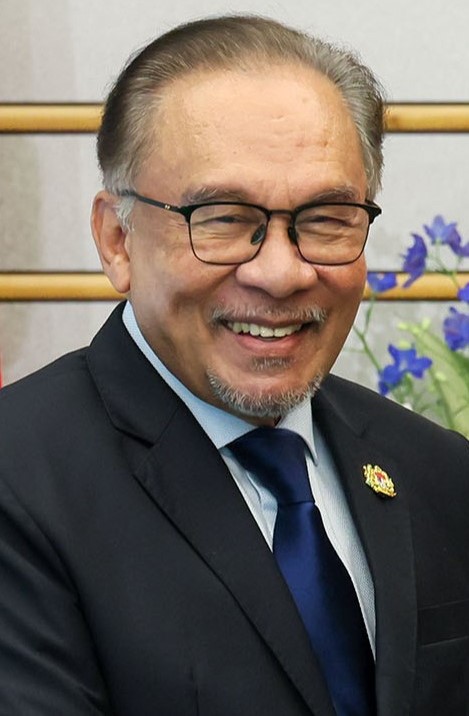
Prime Minister Datuk Seri Anwar Ibrahim has reinforced the significance of television broadcasting anchored in ethical principles, intellectual rigour and moral insight, maintaining that such an approach remains deeply valuable to communities despite the accelerating transformation and mounting pressures affecting the contemporary media industry.
Anwar's endorsement comes as TV AlHijrah commemorates its sixteenth year of service to Malaysian audiences. The station, which operates on a faith-centred editorial philosophy, has maintained a distinct positioning within the crowded Malaysian broadcasting sector by emphasising content that aligns with Islamic values and promotes knowledge-sharing among viewers. The PM's comments suggest government recognition of the channel's role in contributing to Malaysia's media pluralism.
The timing of the PM's remarks reflects broader concerns within Malaysia's political and social leadership about the direction of media consumption. With digital platforms fragmenting traditional television audiences and social media providing alternative—often unregulated—sources of news and information, established broadcasters that maintain clear editorial standards face both competition and validation from policymakers. Anwar's public backing signals that his administration views values-centred media outlets as counterweights to misinformation and sensationalism.
TV AlHijrah's establishment in the mid-2000s represented an attempt to serve Muslim Malaysian audiences seeking programming that reflected their religious perspectives and cultural values. Over sixteen years, the station has built an audience base through a combination of religious content, educational programming, family-oriented entertainment, and news bulletins that filter stories through an Islamic ethical lens. The channel's survival and stability in a sector dominated by commercial imperatives underscores the existence of sustained viewership demand for this category of programming.
The PM's remarks also carry implications for Malaysia's international positioning. As a Muslim-majority nation with constitutional protections for Islam, Malaysia has long sought to present itself as a model of moderate, progressive Islamic democracy. Media outlets like TV AlHijrah feature prominently in narratives about Malaysia's ability to combine religious identity with modern broadcasting standards. Anwar's public endorsement reinforces this image both domestically and to international observers.
However, the relationship between values-based broadcasting and editorial independence warrants scrutiny. While faith-centred content reflects legitimate audience preferences, the intersection of religious messaging and state influence remains a sensitive area in Malaysian media discourse. The PM's public celebration of the channel invites questions about the boundaries between government support and editorial autonomy—a distinction crucial to the credibility of any news operation.
The Malaysian media landscape itself continues experiencing structural change. Younger audiences increasingly consume news through streaming platforms and social media rather than linear television. Traditional free-to-air broadcasters across the region, including those operating values-based models, must navigate declining viewership while maintaining financial viability. TV AlHijrah's persistence suggests either loyal demographic segments or successful adaptation to multi-platform distribution, though precise audience figures remain proprietary.
Anwar's framing of values-based broadcasting as an antidote to rapid change and mounting challenges reflects a worldview shared by various stakeholders across Southeast Asia. Governments, religious organisations, and civil society groups increasingly position faith-centred and ethics-grounded media as stabilising forces during periods of social and technological disruption. This narrative appeals to audiences seeking interpretive frameworks beyond raw information delivery.
The broader context includes Malaysia's regulatory environment for broadcasting. The Malaysian Communications and Multimedia Authority maintains licensing requirements that permit diverse ownership models, including those built around religious or cultural missions. TV AlHijrah operates within this framework, suggesting that values-based broadcasting enjoys institutional recognition as a legitimate category of service. The PM's comments formalise this acceptance at the highest political level.
Looking forward, TV AlHijrah's sixteenth anniversary milestone occurs as Malaysian media policy discussions increasingly centre on digital regulation, misinformation countermeasures, and content standards. The channel's values-based approach positions it within debates about what responsible broadcasting means in an age of algorithmic content distribution. Whether traditional values-grounded models can compete with digital-native competitors for audience attention remains an open question for Malaysian broadcasters across all ideological and religious orientations.
Anwar's endorsement also reflects coalition politics and stakeholder management within Malaysia's government. Various religious and conservative constituencies view values-based media as essential infrastructure for their communities. The PM's public recognition of TV AlHijrah's role serves both substantive and political purposes—validating the station's mission while acknowledging the constituencies it serves.