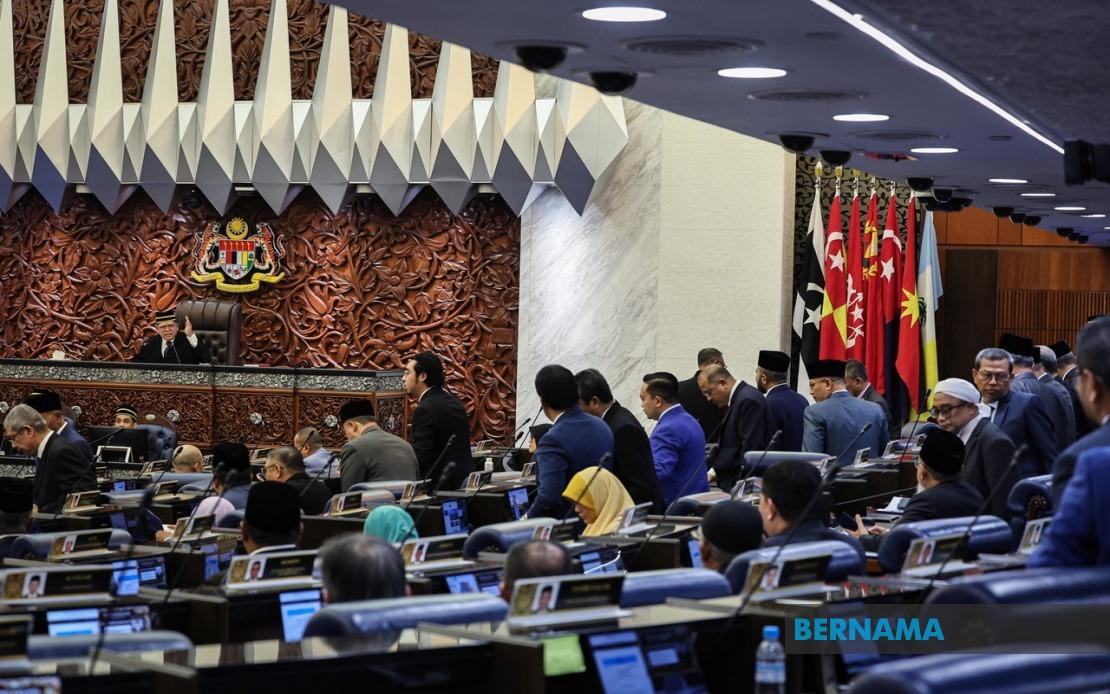
The Prime Minister's non-attendance at yesterday's special parliamentary sitting on the Tabung Haji Royal Commission of Inquiry should not become justification for legislators to abandon their responsibility to scrutinise one of Malaysia's most significant institutions affecting Muslim savings. This was the pointed rebuttal from Tengku Datuk Seri Zafrul Tengku Abdul Aziz, the Senior Political Adviser to the Prime Minister, who took to social media to criticise the decision by several Members of Parliament to leave the Dewan Rakyat chamber whilst discussion of the TH management report was underway.
The controversy surrounding yesterday's parliamentary sitting underscores a deeper tension within Malaysian politics regarding accountability and the treatment of matters touching the interests of Muslim communities. Tengku Zafrul articulated a fundamental principle of parliamentary democracy: that legislative engagement should be decoupled from the physical presence of particular individuals, particularly when the subject matter concerns public assets and the accumulated wealth of ordinary citizens. His intervention suggests frustration with what he characterised as performative protest divorced from substantive engagement with the issues at hand.
Perikatan Nasional lawmakers, including Opposition Leader Datuk Seri Hamzah Zainudin, exited the chamber during the debate on the 211-page RCI report tabled by Minister in the Prime Minister's Department (Religious Affairs) Dr Zulkifli Hasan. The walkout was joined by PN chief whip Datuk Seri Takiyuddin Hassan and PN chairman Datuk Seri Dr Samsuri Mokhtar, signalling a coordinated protest strategy rather than individual decisions. The special sitting provided parliamentarians with the rare opportunity to examine in detail the findings of a comprehensive inquiry into Tabung Haji's management and operations spanning the 2014 to 2020 period, a document that had been withheld from public view until July 29 when the government released it following a period of deliberation.
Tengku Zafrul's rhetorical question—whether the absence of the Prime Minister negates the necessity for MPs to listen, question and debate—cuts to the heart of parliamentary responsibility. In established democracies, the adjournment of parliamentary business due to executive absence would be considered unthinkable; indeed, the presence of senior government figures is often less critical than the institutional imperative to examine policy outcomes and institutional performance. By walking out, opposition lawmakers arguably ceded the parliamentary space entirely to government members, forfeiting an opportunity to place their own interpretations and criticisms into the formal record.
The substance of the TH matter itself renders the debate particularly consequential for Malaysia. Tabung Haji represents one of the largest financial repositories of Muslim savings in the country, holding the accumulated retirement and pilgrimage aspirations of millions of ordinary Malaysians across diverse economic strata. The RCI inquiry touched upon governance failures, financial management lapses, and operational irregularities spanning six years of institutional stewardship. Any parliamentary discussion of such findings should command cross-party engagement, as the stakes extend far beyond partisan advantage to encompass the financial security of vulnerable savers whose contributions represent genuine personal sacrifice.
Tengku Zafrul's further comments emphasised the legitimacy of parliamentary dissent when grounded in factual scrutiny rather than political theatre. He encouraged MPs to leverage parliamentary proceedings as a forum for questioning, debate and principled disagreement with government positions, but with the caveat that such challenges must be substantive and evidence-based rather than demonstrative. The distinction he drew—between refusing to engage with important matters versus disagreeing with how those matters are handled—reflects a concern that Malaysian parliamentary culture sometimes privileges symbolic gestures over genuine policy engagement.
The decision to release the TH RCI report publicly represents a significant transparency initiative, positioning parliament as the appropriate venue for initial detailed examination and debate. By absenting themselves during these proceedings, opposition lawmakers potentially weakened their own capacity to influence how the report's findings translate into future policy and regulatory reform. Parliament's role as a forum where all stakeholders can contest interpretations and propose alternative solutions becomes diminished when substantial blocs of members treat it as a venue for protest rather than deliberation.
For Malaysian savers and the broader Muslim community who depend upon sound governance of Tabung Haji, the irony of the walkout deserves scrutiny. Regardless of broader political positioning or views toward the government in power, the institutional performance of Tabung Haji affects concrete financial interests. Opposition scrutiny channelled through parliamentary debate, buttressed by factual analysis and specific recommendations for reform, would arguably serve these constituencies more effectively than symbolic withdrawals from the chamber. The parliamentary record becomes both a historical document and a blueprint for future remedial action; absence from that process necessarily constrains the opposition's ability to shape eventual outcomes.
The broader pattern of walkouts and boycotts in Malaysian politics warrants consideration within this context. Whilst such tactics may occasionally serve to register profound disagreement with procedural or substantive matters, their routine deployment risks normalising parliamentary abdication. When opposition participation becomes discretionary based on peripheral factors like executive attendance, the institution's legitimacy as a deliberative space deteriorates. Legislatures function most effectively when members treat their participation as an institutional duty transcending partisan advantage or leadership symbolism.
Tengku Zafrul's intervention ultimately defends a conception of parliamentary responsibility that emphasises substantive engagement over performative politics. Whether one agrees with the government's handling of Tabung Haji governance or credits the opposition's broader political narrative, the argument that MP participation should not be conditional upon prime ministerial presence during a matter of significant public importance carries considerable force. The coming weeks will reveal whether opposition lawmakers choose to re-engage substantively with the TH matter through formal amendment proposals, investigative committee participation, or other parliamentary mechanisms, or whether the walkout signals a broader strategic disengagement from this particular policy domain.

