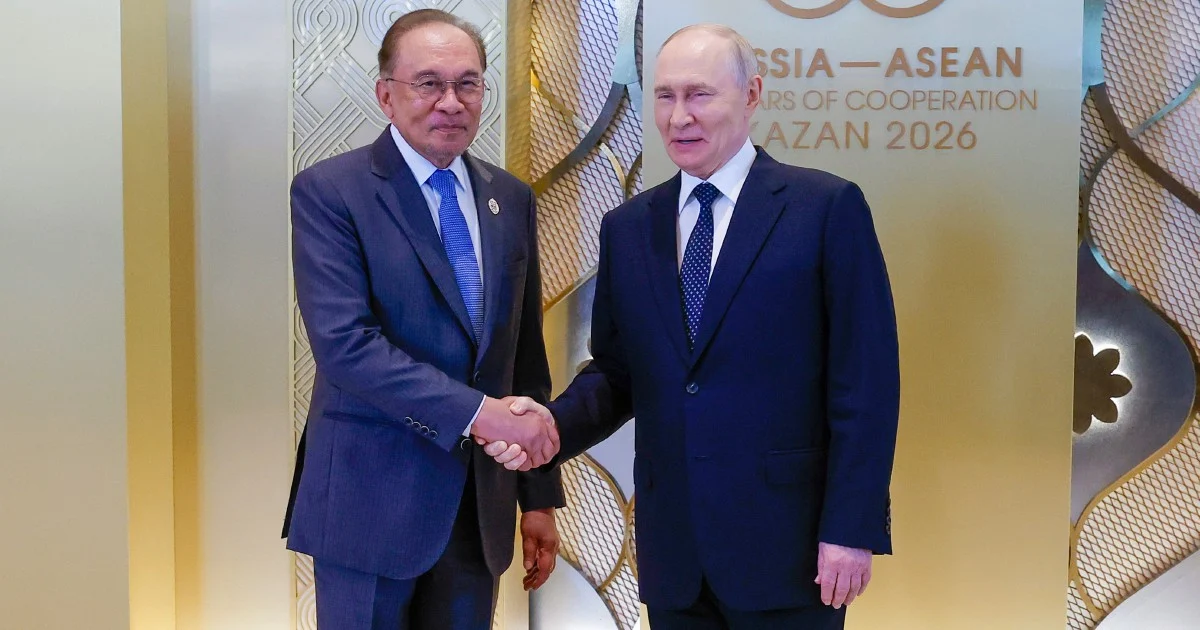
Prime Minister Datuk Seri Anwar Ibrahim's recent official visits to Russia and Turkmenistan represent a strategic pivot in Malaysia's approach to energy security, as the nation seeks to diversify its supply chains and reduce vulnerability to global market volatility. BRICS International Malaysia has welcomed the diplomatic outcomes, emphasizing that the bilateral engagements demonstrate tangible progress toward securing Malaysia's hydrocarbon needs through expanded partnerships with established energy producers in Central Asia and Eastern Europe.
The timing of these visits reflects Malaysia's broader recalibration of its energy foreign policy. As a producer of natural gas and oil, Malaysia has historically maintained a balanced diplomatic posture while managing domestic energy demand and export revenues. However, shifting geopolitical dynamics and the global transition toward cleaner energy have prompted policymakers to strengthen ties with reliable energy partners capable of supplying additional reserves should domestic production decline or regional supply chains face disruption.
Russia, despite international sanctions, remains one of the world's largest hydrocarbon exporters and possesses significant strategic reserves. Malaysia's engagement with Moscow signals a willingness to maintain pragmatic economic relationships independent of Western-led restrictions, a position increasingly adopted by ASEAN members seeking strategic autonomy. For Malaysian policymakers, securing energy cooperation agreements with Russia provides a counterweight to potential over-reliance on Middle Eastern suppliers and creates opportunities for technology transfer in upstream petroleum operations and liquefied natural gas infrastructure.
Turkmenistan complements this energy diversification strategy by offering access to Central Asian gas reserves, which have historically supplied markets across the Caucasus and Europe through existing pipeline infrastructure. By establishing closer ties with Ashgabat, Malaysia positions itself as a potential customer for Turkmen gas exports, either through existing transportation corridors or future regional trade arrangements that might benefit ASEAN as a collective bloc. The Central Asian nation has continuously expanded its production capacity and actively seeks new markets beyond its traditional European and Asian customers.
The strategic value of these partnerships extends beyond commodity supply. Oil and gas cooperation typically encompasses technology sharing, joint ventures in exploration and production, and capacity building for Malaysian energy sector professionals. Such arrangements enable domestic companies like Petronas to access expertise in operating offshore fields and managing complex extraction projects in challenging geological environments. Additionally, expanded trade in energy goods strengthens bilateral relationships across multiple sectors, creating diplomatic goodwill that translates into support on regional and international issues.
From a Southeast Asian perspective, Malaysia's energy diplomacy carries implications for the broader region's energy security. As the world's second-largest liquefied natural gas exporter and a crucial regional energy hub, Malaysia's ability to secure reliable supply chains influences energy availability and pricing across ASEAN. Strengthened connections with suppliers in Russia and Turkmenistan could facilitate regional infrastructure projects, such as pipeline construction or joint processing facilities, that benefit neighbouring countries dependent on energy imports.
The concept of energy security underpinning these diplomatic missions has evolved significantly since the Cold War era. Rather than military-focused deterrence, modern energy security emphasizes supply diversification, price stability, infrastructure resilience, and long-term contractual arrangements that protect both producers and consumers from market shocks. Malaysia's approach through these visits aligns with this contemporary understanding, balancing commercial interests with geopolitical considerations.
BRICS International Malaysia's endorsement of the diplomatic outcomes reflects broader support within Malaysian policy circles for engaging non-Western economic blocs. BRICS, comprising Brazil, Russia, India, China, and South Africa, represents an alternative power structure increasingly relevant to developing nations seeking autonomous foreign policies. Malaysia's participation in BRICS-affiliated forums and its strengthening ties with member states underscore a strategic reorientation toward multipolar global arrangements that challenge traditional Western economic dominance.
The visits also carry symbolic importance for Malaysia's position within ASEAN and the Indo-Pacific region. By demonstrating capacity to negotiate independently with major powers from different geopolitical blocs, Prime Minister Anwar Ibrahim reinforces Malaysia's credibility as a sovereign actor capable of advancing national interests without constraint from regional hegemons or Western pressure. This autonomy proves essential for ASEAN's collective effectiveness, as member states maintain individual agency while pursuing coordinated regional initiatives.
Looking forward, the outcomes of these diplomatic missions will likely translate into concrete agreements on energy supply contracts, joint exploration ventures, and technical cooperation frameworks. Implementing these arrangements requires coordination across multiple Malaysian government agencies, including the Ministry of Energy Transition and Water Transformation, Petronas, and relevant regulators. Successful execution could establish templates for deeper economic integration with Russia and Turkmenistan across sectors beyond hydrocarbons.
The broader context involves Malaysia's energy transition policies and climate commitments, which ostensibly prioritize renewable energy and reduced carbon emissions. However, securing additional conventional energy supplies through these partnerships acknowledges the reality that fossil fuels will continue powering Malaysia's economy for decades, even as the nation gradually increases renewable energy capacity. This pragmatic approach balances immediate economic needs with longer-term sustainability objectives, a strategy many developing nations must navigate as they transition toward cleaner energy systems.
Sustained engagement with energy suppliers in Russia, Turkmenistan, and other non-traditional partners positions Malaysia to weather future global crises affecting energy markets. The COVID-19 pandemic and subsequent disruptions demonstrated how supply chain concentrations create vulnerabilities; Malaysia's diplomatic efforts to expand its supplier network reduce exposure to such shocks. Whether these visits yield significant commercial volumes of energy imports remains to be seen, but the strategic groundwork established during high-level diplomatic engagement typically precedes substantial business activity.

