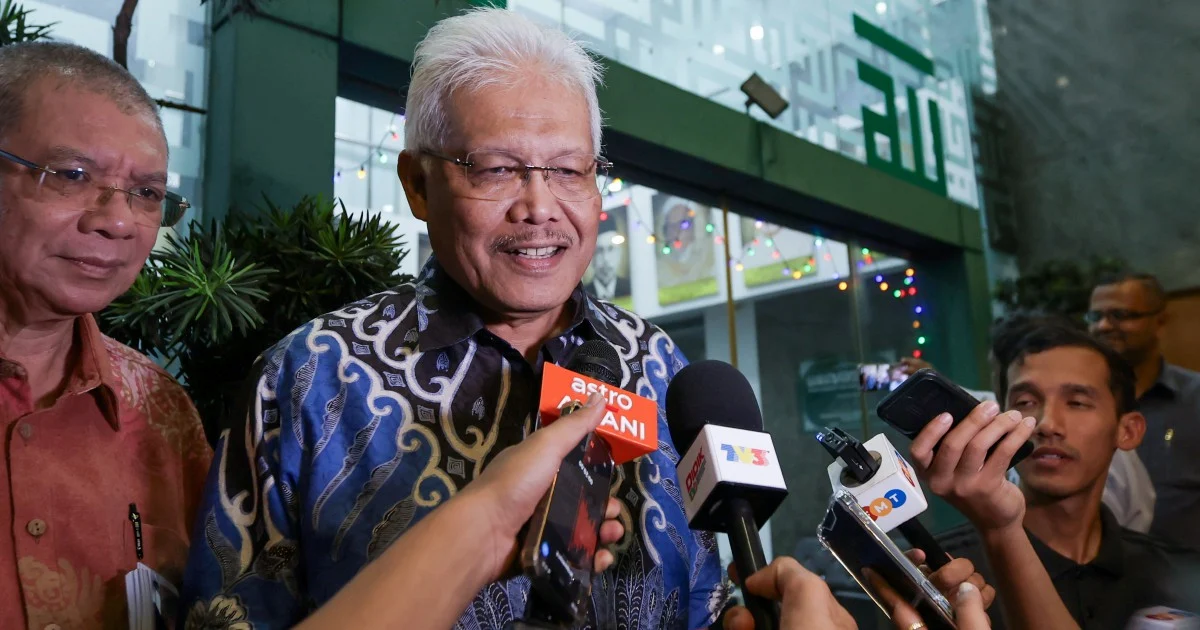
Datuk Seri Takiyuddin Hassan, the chief whip of Perikatan Nasional, has lodged formal notification with the Speaker of the Dewan Rakyat confirming the reappointment of Datuk Seri Hamzah Zainudin to the position of opposition leader. The submission represents a procedural step required under parliamentary convention whenever the opposition leadership undergoes changes or when existing office holders are formally reconfirmed in their roles.
The move signals Perikatan Nasional's strategic positioning in the current parliamentary landscape, where the coalition has consolidated its influence as the largest opposition bloc following the 2023 general election. Hamzah Zainudin's continued leadership of the opposition reflects the coalition's decision to maintain institutional consistency in its parliamentary operations, particularly as Malaysia navigates shifting political dynamics and policy debates in the Dewan Rakyat.
Parliamentary convention requires that opposition leadership appointments be formally documented through the Speaker's office, ensuring transparency and establishing clear lines of responsibility for parliamentary proceedings and opposition coordination. This procedural formality allows the Speaker to maintain accurate records of parliamentary leadership structures and facilitates communication between government and opposition representatives on matters concerning parliamentary governance and legislative scheduling.
Hamzah Zainudin's reappointment comes at a time when Perikatan Nasional has been increasingly vocal on various parliamentary matters, from budget allocations to legislative initiatives. His position grants him certain privileges within parliament, including the right to lead opposition questioning during parliamentary sessions and coordinate parliamentary strategy across the coalition's members. These responsibilities carry weight in shaping legislative debates and holding the government accountable on key policy issues.
The notification process, while administrative in nature, underscores the formal structures underpinning parliamentary democracy in Malaysia. Unlike executive appointments that may vary by political preference, the role of opposition leader is enshrined within parliamentary conventions and recognized across all political parties as essential to the functioning of checks and balances within the legislative chamber. The Speaker's formal acknowledgment of Hamzah's position ensures that his authority to represent the opposition on parliamentary matters is officially recognized.
For Malaysian observers monitoring parliamentary dynamics, the reappointment signals continuity in Perikatan Nasional's leadership structure despite the broader political fluidity characterizing recent Malaysian politics. The coalition has navigated considerable changes since the 2023 election, including shifts in party affiliations and coalition compositions, yet maintains its parliamentary organization through established leadership frameworks. Hamzah's continued tenure suggests the coalition views institutional stability as crucial to its effectiveness as an opposition force.
The broader context involves Malaysia's evolving political configuration, where traditional party alignments have become less predictable and coalition formations increasingly contingent on tactical considerations. In this environment, maintaining clear leadership hierarchies within opposition blocs becomes particularly important for coordinating legislative strategies and presenting unified positions on matters before parliament. Perikatan Nasional's reaffirmation of Hamzah's leadership supports these organizational objectives.
The Speaker's office processes numerous such notifications related to parliamentary administration, ranging from committee appointments to leadership designations. These procedural requirements ensure that parliament maintains accurate information about its membership, leadership structures, and institutional arrangements. For legislative staff and parliamentary officers, such notifications provide the formal foundation for implementing various parliamentary functions and protocols.
Fooking forward, Hamzah Zainudin's reappointment positions him as a central figure in opposition parliamentary activities throughout the current session. His role extends beyond ceremonial functions to substantive parliamentary responsibilities, including leading opposition contributions during parliamentary debates, coordinating questioning of government ministers, and representing opposition interests in parliamentary committees and special sittings. These activities directly influence the tenor and substance of legislative discussions in Malaysia.
For the government, formal recognition of Hamzah's opposition leadership role facilitates parliamentary engagement and dialogue, as there exists a clearly identified opposition representative with whom parliamentary protocols and scheduling matters can be coordinated. This institutional clarity, though sometimes overlooked in political commentary focused on partisan conflict, serves the practical functioning of parliament as an institution dedicated to legislative work and governmental accountability.
The reappointment also carries implications for regional observers of Malaysian politics, as opposition parliamentary leadership reflects the distribution of political forces within the Dewan Rakyat. Perikatan Nasional's choice to continue with Hamzah demonstrates the coalition's confidence in his stewardship and suggests the leadership structure will remain consistent through forthcoming parliamentary business, including anticipated budgetary processes and legislative agendas.

