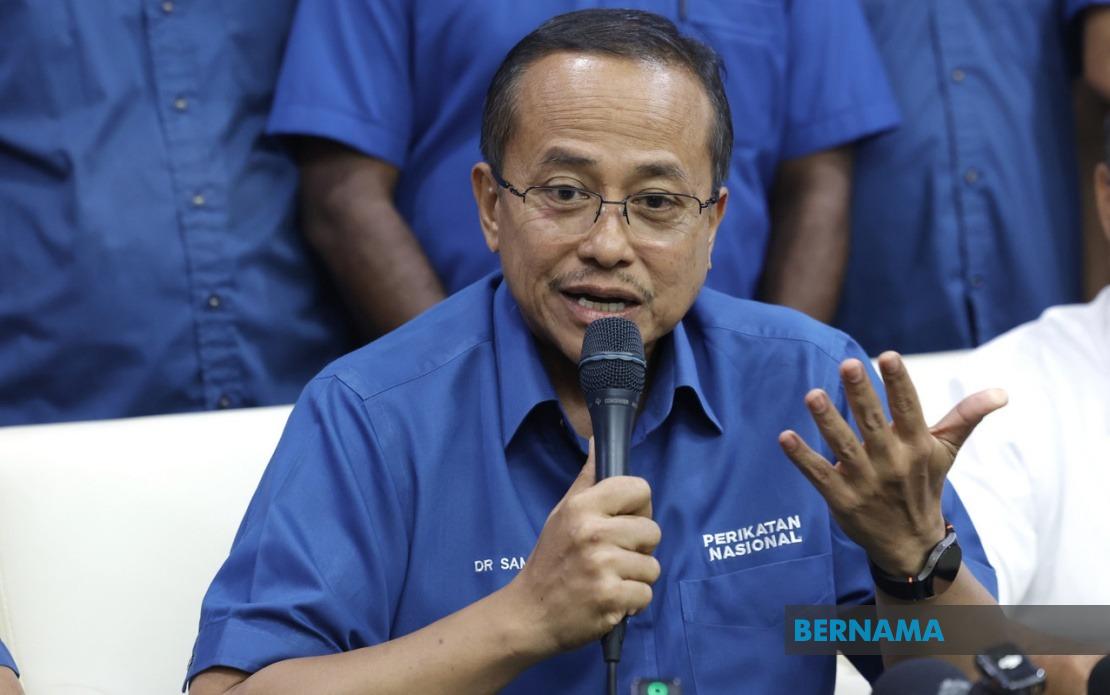
Perikatan Nasional has moved decisively to unify its electoral strategy for the Negeri Sembilan state election, with its Supreme Council formally endorsing seat allocation arrangements across the coalition's member parties and mandating a single coalition logo for all candidates. The decision, announced by PN chairman Datuk Seri Dr Ahmad Samsuri Mokhtar following a special meeting in Seremban on July 16, establishes a coordinated approach that seeks to present a consolidated political front to voters in the state, a departure from the fragmented candidacy approaches that have sometimes undermined coalition effectiveness in previous electoral contests.
The allocation framework involves four distinct political entities within the PN coalition structure—PAS, Gerakan, Wawasan, and MIPP—each receiving designated state constituencies in what represents a carefully negotiated division of electoral opportunities. This multi-party arrangement reflects the complexity of managing coalition mathematics in Malaysian politics, where smaller components must be accommodated meaningfully to maintain unity while larger parties secure the contests where they possess the strongest organisational capacity and voter appeal. The specifics of which party received how many seats remain to be disclosed through formal candidate announcements, but the framework itself signals a commitment to transparent, rules-based allocation rather than ad hoc negotiation.
The commitment to contest exclusively under the PN coalition logo carries strategic significance for how voters will perceive and evaluate the electoral offering. Rather than allowing individual party identities to fragment the coalition's message and visual identity on ballot papers and campaign materials, the unified logo approach emphasises collective responsibility and shared platform commitments. This institutional choice matters because Malaysian voters, particularly in suburban and rural areas, often respond to coalition branding and the perception of unified governance intent. The decision also simplifies campaign messaging by presenting a single identity rather than requiring voters to understand complex intra-coalition relationships.
Dr Ahmad Samsuri's statement emphasised that the electoral participation of PN candidates would centre on championing public welfare, advancing Negeri Sembilan's development priorities, and reinforcing social harmony within the state's diverse population. These articulated objectives reflect standard coalition positioning rhetoric, yet their emphasis in an official statement suggests internal agreement on the campaign's core messaging pillars. Development-focused narratives and communal harmony appeals have proven effective in Negeri Sembilan's recent electoral contests, where swinging voter populations respond to evidence of infrastructure investment and administrative competence rather than ideological positioning alone.
The PN chairman's clarification that all preliminary discussions with allied parties had proceeded under his knowledge and explicit approval addresses an internal governance question that had apparently generated some uncertainty within coalition structures. This statement serves to reassert his authority as PN chairman and to establish that the coalition's formal leadership maintained oversight of negotiations rather than permitting ad hoc arrangements by component parties. Such clarifications matter within coalition politics because they prevent perceptions of uncontrolled fragmentation or component parties operating according to separate strategic logic that contradicts collective decisions.
However, the announcement arrives amid significant coalition friction, as Bersatu's absence from the approved allocation framework has become evident through Bersatu president Tan Sri Muhyiddin Yassin's public declaration that his party was not meaningfully engaged in the seat allocation process. Muhyiddin's assertion that Bersatu was excluded from deliberations on both internal PN seat distributions and broader cooperation frameworks with Barisan Nasional indicates that the coalition unity presented in Dr Ahmad Samsuri's statement masks deeper organisational tensions. The fact that Bersatu, a major PN component with significant parliamentary representation nationally, found itself effectively sidelined from the Negeri Sembilan electoral planning represents a notable fracture within the coalition's decision-making architecture.
Bersatu's consequent decision to contest independently using its party logo rather than accepting PN branding or coordination transforms the electoral contest into a three-way competition involving PN's unified slate, Bersatu's independent candidacy, and the anticipated Barisan Nasional/Pakatan Harapan positioning. This fragmentation of the broader opposition political space—where both PN and Bersatu ostensibly share anti-government positioning relative to the ruling coalition—creates opportunities for whichever incumbent force controls Negeri Sembilan's state government to exploit divisions among potential challengers. The emergence of competing opposition slates diminishes the consolidation effect that unified opposition candidacy typically generates.
For Malaysian political observers, the Negeri Sembilan contest increasingly functions as a test case for coalition coherence within the opposition political landscape. The inability of PN to retain Bersatu within its electoral framework, notwithstanding their shared parliamentary positioning and previous cooperation arrangements, suggests that coalition management remains structurally difficult even among parties that share certain ideological orientations and political constituencies. The fragmentation becomes particularly consequential in state-level contests where the mathematics of coalition seat allocation become more granular and contentious, as each component party seeks to maximise territorial representation within a geographically constrained pool of available constituencies.
The unified PN logo strategy, despite the Bersatu rupture, still represents a significant organisational commitment compared to permitting PAS, Gerakan, Wawasan, and MIPP to contest under separate identities as they have in certain previous contests. This consolidation approach has demonstrated electoral benefits in states where coalition branding achieves recognition among swing voters who lack deep partisan commitment but seek evidence of organised, coherent political alternatives. Negeri Sembilan's electoral demography—comprising urban professionals, rural agricultural constituencies, and diverse ethnic communities—theoretically benefits from messaging clarity that unified branding provides, though the simultaneous emergence of Bersatu as an independent electoral force may undermine that benefit substantially.
Looking forward, the success of PN's coordinated approach in Negeri Sembilan will likely inform coalition strategy for subsequent state elections scheduled across Malaysia in coming years. If the unified logo and coordinated allocation framework produces strong electoral returns despite Bersatu's breakaway candidacy, the coalition may consolidate this approach as standard practice. Conversely, if the contest demonstrates that internal coalition tensions translated into voter confusion or suppressed opposition consolidation, PN leadership may need to reconsider whether forced integration of distinct party identities creates more problems than solutions. The Negeri Sembilan election thus carries implications extending beyond that state's specific political circumstances into the broader trajectory of opposition coalition development in Malaysia's increasingly fragmented political landscape.

