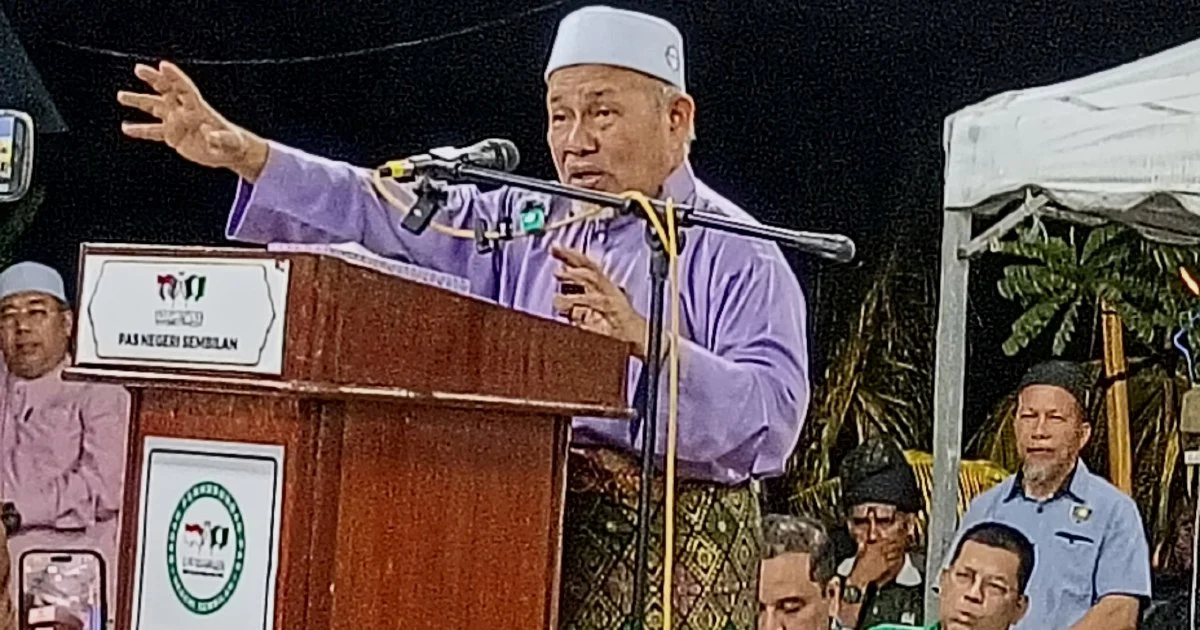
Datuk Seri Tuan Ibrahim Tuan Man, the deputy president of Pas, has firmly rejected characterisations of Perikatan Nasional as belonging exclusively to Bersatu, asserting instead that the political alliance operates as a collective entity owned and governed jointly by all parties within its fold. His remarks emerged amid mounting tensions within the coalition regarding its strategic direction and decision-making authority, spotlighting unresolved questions about power distribution among senior coalition members.
The statement represents a significant pushback against what Tuan Ibrahim perceived as overreach or presumption of control by Bersatu within the PN structure. Rather than accepting a hierarchical arrangement where one party directs the coalition's course, the PAS leader articulated a vision of PN as fundamentally democratic in its internal governance, where each participating organisation enjoys equal standing in determining policy and electoral strategy. This framing carries particular weight given PAS's historical significance within Malaysian politics and its substantial electoral machinery, especially in states such as Kelantan and Terengganu where the Islamic party remains dominant.
The dispute reflects deeper structural ambiguities within Perikatan Nasional itself. Since its formal establishment, PN has functioned as a relatively loose confederation rather than a tightly integrated organisation with clear constitutional hierarchies. This flexibility initially allowed disparate parties—ranging from Pas's grassroots Islamic conservatism to PKR's reform-oriented positioning to smaller regional players—to collaborate without surrendering individual identity. However, this same looseness has created recurring friction whenever coalition partners disagree about resource allocation, candidate selection or parliamentary tactics.
Tuan Ibrahim's intervention assumes particular significance because PAS commands considerable electoral weight within PN. The party's network extends deep into rural Malay-Muslim constituencies across multiple states, a voter base that remains substantially faithful to its campaigns. Should PAS ever conclude that its interests are being compromised within PN or that another party is claiming undue dominance, the coalition faces potential fragmentation with profound consequences for Malaysia's broader political landscape. The coalition's viability in forthcoming elections could hinge partly on whether such internal grievances are resolved satisfactorily.
The ongoing conversation about PN ownership also connects to wider debates about coalition governance across Southeast Asia. Regional alliances frequently encounter similar questions about whether they function as genuine partnerships or become vehicles through which stronger parties dominate weaker ones. Malaysia's experience with such arrangements—whether examining past Barisan Nasional structures or more recent PN configurations—offers instructive lessons about how coalitions either institutionalise equitable power-sharing mechanisms or gradually deteriorate into vehicles for factional conflict.
Bersatu, as the newest major player among these partners, entered PN with significant political capital following its formation by defectors from UMNO. However, despite this initial advantage, the party has faced practical constraints in asserting dominance over more established organisations like PAS, which possess deep institutional roots and loyal voter constituencies spanning decades. The resulting tension between aspirations for leadership and operational limitations has produced the sort of disputes now surfacing through public statements.
For Malaysian voters and civil society observers, these internal coalition dynamics carry concrete implications. Coalition stability influences government formation, policy implementation and the substantive issues that reach parliamentary agendas. When component parties squabble over basic questions about governance structure rather than focusing on policy platforms or constituent service, voter confidence erodes and opposition parties gain openings to advance their own political agendas. This reality has not escaped the attention of other political camps currently positioning themselves for future electoral contests.
The territorial and demographic dimensions of PN's composition further complicate questions about equitable partnership. Different parties exercise preponderant influence in different regions—PAS in the northeast, PKR more competitive in urban areas, Bersatu with scattered but significant support—creating a mosaic where no single organisation can realistically claim to represent the coalition's entirety. This geographic fragmentation necessitates genuine consultation and consensus-building rather than top-down direction if the coalition hopes to maintain cohesion.
Moving forward, Tuan Ibrahim's assertion that PN operates as a collective entity rather than as Bersatu's subsidiary appears designed to establish precedent and prevent any party from consolidating unchecked authority. Whether this position translates into actual institutional reforms—formal governance structures, explicit power-sharing agreements, transparent decision-making processes—remains uncertain. Without such codification, similar disputes will likely resurface whenever coalition members perceive that another party is exceeding its proportionate influence.
The broader political context amplifies the significance of these internal PN conversations. With Malaysian politics remaining volatile and electoral landscapes subject to rapid shifts, maintaining coalition stability has become increasingly valuable to all participating parties. Should PN fragment, the resulting redistribution of political forces could reshape national politics fundamentally. Consequently, statements like Tuan Ibrahim's should be understood not merely as rhetorical positioning but as significant interventions in an ongoing negotiation about the coalition's fundamental character and future trajectory.

