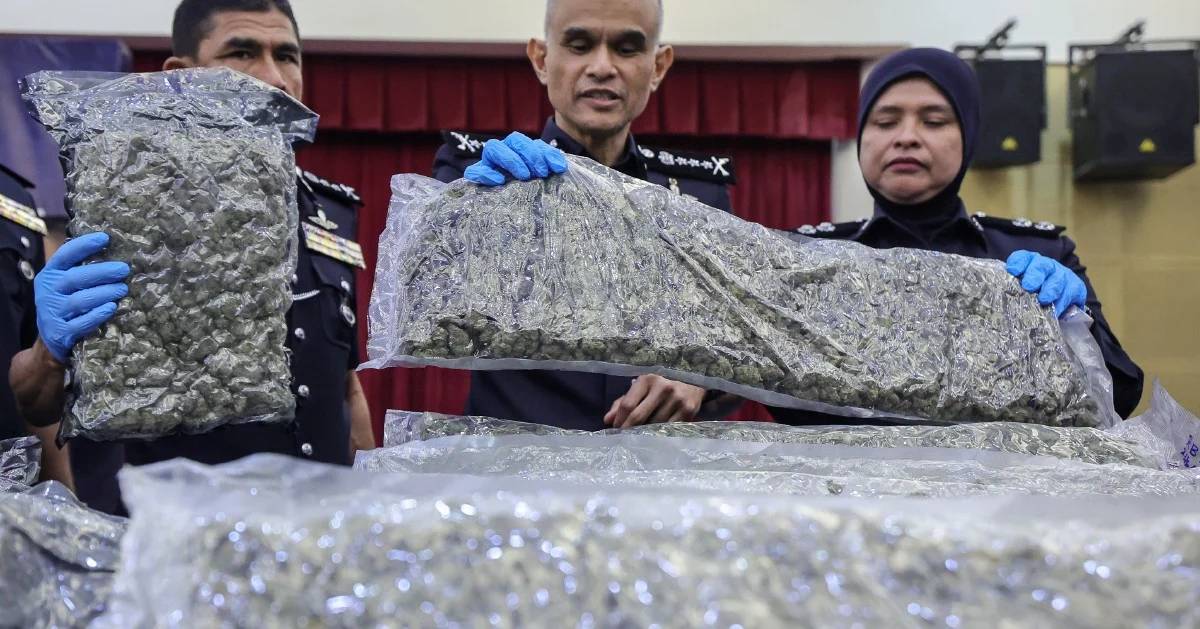
A major drug trafficking operation centred on Malaysia's primary international gateway has been disrupted following a series of coordinated police enforcement actions. Since the start of January, authorities at Kuala Lumpur International Airport have impounded more than half a tonne of cannabis buds—650 kilograms in total—representing one of the most substantial seizures at the facility in recent memory. The scale of confiscation underscores the airport's continuing vulnerability to narcotics smuggling and the persistent challenge posed by organised trafficking networks exploiting air cargo routes and passenger baggage channels.
The investigation, spearheaded by federal police units operating from Shah Alam, has resulted in the arrest of 38 individuals suspected of involvement in the supply chain. The detainees include both Malaysian nationals and foreign operatives, suggesting a transnational dimension to the trafficking apparatus. This composition hints at a sophisticated criminal ecosystem in which foreign syndicates leverage local accomplices for distribution, warehousing, and logistics within Malaysian territory—a pattern increasingly observed across Southeast Asia's drug markets.
Kuala Lumpur International Airport represents a critical chokepoint in regional drug flows, accommodating over 100,000 daily passenger movements and serving as a hub for cargo transshipment across Asia-Pacific routes. The volume and nature of material seized at KLIA reflect both the scale of global cannabis demand and the willingness of trafficking organisations to route contraband through Malaysia's comparatively advanced infrastructure. Cannabis, once treated as a peripheral threat relative to heroin and methamphetamine, has assumed greater prominence in regional law enforcement priorities as global legalisation movements have paradoxically increased black-market supply chains compensating for regulated markets in other jurisdictions.
The detection mechanisms employed by airport authorities typically encompass behavioural profiling, canine units, scanning technologies, and intelligence-driven targeting of shipments flagged by international partner agencies. The consistency of seizures at KLIA since January suggests either heightened enforcement activity or, conversely, an uptick in attempted smuggling volumes. Police statements will likely emphasise the operational successes while glossing over the structural factors enabling throughput—a natural tension in law enforcement communication that complicates public understanding of trafficking's true extent.
The arrest of 38 suspects provides investigators with interrogation opportunities to map supply pathways, identify source countries, and trace distribution networks within Malaysia. Intelligence derived from such operations typically flows to the Malaysian Anti-Corruption Commission, the National Narcotics Bureau, and international counterparts through INTERPOL and bilateral intelligence-sharing frameworks. The involvement of foreign nationals may trigger extradition procedures or deportation protocols, though prosecutorial outcomes depend substantially on evidentiary standards and treaty obligations governing each nationality represented among the detainees.
Cannabis interdiction sits within Malaysia's broader narcotics enforcement strategy, which historically prioritised opiates and synthetic drugs implicated in overdose mortality. However, police resources allocated to cannabis investigations have expanded incrementally as trafficking sophistication increased and market size grew. The 650kg seizure represents material destined for Malaysian consumption, regional distribution, or potential transshipment to markets further afield—each scenario carrying distinct implications for sentencing recommendations under Malaysia's Dangerous Drugs Act 1952, where trafficking charges attract mandatory minimum custodial sentences and potential capital punishment depending on quantity thresholds.
The timing of the announcement—following accumulation of seizures over several months—reflects deliberate police strategy to project enforcement efficacy and deter trafficking organisations through publicised interdiction successes. However, criminological research indicates that publicity campaigns alone produce limited deterrent effect on established supply networks, which typically absorb seizure costs as operational expenses and adjust sourcing patterns accordingly. The genuine utility of enforcement lies in supply disruption, intelligence harvesting, and network dismantling rather than deterrence messaging.
The presence of foreign operatives within the arrested cohort invites scrutiny of visa policies, border screening protocols, and regional cooperation mechanisms. Southeast Asian countries remain concerned about cross-border trafficking syndicates exploiting permissive entry requirements and limited information-sharing between immigration authorities and law enforcement agencies. Malaysia's position within ASEAN creates both vulnerabilities—porous land borders with Thailand and Brunei—and cooperative opportunities through the ASEAN Regional Forum and bilateral mechanisms with neighbouring states.
The investigation's outcomes will inform police resource allocation and border management policies in coming months. If the 38 arrests dismantle a significant trafficking node, the disruption effect may be measurable in subsequent seizure patterns and purity levels in street-level cannabis markets. Conversely, if the operation represents symptomatic enforcement against dispersed supply chains, market functionality will likely resume rapidly. The scale of the 650kg seizure suggests authorities disrupted a distribution hub or interception point rather than eliminating organised trafficking capacity entirely—a distinction material to understanding whether enforcement has achieved strategic or merely tactical success.

