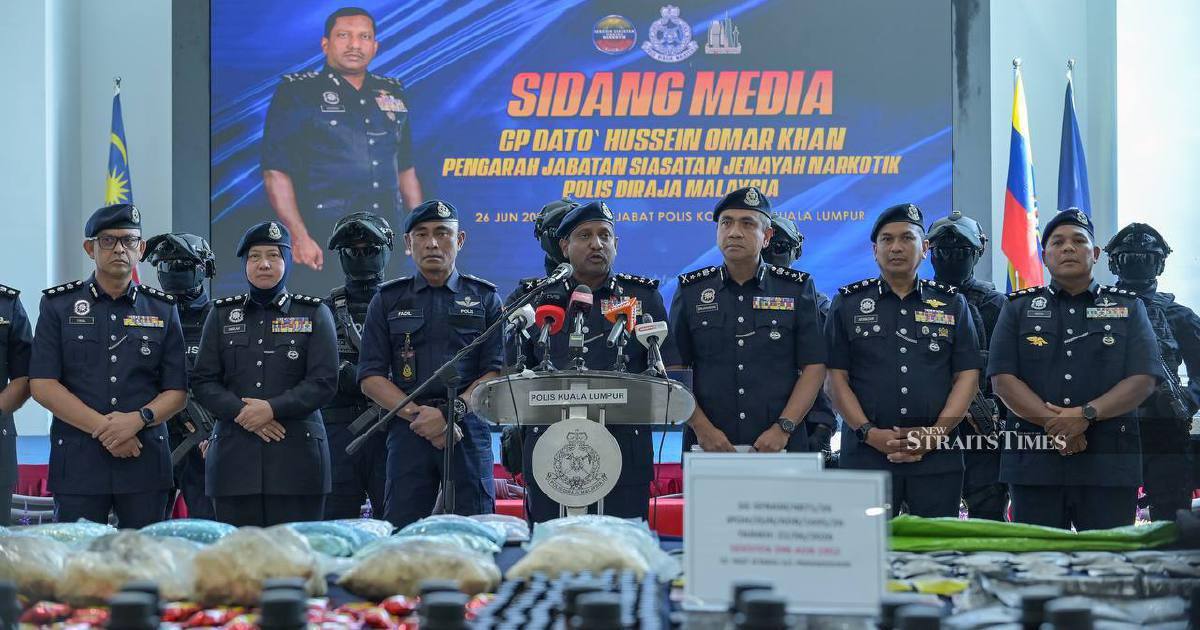
Authorities in Kuala Lumpur have disrupted what appears to be a substantial narcotics distribution network following simultaneous enforcement operations in the Cheras area on June 20. The multi-location raid resulted in the seizure of drugs estimated at RM135.63 million, along with the detention of seven individuals suspected of involvement in the trafficking enterprise. The coordinated action represents a significant blow to drug trafficking operations in the capital region and reflects ongoing police efforts to interdict narcotics before they can reach street-level distribution networks.
The scale of the confiscated material underscores the sophisticated nature of drug operations currently active within Malaysia's urban centres. With an estimated street value exceeding RM135 million, the seized consignment would represent substantial quantities of multiple narcotic substances typically destined for either local consumption or further distribution across Southeast Asian markets. The apparent sophistication of the operation—evidenced by the coordinated use of multiple premises—suggests the network possessed established supply chains and distribution infrastructure capable of servicing significant demand.
Malaysia has long grappled with its position within broader Asian drug trafficking routes. The country's strategic location along traditional smuggling corridors, combined with its major ports and airport facilities, has made it both a transit point and consumption market for narcotic substances originating from the Golden Triangle and other regional production zones. Law enforcement agencies have consistently identified organised drug trafficking as one of the most serious threats to public safety and social stability, with addiction rates and associated crimes placing considerable strain on healthcare and criminal justice systems.
The decision to conduct three separate but coordinated raids suggests police intelligence operations had been tracking the suspected network's activities over an extended period. Modern drug enforcement increasingly relies on sophisticated surveillance, financial tracking, and inter-agency coordination to identify and dismantle trafficking organisations before they can execute major shipments or establish deeper market penetration. The timing and precision of the June 20 operations indicate that investigators had developed sufficient evidence to move forward with enforcement action simultaneously across multiple locations, a tactic designed to prevent suspects from destroying evidence or fleeing the jurisdiction.
The arrest of seven individuals provides investigators with multiple avenues for further enquiries. Suspects detained during major drug operations often possess knowledge of upstream suppliers, downstream distribution networks, and financial arrangements underpinning trafficking operations. This information can prove invaluable for law enforcement agencies seeking to dismantle entire criminal organisations rather than simply addressing individual transactions or street-level dealers. Malaysian police have increasingly focused on disrupting the infrastructure and financial mechanisms enabling large-scale trafficking rather than concentrating solely on user-level enforcement.
Drug trafficking carries severe penalties under Malaysian law. The country maintains some of the region's most stringent anti-narcotics legislation, with trafficking convictions potentially resulting in mandatory minimum sentences of imprisonment, substantial fines, and in the case of extremely large quantities, capital punishment. These legal frameworks reflect the government's determination to maintain deterrence against major trafficking operations, though enforcement effectiveness ultimately depends on successful investigation, prosecution, and conviction of suspected offenders.
The Cheras operation occurs against a backdrop of persistent drug-related challenges facing Malaysia. Urban centres including Kuala Lumpur continue to experience elevated rates of drug-related crimes, including theft, robbery, and violent offences connected to addiction and trafficking activities. Rehabilitation and treatment services remain stretched, with demand for addiction treatment exceeding available capacity in many regions. The interception of major shipments represents one critical component of comprehensive anti-drug strategies, though experts acknowledge that sustained reduction in drug prevalence also requires investment in community prevention, treatment accessibility, and economic opportunities in vulnerable areas.
Regional cooperation has become increasingly important for combating transnational drug trafficking. Malaysia's law enforcement agencies collaborate extensively with counterparts in Thailand, Singapore, Indonesia, and other Southeast Asian nations to share intelligence and coordinate operations against trafficking networks operating across borders. The multilayered nature of modern trafficking organisations—often involving production, processing, financing, and distribution activities spread across multiple jurisdictions—necessitates such international coordination to achieve meaningful enforcement outcomes.
The investigation into the seven arrested individuals will likely occupy law enforcement resources over coming weeks and months as authorities seek to establish charges, secure convictions, and pursue identified associates. The narcotics seized during the operation will be processed through forensic examination to determine precise quantities and composition, information essential for both prosecution and understanding the specific nature of substances entering Malaysian markets. Police statements accompanying such seizures typically emphasise the commitment to disrupting trafficking operations, though the reality remains that drug trafficking continues to generate substantial criminal profits across Southeast Asia, ensuring that criminal organisations maintain incentive to operate despite enforcement risks.

