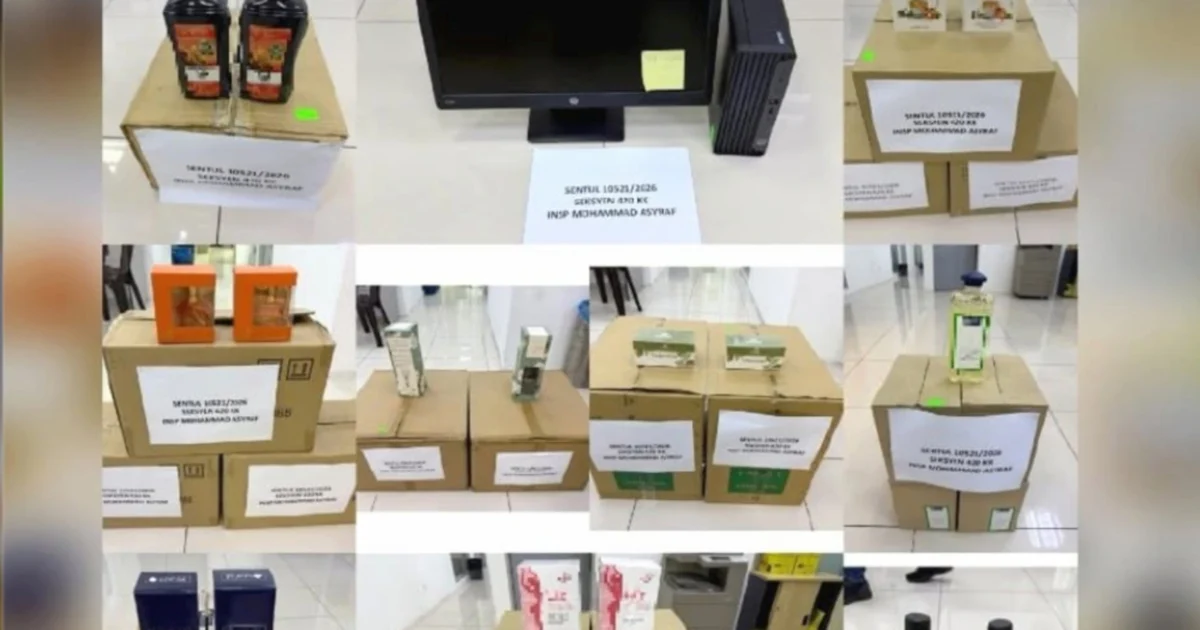
Police have successfully dismantled a fraudulent investment scheme that marketed perfume as an investment vehicle, resulting in six arrests during a raid at a commercial premises in KL Eco City on Wednesday. The operation represents a significant escalation in law enforcement efforts against sophisticated financial scams that have increasingly plagued Malaysia's urban centres, preying on individuals seeking alternative income sources and investment opportunities.
The syndicate operated from a premises located within KL Eco City, a mixed-use commercial and residential development in Kuala Lumpur's growth corridor. Authorities conducted the raid as part of a coordinated investigation that had been tracking the group's operations for a period of time. The decision to move against the suspects came after gathering sufficient evidence of fraudulent activity, signalling that the police commercial crime division had completed its preliminary investigation and secured the necessary warrants.
Investment scams centred on tangible commodities like perfume have become increasingly prevalent across Southeast Asia. These schemes typically operate by recruiting investors who purchase inventory at inflated prices, with promises of guaranteed returns or buyback programmes. The victims are then pressured to recruit additional investors in a pyramid-like structure, with earlier participants enriched at the expense of those who join later. By the time such operations collapse, newcomers often lose their entire capital investment.
The perfume investment model offers scammers several operational advantages. The product is lightweight, easily transported, and can be stored with minimal regulatory oversight, unlike securities or cryptocurrency schemes that trigger stricter monitoring. The fraudsters leverage aspirational marketing—positioning premium perfume as both a luxury good and a legitimate investment asset—to attract middle-class Malaysians who might otherwise be sceptical of obvious financial schemes.
KL Eco City's prominence as an arrest location underscores how organised fraudsters strategically establish front offices in legitimate commercial hubs. By situating themselves within high-profile developments alongside legitimate businesses, they gain credibility and avoid arousing immediate suspicion from landlords or regulatory bodies. The professional appearance of their office environment enables scammers to conduct face-to-face recruitment sessions, collect funds, and maintain the veneer of legitimacy required to sustain investor confidence.
The six individuals arrested face investigations under relevant provisions of Malaysia's criminal law concerning fraud and financial deception. Police will likely examine financial records, communication logs, and victim statements to establish the scale of the operation and quantify losses. Preliminary investigations typically focus on identifying the hierarchy within the criminal group—distinguishing between masterminds, recruiters, and lower-level operatives—to understand how responsibilities were distributed and how proceeds were laundered.
Victims of such schemes often remain silent for extended periods, embarrassed by their losses or unaware that they have legal recourse. This reluctance to report creates a blind spot in law enforcement statistics, meaning the actual scope of perfume investment fraud significantly exceeds documented cases. The investigation leading to this raid likely involved either a victim coming forward or suspicious activity reports from financial institutions noticing unusual transaction patterns.
The timing of this operation reflects broader police initiatives to crack down on investment fraud across Malaysia. The Commercial Crime Investigation Department has expanded resources dedicated to online and offline schemes, recognising that such operations cause considerable economic damage and erode public confidence in legitimate investment channels. Each successful prosecution serves a dual purpose: incapacitating specific criminal networks while sending deterrent signals to others contemplating similar ventures.
Investors in Malaysia should exercise heightened caution when encountering perfume or commodity-based investment opportunities, particularly those promising guaranteed returns or requiring recruitment of additional participants. Legitimate investment products are regulated by the Securities Commission or Bank Negara Malaysia and come with clear documentation and regulatory oversight. Unsolicited investment opportunities, especially those delivered through social networks or personal recommendations from recently acquainted contacts, warrant particular scrutiny.
The perfume scam represents a variant within a broader ecosystem of investment fraud affecting Malaysia and Southeast Asia. Other prevalent schemes involve jewellery, skincare products, agricultural commodities, and cryptocurrency, all employing similar mechanics of recruitment-based wealth distribution. Law enforcement agencies across the region have recognised this trend and are increasingly sharing intelligence and coordinating cross-border operations to dismantle transnational fraud syndicates.
Members of the public who suspect involvement in investment fraud schemes should lodge reports with the Royal Malaysia Police's Commercial Crime Investigation Department or the Malaysian Anti-Corruption Commission. Evidence preservation—including payment receipts, contracts, communications with recruiters, and documentation of promised returns—strengthens investigation efforts and increases the likelihood of successful prosecution. Early reporting also prevents further recruitment and financial losses within victim networks.
The six arrests and premise closure represent important operational success, yet sustained progress against investment fraud requires continued vigilance from both law enforcement and the public. As scammers adapt their tactics and shift to new product categories or platforms, authorities must maintain investigative pressure while educating consumers about warning signs and legitimate investment verification methods.

