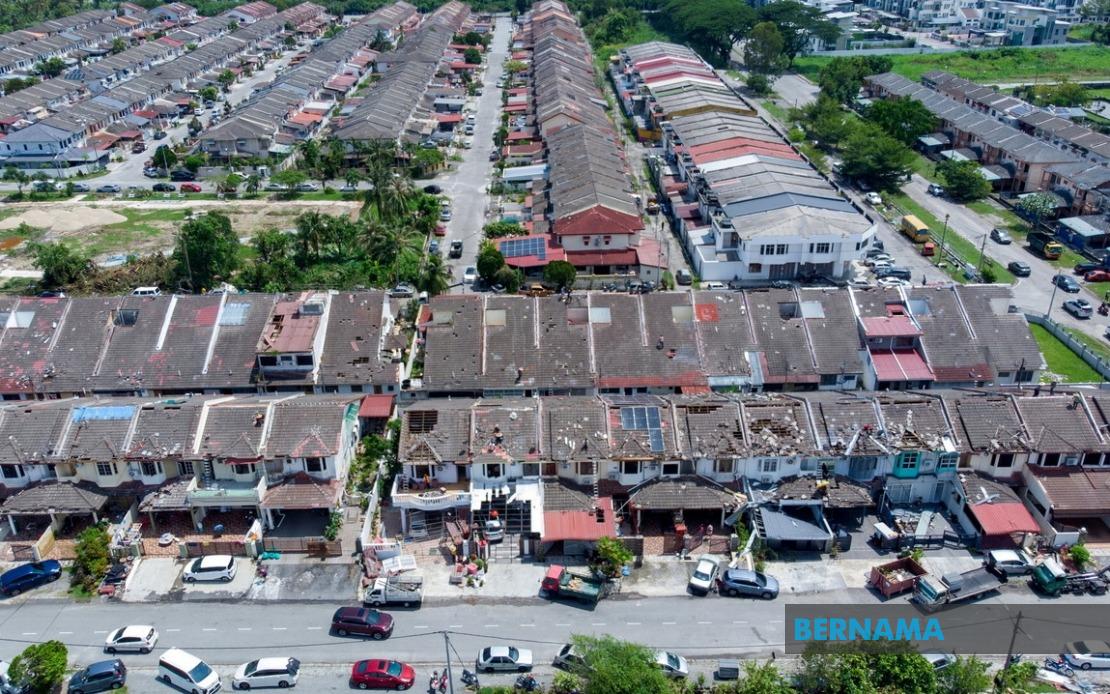
Authorities in Ipoh have established security perimeters around five separate zones in Bercham following a devastating storm that struck the neighbourhood on Friday, leaving residents to navigate new restrictions as they assess damage and begin recovery efforts. The Ipoh district police chief ACP Muhammad Najib Hamzah announced the cordons during a press briefing at Bercham police station, emphasizing that the measures aim to deter criminal activity in areas left vulnerable by the disaster.
The storm's impact has been substantial and geographically dispersed across the township. Multiple residential communities have been affected, including Anjung Bercham Utara, Taman Mujur, Kampung Bercham, Kampung Tersusun Tasek, Taman Pusat Bercham, and Taman Indah Sakti. According to M. Kulasegaran, Ipoh Barat Member of Parliament and Deputy Minister in the Prime Minister's Department (Law and Institutional Reform), more than 200 houses sustained damage in the disaster. Preliminary investigations suggest the phenomenon responsible was a landspout, an unusual weather event that has proven rare enough to warrant special investigation and documentation by authorities.
While the police have established restricted zones, they are attempting to balance security concerns with the practical needs of residents undertaking recovery work. ACP Muhammad Najib Hamzah explained that some flexibility exists for homeowners who wish to enter or exit the affected areas, particularly those conducting cleanup operations at their properties. However, this accommodation comes with increased scrutiny during night hours, when verification procedures have been tightened considerably. The approach reflects police concerns that the cover of darkness and legitimate cleanup activities could provide opportunities for criminals to pose as residents engaged in salvage work.
The absence of electrical power in several affected zones, notably Anjung Bercham, complicates the cleanup and recovery process substantially. Residents requiring nighttime access to their properties for cleaning or salvaging belongings will find themselves subject to police verification checks designed to confirm their ownership and legitimate access. This heightened security posture during evening hours represents a deliberate enforcement strategy, with officers stationed to monitor movements and prevent the exploitation of disaster conditions for criminal gain.
As of 8 am on the day of the police briefing, authorities had received 492 storm-related reports submitted through Op Bencana, the government's disaster operations framework. ACP Muhammad Najib Hamzah clarified that no deadline exists for victims wishing to lodge formal reports of damage or losses, ensuring that affected residents can document incidents at their own pace as they determine the full extent of their losses. This flexibility in reporting timelines acknowledges that many homeowners may still be assessing damage or dealing with immediate survival and recovery needs.
The total financial losses sustained across the disaster area remain unquantified at present. Authorities have not yet released official damage assessments or cost estimates, suggesting that systematic surveying of affected properties is still underway. The diversity of affected neighbourhoods and the apparent random distribution of storm damage across multiple residential zones indicate that a comprehensive accounting process may require considerable time and coordination between various agencies.
The police response reflects broader disaster management principles increasingly adopted across Southeast Asia, where criminal opportunism during natural disasters has emerged as a documented concern. Indonesia, Thailand, and the Philippines have all experienced significant property crimes in the aftermath of typhoons and floods, prompting security forces to implement similar cordon systems. Malaysia's approach in Bercham demonstrates how law enforcement is adapting protocols to address vulnerabilities created when communities are preoccupied with immediate survival and recovery rather than property security.
For residents of the affected Bercham neighbourhoods, the cordons and movement restrictions represent both protection and inconvenience. While the police presence may deter would-be thieves and burglars exploiting the chaos, the checkpoint procedures and verification requirements also consume time during a period when every available hour is precious for damage assessment and initial repairs. The balance between these competing concerns will likely test community relations and the police's ability to calibrate enforcement intensity appropriately.
The storm's classification as a landspout phenomenon also holds broader implications for disaster preparedness in the region. Landspouts are poorly understood and difficult to predict with existing meteorological models, suggesting that weather services across Southeast Asia may need to enhance monitoring and warning systems. The incident in Bercham could prompt reviews of building codes, early warning protocols, and emergency response frameworks across Malaysia, particularly in Perak state where previous severe weather events have prompted similar reckonings.
From a regional perspective, the incident underscores the vulnerability of rapidly urbanised areas in Malaysia and throughout Southeast Asia to extreme weather events that conventional infrastructure and building standards may not adequately address. Taman Mujur, Taman Pusat Bercham, and similar residential developments represent the type of planned communities common across the region, yet their resilience to unusual meteorological phenomena remains largely untested. The Bercham experience may influence how future development approvals are considered and what additional safeguards authorities might mandate for populated areas.
The ongoing police operations in Bercham will require sustained coordination between law enforcement, disaster management agencies, and local government to ensure that security measures do not impede essential recovery work. As residents continue cleanup operations and file damage reports over the coming weeks, the cordoned zones will gradually reopen, though the security lessons learned may inform how authorities respond to future disasters across Ipoh and beyond.

