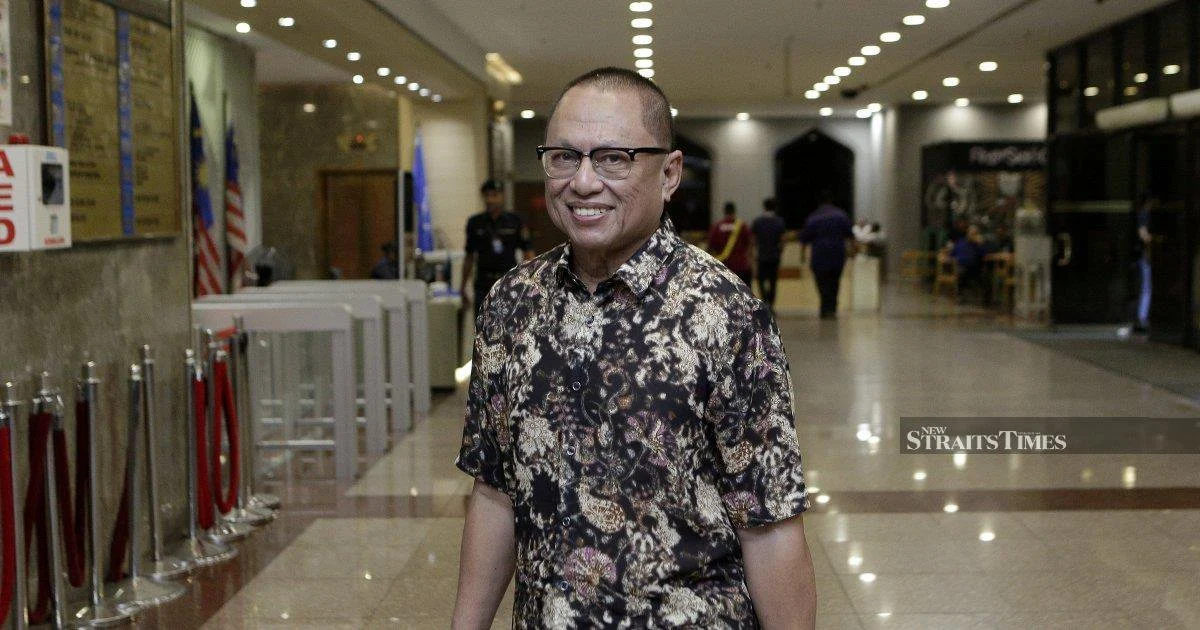
Police in Johor Baru have commenced a formal investigation into alleged remarks made on social media by former Umno veteran Datuk Dr Mohd Puad Zarkashi, marking a significant escalation in a controversy that has triggered widespread public concern across Malaysia. The decision to launch the probe came after authorities received a substantial wave of complaints, with 153 separate police reports filed nationally over a single day, suggesting the matter has struck a chord with citizens from multiple regions and demographic groups.
The scale of the public response indicates that Puad Zarkashi's comments have provoked considerable reaction within Malaysian society. The sheer number of reports filed in such a compressed timeframe suggests coordinated or spontaneous grassroots concern, reflecting growing sensitivity around statements made by public figures on digital platforms. Such high report volumes are relatively uncommon and typically signal either organised campaigns or issues that have resonated deeply with ordinary Malaysians who feel compelled to take formal action.
Puad Zarkashi, who held significant positions within Umno during his career, has maintained an active presence on social media where he regularly comments on political and social matters. His transition to digital advocacy reflects a broader trend among senior politicians and former leaders across Southeast Asia, who have increasingly turned to platforms like Facebook, Twitter, and Instagram to bypass traditional media filters and address supporters and critics directly. However, this directness can sometimes result in statements that authorities or the public perceive as crossing lines around acceptable discourse.
The "3R" nomenclature referenced in reports remains somewhat unclear without additional context, though such terminology often relates to specific political messaging or policy frameworks. In Malaysian political discourse, simplified terminology frequently becomes shorthand for more complex positions, allowing rapid communication across social media but sometimes creating ambiguity about precise meanings. Understanding what specifically triggered concern would require clarification from either the authorities or the individuals who filed complaints.
The geographic spread of complaints across Malaysia rather than concentration in a single state suggests the comments were either widely circulated or touched on issues with genuinely national resonance. Social media's algorithmic nature means controversial content can rapidly spread beyond its original intended audience, reaching diverse communities and generating reactions that an original poster might not have anticipated. This phenomenon has become increasingly important for law enforcement agencies in Malaysia to monitor, as online statements can have real-world implications for public order and social cohesion.
Malaysia's legal framework provides mechanisms for authorities to investigate statements deemed potentially offensive or problematic, including provisions under the Penal Code and the Communications and Multimedia Act. Police investigations at this scale typically involve preliminary inquiries to determine whether specific laws have been breached, followed by potential escalation if authorities conclude that charges are warranted. The process, however, remains subject to scrutiny regarding proportionality and consistency in application across different public figures and political affiliations.
For regional observers and analysts monitoring Malaysian politics, the incident illustrates ongoing tensions between free expression on digital platforms and government regulation of speech. Southeast Asia has seen increasing conflicts over this boundary, with different nations drawing lines at different points. Malaysia's approach reflects concerns about social harmony, religious sensitivities, and political stability, though critics argue that enforcement sometimes appears selective based on political considerations rather than uniform principle.
Puad Zarkashi's status as a former Umno figure adds political complexity to the situation. Umno remains one of Malaysia's dominant political forces, and actions targeting prominent party figures or veterans inevitably attract attention from party supporters and critics alike. The former ruling party and its allies may view investigations into opposition or former members with suspicion, interpreting them through a political lens rather than purely as law enforcement matters. This dynamic can inflame rather than resolve tensions when public figures from major parties become subjects of official scrutiny.
The investigation's progression will likely depend on authorities determining whether specific statements violated existing legislation. Investigators will need to review the exact language used, assess context and intent, and evaluate whether any statements constitute sedition, incitement, contempt of court, or violations of other relevant statutes. The substantial number of complaints may actually complicate rather than simplify this analysis, as they don't necessarily establish legal violations—they primarily demonstrate public concern warranting official examination.
From a Southeast Asian perspective, this incident reflects broader challenges facing the region as it grapples with balancing digital freedoms against social stability concerns. Thailand, the Philippines, Vietnam, and other neighbours have faced similar dilemmas, with varying approaches ranging from heavy-handed content removal to more permissive policies. Malaysia's response to this particular case may offer insights into how the country intends to handle politically sensitive social media discourse moving forward, particularly as election cycles approach and political rhetoric intensifies.
The investigation's outcome will carry implications beyond the immediate case. It may signal to other public figures, particularly those with substantial followings, that certain types of social media commentary attract official attention. This regulatory message can function as a form of soft censorship, encouraging self-restraint regardless of whether statements are actually illegal. Alternatively, authorities may determine that the remarks, while provocative, do not constitute legal violations, potentially signalling broader tolerance for political commentary.
As the investigation unfolds, attention will focus on whether authorities investigate with transparency and consistency, whether Puad Zarkashi receives opportunity to respond to specific allegations, and whether the process respects fundamental rights while protecting genuine public interests. The outcome will contribute to ongoing debates within Malaysia about the appropriate boundaries for political speech in the digital age, debates that resonate across Southeast Asia as societies navigate the intersection of technology, politics, and law.

