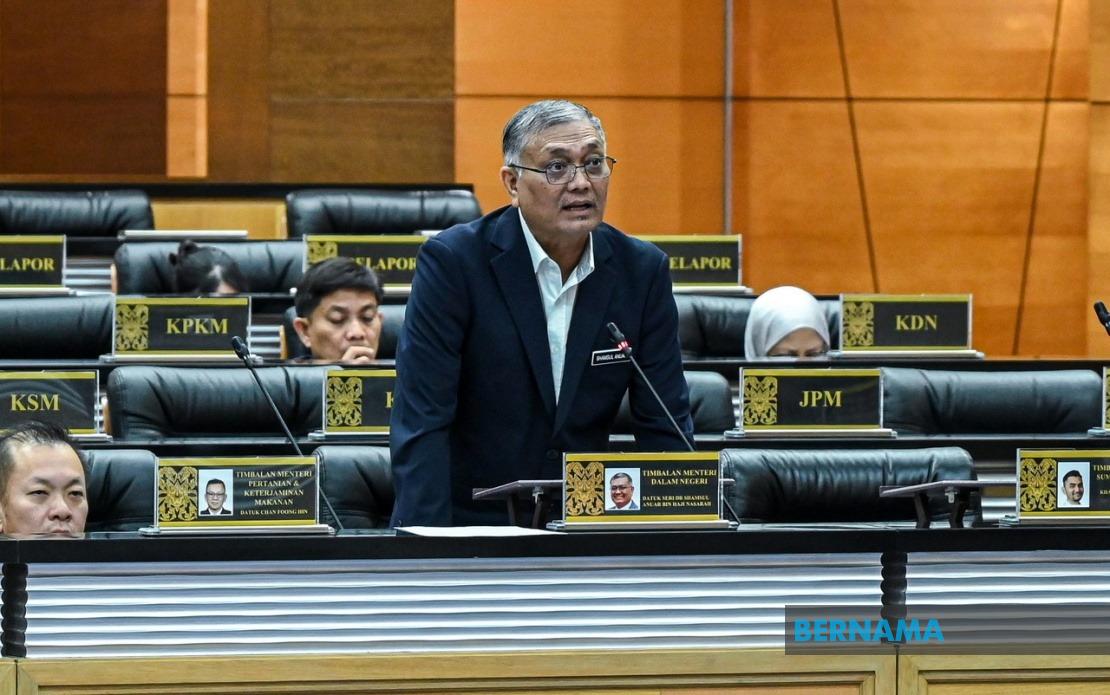
Deputy Home Minister Datuk Seri Dr Shamsul Anuar Nasarah has made clear assurances to Parliament that the Royal Malaysian Police will not shield any individual from investigation, regardless of their political status or former position. Speaking during proceedings at the Dewan Rakyat on July 15, he addressed concerns about potential bias in several high-profile cases currently under examination, emphasising that the force maintains professional standards and operates with transparency across all investigations.
The statement comes as the police continue their inquiry into an intimate video recording that circulated widely in 2019 and was connected to a former Cabinet minister. Investigators are actively working to locate the original recording along with all devices and equipment involved in its creation and distribution. This particular case remains sensitive given the public prominence of the individual implicated and the nature of the material involved, making the police's assurance of impartial handling particularly noteworthy.
The investigation draws on multiple legislative frameworks to ensure comprehensive coverage of potential offences. Authorities are examining the matter under Section 292 of the Penal Code, which addresses obscene materials; Section 377B, concerning consensual intimate activity; and Section 504, dealing with intentional insults. Additionally, investigators are applying Section 233 of the Communications and Multimedia Act 1998, which governs offensive content distributed through electronic networks. This multi-layered approach reflects the complexity of pursuing cases that span both physical and digital spheres.
The Deputy Home Minister's comments were prompted by a parliamentary query from Datuk Wan Saifulruddin Wan Jan, representing the Perikatan Nasional coalition from Tasek Gelugor. The question specifically sought updates on the progress of several high-profile investigations, indicating ongoing parliamentary interest in how the authorities are managing these sensitive matters. Such queries reflect the broader public concern about whether prominent figures receive differential treatment during investigations, a persistent question in Malaysian politics.
Shamsul Anuar emphasised that the police force's commitment to conducting investigations professionally, transparently, and fairly operates entirely independently of whether suspects hold political positions or belong to particular political organisations. This declaration carries significance in a political environment where questions about institutional independence and political interference have periodically surfaced, particularly when investigations touch figures of national prominence or controversial circumstances.
Beyond the 2019 video case, the Deputy Home Minister addressed another high-profile matter involving the son-in-law of former Prime Minister Tan Sri Muhyiddin Yassin. He clarified that this investigation falls under the purview of the Malaysian Anti-Corruption Commission rather than the police, and that the MACC has already issued an arrest warrant in connection with the case. His reluctance to elaborate further reflects the appropriate boundaries that government ministers typically observe regarding active investigations managed by other agencies.
The transfer of this particular case to the MACC indicates that authorities suspect potential breaches of anti-corruption legislation, placing it outside standard police investigative scope. This institutional separation serves as a safeguard, ensuring that enquiries into potential corruption are handled by the dedicated agency responsible for such matters rather than the general police force. The issuance of an arrest warrant demonstrates that the MACC has gathered sufficient preliminary evidence to justify the measure.
On a broader front, the Deputy Home Minister outlined Malaysia's framework for international legal cooperation, particularly regarding extradition matters. These processes operate under the Extradition Act 1992 and are governed by bilateral treaties that Malaysia has negotiated with individual nations. The current arrangement covers formal agreements with eleven countries, positioning Malaysia within an established network of jurisdictions committed to mutual legal assistance.
Additionally, Malaysia is a signatory to the ASEAN Extradition Treaty, which facilitates cooperation among Southeast Asian nations in returning fugitives and suspects to their home countries for prosecution. This regional framework proves particularly valuable given Malaysia's geographic position and the cross-border nature of contemporary crime. The government has signalled its willingness to expand this treaty network further, indicating openness to negotiating additional extradition agreements with foreign nations to enhance Malaysia's capacity for international law enforcement cooperation.
These developments underscore the ongoing tension between Malaysia's need to demonstrate that its institutions can investigate powerful figures impartially and the persistent perception among some quarters that political considerations influence investigative priorities. The Deputy Home Minister's explicit assurances on this point reflect an awareness that public confidence in the police force's independence remains crucial for institutional credibility. Malaysian readers, already familiar with the 2019 incident and its political ramifications, will view these statements through the lens of whether previous investigations have genuinely operated free from political interference.
For the broader Southeast Asian context, Malaysia's approach to these high-profile cases carries implications for the region's reputation regarding rule of law and institutional independence. International observers frequently assess regional democracies partly on their capacity to investigate prominent political figures without apparent bias. How Malaysian authorities ultimately conclude these investigations will thus carry significance beyond domestic political considerations.
The interconnection between multiple cases, spanning from intimate recordings to corruption allegations to extradition procedures, illustrates the complexity of managing high-stakes investigations in an environment where political sensitivities abound. The Deputy Home Minister's parliamentary appearance attempts to provide reassurance that mechanisms exist to ensure fair treatment, though only the outcomes of these investigations will ultimately determine whether public confidence has been justified.

