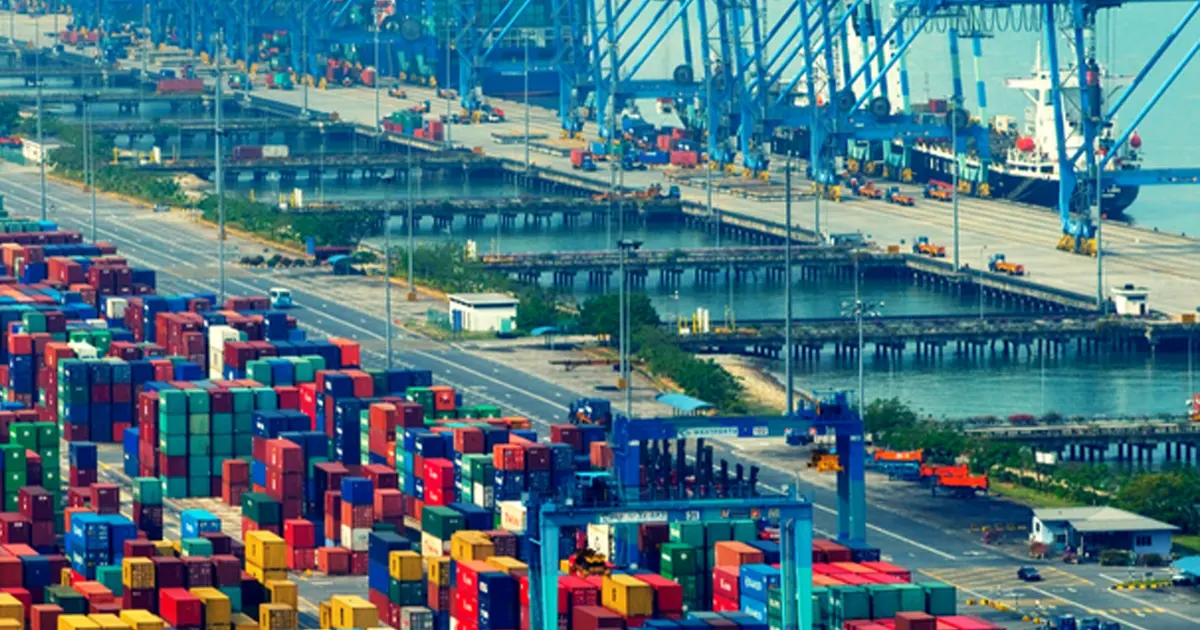
Malaysia's struggling Port Klang Free Zone is showing tangible signs of recovery, having posted RM108 million in revenue as its comprehensive reactivation drive approaches completion at the 86 per cent mark. Transport Minister Loke Siew Fook highlighted the achievement as evidence that eighteen months of focused restructuring and operational reforms have begun delivering measurable results for the strategically important facility.
The Port Klang Free Zone, which has endured years of underutilisation and financial strain stemming from legacy issues, represents a critical component of Malaysia's logistics infrastructure and gateway to international trade. Its performance directly influences the competitiveness of Malaysian exporters and the efficiency of the nation's supply chains serving Southeast Asian markets. The upward trajectory in both revenue generation and operational progress suggests that policy interventions have gained traction, though observers caution that sustained momentum will determine whether the facility can fully reclaim its position as a premier trade hub.
The reactivation initiative encompasses multiple dimensions: physical infrastructure upgrades, technology modernisation, operational efficiency improvements, and strategic marketing to attract new tenants and service providers. Reaching 86 per cent completion indicates that most planned renovations and system overhauls are either concluded or in final phases, positioning the facility to expand capacity and attract higher-value cargo operations. This progress matters considerably for Malaysia's broader competitiveness in regional trade, as logistics costs and reliability significantly influence corporate decisions about establishing regional headquarters and distribution networks.
The RM108 million revenue figure, while modest compared to pre-crisis performance benchmarks, demonstrates that operational units within the zone continue generating income despite ongoing rehabilitation work. This indicates healthy underlying demand and suggests that core users recognise the facility's strategic location adjacent to Port Klang, Southeast Asia's busiest container terminal. The revenue base provides financial resources to fund remaining reactivation phases and operational improvements that stakeholders identify as necessary for long-term sustainability.
Minister Loke's framing of the results as "steady, encouraging growth" reflects a carefully calibrated narrative positioning the facility's recovery as gradual but fundamentally sound. This messaging aims to restore confidence among potential investors, existing tenants, and cargo owners who have experienced volatility and operational disruptions in recent years. For Malaysia's business community, particularly exporters and logistics operators, renewed viability of the Port Klang Free Zone translates to improved regional competitiveness and reduced reliance on alternative facilities in competing jurisdictions.
The timing of this progress update holds significance amid broader regional competition for trade and logistics supremacy. Thailand, Singapore, and Indonesia have invested substantially in their respective free zones and port infrastructure, creating competitive pressure on Malaysian facilities to demonstrate world-class operations and cost efficiency. The Port Klang Free Zone's recovery therefore carries implications beyond individual facility performance, touching on Malaysia's positioning within regional supply chain networks and its ability to retain and attract high-value logistics operations.
Looking forward, the critical phase involves maintaining momentum through the final 14 per cent of the reactivation programme while simultaneously building operational excellence and tenant satisfaction. Stakeholders will monitor key performance indicators including tenant occupancy rates, cargo volumes, service quality benchmarks, and financial sustainability over the next twelve to twenty-four months. These metrics will indicate whether the facility can sustain current growth trajectories and transition from recovery mode to genuine competitive resurgence.
The achievement also reflects evolving approaches to special economic zone management in Malaysia, where traditional free trade zones are increasingly expected to deliver integrated services combining customs advantages with logistics expertise, technology platforms, and value-added services. The Port Klang Free Zone's reactivation strategy appears aligned with this shifting paradigm, moving beyond basic warehouse and storage functions toward sophisticated supply chain solutions that justify premium positioning.
For Malaysian exporters and importers, the facility's recovery creates tangible benefits through improved service options, competitive pricing pressures, and enhanced operational reliability. Regional traders increasingly seek diversified logistics pathways to mitigate supply chain risks, making the availability of a fully operational and competitive Malaysian free zone valuable for risk management and cost optimisation strategies. The Port Klang Free Zone's reactivation thus serves broader economic objectives beyond the facility itself.
Transport Ministry officials will likely prioritise finalising remaining reactivation components expeditiously while establishing clear communication channels with the private sector regarding timeline expectations and service enhancements. Industry feedback remains essential for ensuring that modernisation efforts address genuine operational pain points and user requirements rather than theoretical improvements disconnected from actual commercial needs. Collaborative governance models emphasising stakeholder input often yield superior outcomes in special economic zone development.
The RM108 million revenue and 86 per cent reactivation completion represent measurable progress points within a longer recovery narrative. Achieving sustained profitability and operational excellence will require continued commitment from both government authorities and private sector participants. For Malaysia's economic planners, the Port Klang Free Zone's trajectory will inform future policy decisions regarding facility investment, governance structures, and regulatory frameworks governing special economic zones more broadly.

