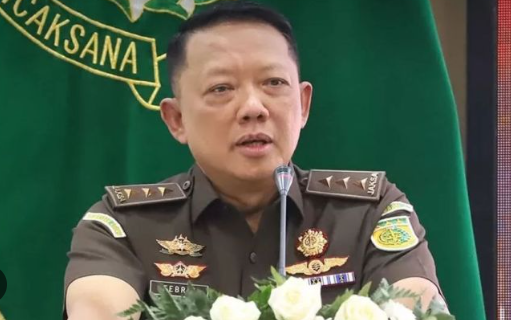
Indonesian President Prabowo Subianto built his early presidency on an emphatic anti-corruption platform, repeatedly exhorting government officials to reform themselves before law-enforcement agencies took action. Yet scarcely two years into his administration, that commitment faces a critical test that threatens to undermine the credibility of his entire anti-graft agenda. The catalyst is a sprawling corruption investigation into Febrie Adriansyah, who until recently held one of the most consequential positions in Indonesia's entire law-enforcement apparatus as deputy attorney general overseeing special crimes—the nation's most powerful anti-corruption prosecutor.
The investigation has thrust into sharp relief a structural problem that plagues Indonesia's institutional architecture: how to credibly hold accountable officials from within the very agencies tasked with fighting crime. Police seized approximately US$26 million in cash and gold bars from a residence owned by Febrie, naming him a suspect in alleged money laundering just days after the raid. Yet despite these dramatic moves, Febrie remained free, never detained or formally arrested—a discretion that sparked immediate controversy among legal scholars and lawmakers who questioned whether such differential treatment was justified or whether it merely reflected institutional fraternalism.
The most contentious aspect of the case centres not on the allegations themselves but on the decision by police to transfer three related investigations to the Attorney General's Office, the very institution where Febrie spent the bulk of his illustrious career. Former Constitutional Court Chief Justice Mahfud MD challenged whether Indonesia's criminal procedure code even permits such a transfer while an investigation remains active, warning that prosecutors could face successful pretrial challenges that might unravel the entire case. This procedural irregularity looms as potentially catastrophic, threatening to render years of investigation legally worthless.
Zaenur Rohman, an anti-corruption specialist at Gadjah Mada University, articulated the fundamental problem with characteristic candour: the transfer represents "a political settlement aimed at easing tensions" between competing law-enforcement institutions rather than a legally sound investigative decision. Allowing the Attorney General's Office to probe one of its own former leaders creates an obvious conflict of interest that few democracies would tolerate. Multiple lawmakers responded by establishing a working group to monitor developments, while others publicly called for the Attorney General's Office to assemble an independent investigative team specifically insulated from any institutional pressure.
The transfer decision also reflects deeper anxieties about institutional autonomy in Indonesia's law-enforcement ecosystem. The Corruption Eradication Commission, a state agency theoretically independent from both police and prosecutors, would have been a superior investigative body precisely because it operates outside the chains of command where loyalty and institutional obligation might compromise objectivity. Yet that option appears to have been dismissed, suggesting that political considerations—keeping the investigation within bureaucratic channels where outcomes might be more predictable—took precedence over legal principle.
Coordinating Minister Yusril Ihza Mahendra defended the transfer on efficiency grounds but implicitly acknowledged public apprehension by acknowledging the risk of what Indonesians call "oranges eating oranges"—institutional self-protection rather than genuine accountability. He revealed that Prabowo had personally met with both the police chief and attorney general to provide direction on managing the transfer, indicating that presidential intervention had shaped procedural decisions in a manner that appeared to prioritize political management over transparent investigative practice.
Febrie's particular prominence magnifies the stakes immeasurably. During his tenure heading the Attorney General's Office's Special Crimes Division, he had orchestrated investigations into some of Indonesia's most politically consequential corruption cases, including probes into the state-owned petroleum company Pertamina, the tin producer Timah, national carrier Garuda Indonesia, and Prabowo's flagship free-meals programme. That a figure of such institutional weight could face investigation while remaining at large, transferred to the very institution he once led, crystallized deeper anxieties about whether Indonesia's anti-corruption apparatus could genuinely police its own members.
The case also illuminates the perpetual institutional jostling among Indonesia's overlapping law-enforcement bodies. Police, prosecutors, and the Corruption Eradication Commission routinely compete for jurisdiction over politically sensitive investigations, each institution defending its turf and seeking to enhance its influence through high-profile cases. Recent legal changes have intensified this competition: a 2025 military law revision permits active-duty officers to serve in the Attorney General's Office without retiring, while simultaneously broadening prosecutors' ability to requisition military protection—functions previously monopolized by police. These structural shifts reflect Prabowo's effort to maintain competitive equilibrium among institutions, preventing any single agency from accumulating excessive power.
Yet such institutional complexity, while politically protective, creates investigative opacity and procedural confusion. Jacqui Baker, a Southeast Asian politics scholar at Murdoch University, observed that succession of presidents have deliberately preserved these overlapping authorities precisely to prevent any institution from achieving dominance, albeit at the cost of coherence and efficiency. Prabowo has continued this tradition while making incremental adjustments that distribute power differently, particularly empowering the military in new capacities.
The sequence of events—armed soldiers deployed around Febrie's residence during raids, public tension between police and prosecutors, subsequent efforts to project institutional harmony—suggested deeper fractures that public statements merely papered over. Prabowo called for "introspection" from all parties, and the police chief appeared publicly alongside the attorney general to deny institutional rifts. Yet such choreographed displays of unity typically emerge precisely when genuine tension requires management, not when cooperation flows naturally.
Simultaneously, the Attorney General's Office ordered regional prosecutors to halt collecting data on Prabowo's signature free-meals programme, citing the conclusion of an initial investigation period and warning against abuse of prosecutorial authority. This directive came strategically after the office had named an active police brigadier general as a suspect in investigations into the programme—a move that appeared to recalibrate pressure from police authorities.
The stakes extend beyond Indonesia's institutional architecture to implications for regional governance and investor confidence. A Southeast Asian power like Indonesia, where presidents orchestrate high-profile anti-corruption campaigns partly to consolidate authority and signal reform, cannot afford for those campaigns to appear as selective political theatre. If powerful prosecutors can evade accountability through institutional maneuvering, confidence in Indonesia's entire anti-corruption ecosystem corrodes, potentially encouraging the opacity and impunity that Prabowo pledged to dismantle. Malaysian and other regional observers watching this case recognize that institutional independence in law-enforcement defines whether anti-corruption campaigns genuinely transform governance or merely shuffle power among elites.

