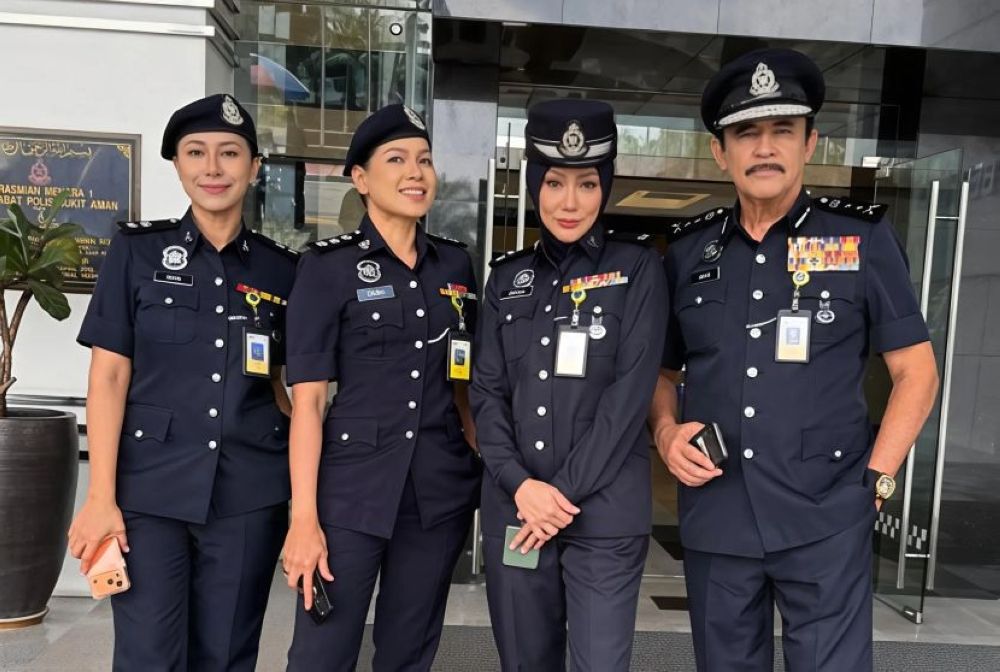
Datuk Yusof Haslam's decision to axe an actress from the forthcoming Gerak Khas 2.0 drama marks a decisive move by the Skop Production chief to distance the high-profile police series from a drug-related scandal that has threatened its reputation. The actress, who was apprehended in a police raid at the Dang Wangi district headquarters on July 7, tested positive for three controlled substances. Though the production had already achieved 90 percent completion when the arrest occurred, Haslam instructed the crew to eliminate all of her outstanding scenes, a decision that underscores the zero-tolerance approach now being applied within the entertainment industry toward substance abuse.
The timing of the incident presented a particular challenge for the production team. With roughly two weeks of work remaining and the actress still scheduled to appear in episodes 23 and 24 of the 26-episode series, the decision to strip away her entire remaining role required significant reworking of the final episodes. Rather than attempt to minimise the disruption or negotiate alternative arrangements, Haslam chose the more drastic option of complete removal, sending an unmistakable message about accountability within his production house. This choice reflects not only the gravity with which Malaysian producers now treat such matters but also the vulnerability of projects that depend heavily on the personal conduct of their cast members.
Haslam's public statements reveal the frustration of a seasoned filmmaker confronted with circumstances entirely beyond his control. He emphasised that had he possessed prior knowledge of the actress's involvement with drugs, she would never have been cast in the first place. The production team had worked with her previously without incident, suggesting that her troubles emerged after the filming commenced. This revelation highlights a broader challenge facing producers across the region: the difficulty of vetting cast members' private lives and preventing unforeseen personal crises from derailing major productions that represent significant financial and creative investments.
The decision to remove her scenes also carried symbolic weight for the drama itself. Gerak Khas 2.0 represents a continuation of a beloved Malaysian franchise with deep connections to the Royal Malaysia Police and national broadcasting traditions. By taking swift and visible action, Haslam sought to protect not only his production company's standing but also the institutional relationship between the entertainment sector and PDRM. The actress had been cast as a police inspector, a role that carries particular sensitivity given the drama's educational and aspirational function in depicting law enforcement professionalism. An actress visibly associated with drug use would have fundamentally undermined that messaging.
Haslam's public comments about the incident reveal the philosophical approach he had instilled throughout the production process. From the outset, he had stressed to all cast and crew the importance of maintaining discipline and avoiding activities that could compromise the drama's integrity or the police force's public image. He acknowledged, however, the inherent limitations of such instruction: a producer cannot monitor or control the personal choices of adult professionals once filming wraps for the day. This candid observation resonates across Southeast Asia's entertainment industries, where rapid growth in production volume has outpaced the development of more sophisticated risk management systems.
The actress's appeals for leniency fell on deaf ears. Haslam made clear that he rejected any pleas or excuses she might have offered, delivering a blunt assessment of the consequences: once a serious transgression occurs, the accumulated goodwill from previous professional contributions becomes irrelevant. This unforgiving stance reflects a broader cultural and institutional shift in how Malaysia's entertainment sector responds to drug-related scandals. The message being broadcast—to the actress, to her peers, and to the broader industry—is that proximity to narcotics is treated as a disqualifying offense that erases prior achievements and professional relationships.
The composition of the remaining cast provides important context for understanding the production's scale and ambition. The series includes established names such as Hans Isaac, Erra Fazira, C. Kumaresan, and Salina Saibi, alongside the police inspector roles played by Tisha Shamsir, Nabiha Aimi, and Emily Elizabeth. This ensemble structure suggests a high-budget, prime-time drama intended for significant viewership. The removal of one actress, while operationally disruptive, remains manageable given the multiple focal points within the narrative. A smaller independent production might have faced genuine existential pressure from a comparable disruption; the institutional backing behind Gerak Khas 2.0 allowed for this more expensive solution.
The incident carries implications extending far beyond this single series. Malaysian entertainment professionals and producers are observing how consequences are being enforced and what standards are now non-negotiable. The swift, public, and comprehensive nature of the response signals that drug involvement will henceforth result in immediate expulsion from projects, regardless of production stage or prior contributions. This precedent may influence casting and contracting practices across Malaysian and regional productions, as producers seek additional protections against similar disruptions.
For Malaysian audiences, particularly younger viewers who consume entertainment content extensively, the visible enforcement of consequences sends an important deterrent signal. Unlike situations where scandals are quietly managed or where professionals are rehabilitated after treatment, this approach emphasises accountability and institutional integrity. The drama industry's willingness to absorb the production costs associated with removing an actress serves as a powerful statement that reputational protection—both of the production company and the institutions it depicts—supersedes financial convenience.
Looking forward, the resolution of this matter will likely influence how Malaysian productions approach risk management and contractual protections. The entertainment sector may increasingly incorporate clause provisions addressing actor conduct, substance abuse testing, or reputational standards. Such formalisation, while protective, also reflects the growing professionalisation and internationalisation of Malaysian media production. As the industry expands and competes for regional and global audiences, the standards for cast conduct are being elevated and codified in ways that previous generations of Malaysian filmmakers never anticipated.

