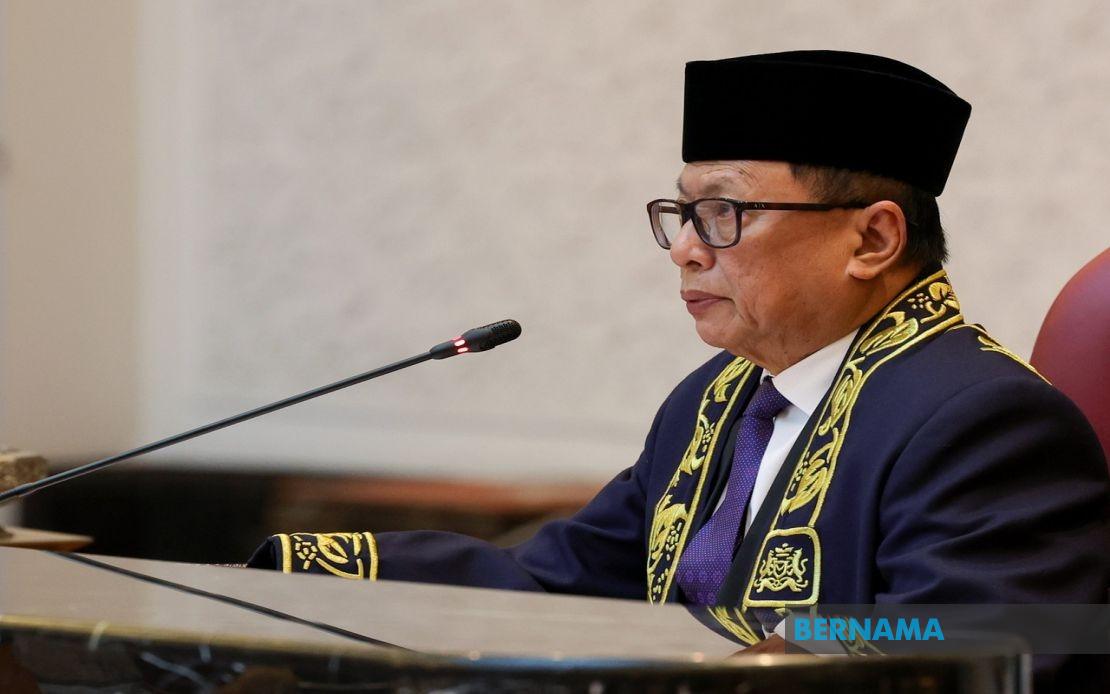
Datuk Dr Mohd Puad Zarkashi, a senior UMNO Supreme Council member and sitting Rengit state assemblyman, announced his immediate resignation from the party on June 25, citing the need for political independence and the freedom to express dissenting views without fear of internal retribution. The announcement, made through a Facebook statement, marks a significant rupture within Johor UMNO's ranks and signals deepening tensions at the state level just as the party navigates succession dynamics and strategic positioning ahead of electoral challenges.
Puad's departure appears driven by broader concerns about party direction and leadership accountability rather than personal grievance alone. In his statement, he emphasised that his exit was voluntary and uncoerced, designed to liberate him from the constraints of party discipline that would otherwise prevent him from voicing criticism or alternative viewpoints. He explicitly rejected the notion that his actions constituted disloyalty, framing his resignation instead as an act of "political courage" intended to expose what he characterises as serious irregularities within Johor UMNO's institutional functioning.
At the heart of Puad's critique is his assertion that Johor Chief Minister Onn Hafiz has reduced the party to a subservient instrument rather than a genuine political force. By describing the state UMNO apparatus as a "tethered puppet," Puad suggests that decision-making authority has been concentrated in the Chief Minister's office, with the party structure merely executing predetermined directives rather than engaging in genuine deliberation or contributing meaningfully to governance strategy. This characterisation implies a breakdown in the traditional relationship between party and government in Johor, where the party has historically exercised substantial institutional autonomy.
The timing of Puad's resignation carries significance. His announcement came days after he had hinted at disclosures regarding irregularities in the Barisan Nasional candidate selection process for the upcoming Johor state election. By resigning first, Puad removes himself from internal party structures that might otherwise constrain his ability to articulate these grievances publicly or seek recourse through party mechanisms. His decision to leave preemptively rather than await potential disciplinary action demonstrates calculated political manoeuvre—by resigning, he forecloses the possibility of expulsion while securing the moral high ground of voluntary departure.
Puad's political trajectory reveals a figure with considerable experience in both state and federal governance. As the former Batu Pahat Member of Parliament, he previously served as Deputy Education Minister from 2009 to 2013 and later as Director-General of the Special Affairs Department (JASA) between 2015 and 2018. These positions indicate his standing within UMNO's national hierarchy, making his departure a notable loss for a party already grappling with internal cohesion challenges. His prior role as Speaker of the Johor State Legislative Assembly further underscores his institutional significance within the state structure.
The substance of Puad's allegations—that candidate selection processes lacked transparency or merit—touches on a perennial source of tension within Malaysian political parties. Patronage networks and factional politics frequently influence candidate nomination decisions, creating resentment among senior figures who perceive themselves as sidelined by younger or less qualified rivals with superior patronage connections. Puad's own decision not to defend the Rengit state seat despite winning it in 2022, combined with his subsequent criticism of selection irregularities, suggests he may have encountered obstacles to securing endorsement for either a state or federal seat in the coming election.
For Johor UMNO specifically, Puad's departure exposes fault lines within the state party's governance model. If the party apparatus has indeed become subordinate to the Chief Minister's executive office, as Puad suggests, this represents a significant departure from the traditional role UMNO branches have played in providing grassroots mobilisation, candidate vetting, and policy input. Such subordination could undermine the party's effectiveness in future electoral cycles and degrade the quality of governance by removing institutional checks on executive decision-making.
The broader implications for Malaysian politics are noteworthy. UMNO, as the dominant party in federal coalition governments over the past two decades despite occasional electoral setbacks, depends upon maintaining internal party discipline and preventing dissension from metastasising into public faction warfare. Senior figures departing and publicly criticising party leadership suggest the party's internal mechanisms for resolving disputes or accommodating ambitious figures have become inadequate. This trend, if it accelerates, could weaken UMNO's competitive position relative to rival parties that have recently benefited from internal consolidation.
Puad's parliamentary record provides context for understanding his grievances. He won Batu Pahat in 2018 with a 12,968-vote majority but lost the seat in 2022 to PKR's Datuk Mohd Idris Jusi by only 1,524 votes, suggesting his support base had significantly eroded. This electoral vulnerability may have complicated his positioning within party hierarchies and potentially influenced selection decisions for upcoming contests. Nonetheless, his public articulation of concerns about institutional dysfunction extends beyond personal electoral disappointment to raise questions about UMNO's internal governance at a moment when the party faces intensifying competition and needs to project unity and purpose.
For Malaysia's broader political ecosystem, the Johor situation merits close attention. Johor remains a strategically vital state for UMNO's national fortunes, and internal dysfunction there reverberates throughout the party's federal structures. If dissenting voices like Puad's represent widespread sentiment among the party's middle and upper ranks, UMNO may face cumulative institutional damage that manifests most acutely during electoral contests or leadership transitions when factional tensions typically escalate into open conflict.

