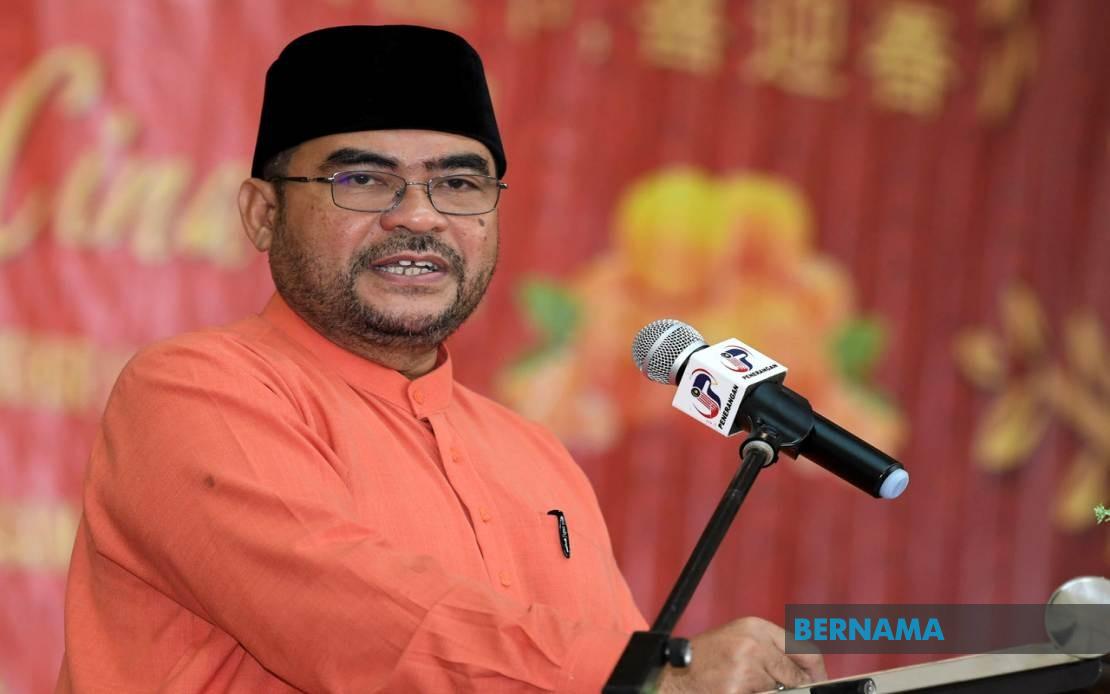
Datuk Seri Dr Mujahid Yusof Rawa, vice-president of Amanah, has thrown his weight behind making the Royal Commission of Inquiry report on Lembaga Tabung Haji publicly available, arguing that disclosure represents the only credible path toward resolving years of controversy surrounding the Islamic pilgrimage fund's operations. Speaking in Seremban on July 25, the former Minister in the Prime Minister's Department emphasised that ordinary Malaysians deserve direct access to the commission's findings rather than relying on filtered official statements or partisan interpretations.
The inquiry examined Tabung Haji's management during a critical six-year window spanning 2014 to 2020, a period marked by mounting allegations of mismanagement, investment losses, and governance failures that shook public confidence in an institution serving approximately 9.2 million depositors. By insisting on full transparency, Mujahid is positioning public disclosure as the antidote to speculation and rumour that has clouded the fund's reputation for years. He argues that withholding findings would only perpetuate doubt and suspicion, whereas releasing the report would ground any subsequent discussion in documented evidence rather than assumption or political point-scoring.
Mujahid's call gains particular significance given his own involvement in Tabung Haji matters during his tenure in the Prime Minister's Department. He indicated willingness to face scrutiny himself, noting that he had provided testimony to the RCI panel and would accept accountability if the report identified shortcomings under his watch. This readiness to be evaluated stands in contrast to defensive posturing sometimes adopted by public figures facing potential criticism, and it underscores his framing of transparency as a test applicable equally to all stakeholders rather than a weapon aimed at political opponents.
The former minister was explicit about the stakes involved. He stressed that determining who bore genuine responsibility for the fund's travails and who acted to stabilise it matters fundamentally to public understanding of institutional performance. Without access to the commission's detailed assessment, citizens cannot accurately distinguish between those who mismanaged Tabung Haji and those who attempted remedial action, leaving accountability mechanisms hollow and allowing narratives to be shaped by whoever controls information flow rather than by evidence.
Mujahid further contended that public release represents a necessary step toward rebuilding institutional confidence. When ordinary Malaysians, particularly the depositors whose savings are at stake, perceive that decision-makers are hiding findings, they naturally grow more suspicious and less likely to trust management going forward. Conversely, demonstrating openness by publishing an independent professional investigation signals that authorities have nothing to fear from factual revelation and are committed to evidence-based governance.
Crucially, Mujahid framed the RCI as offering advantages over political debate as the authoritative reference point. A commission staffed by independent professionals operates under procedural safeguards and investigative standards that lend weight to conclusions in ways that parliamentary grandstanding or media allegations cannot replicate. By anchoring discussion to the RCI's findings rather than to unsubstantiated claims or partisan rhetoric, policymakers and the public can engage in a conversation grounded in verified fact.
Yet Mujahid resisted the temptation to speculate prematurely about what the report might contain. He expressed hope that the commission's work would furnish comprehensive narrative clarity about institutional management across the full review period, but he pointedly declined to venture predictions or to champion particular conclusions before studying the actual document. This restraint enhances his credibility, as it demonstrates commitment to letting evidence speak rather than using selective previews to advance predetermined narratives.
Prime Minister Datuk Seri Anwar Ibrahim has already signalled alignment with this transparency agenda. He expressed confidence that the Cabinet would endorse public disclosure when the proposal comes before the ministerial body for formal consideration on Wednesday. Anwar's apparent backing suggests that the government may be moving toward a position where transparency carries greater political weight than the instinct toward discretion that sometimes characterises official handling of sensitive institutional matters.
For Malaysian depositors and the broader public, the political endorsement of disclosure by senior figures across different perspectives may accelerate movement toward publication. The institutional implications extend beyond Tabung Haji itself, as decisions about whether to open or withhold such reports set precedent for how other government bodies handle findings from major inquiries. Making the RCI report public would signal that Malaysia's leadership recognises merit in subjecting institutional conduct to informed public scrutiny as part of normal governance practice.
The backdrop to this debate reflects Tabung Haji's particular importance within Malaysian financial and religious life. As a savings scheme specifically structured to facilitate Muslim participation in the Hajj pilgrimage, the fund carries social and spiritual significance beyond its purely economic function. Breaches of stewardship therefore affect not only financial interests but also the relationship between the state and religious practice, making questions of institutional trustworthiness genuinely consequential for many Malaysians.
Movement toward releasing the RCI findings also aligns with broader regional trends toward greater institutional transparency and accountability. As Southeast Asian democracies grapple with building public trust in governance institutions amid global information challenges, decisions about official disclosure carry implications that resonate beyond individual cases. Malaysia's handling of the Tabung Haji inquiry will be watched as an indicator of whether the country is committed to evidence-based accountability or whether sensitive institutional findings remain subject to political discretion.

