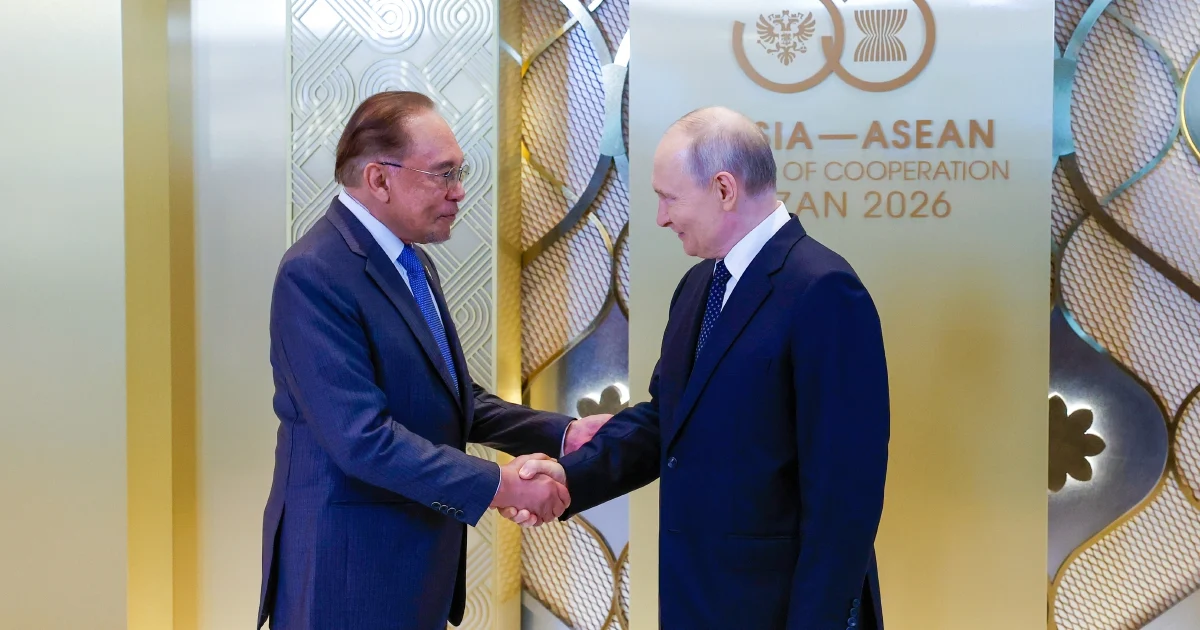
Prime Minister Datuk Seri Anwar Ibrahim announced in Bintulu that Malaysian authorities have obtained assurances from Russian President Vladimir Putin concerning sustained energy deliveries to the country, underscoring a broadening approach to securing the nation's power requirements through alliances with key energy-exporting economies.
The development reflects Malaysia's strategic pivot towards diversifying its energy sourcing base as the nation grapples with rising demand and the imperative to transition away from finite fossil fuel reserves. By cultivating relationships with major energy suppliers across different geopolitical regions, Malaysia aims to reduce vulnerability to supply disruptions and price volatility that often accompany over-dependence on any single source or supplier.
The timing of this announcement is significant for Southeast Asia's largest liquefied natural gas exporter. Malaysia has long relied on its own hydrocarbon reserves, but production from aging fields in the Petronas-operated concessions has declined. The country's own LNG exports, particularly through facilities like the ones in Bintulu and Labuan, have faced pressure from increased global supply and structural changes in energy markets. This strategic repositioning suggests that Kuala Lumpur recognises the need to secure external supply sources as domestic production gradually tapers.
Russia occupies a distinctive position in global energy markets, particularly for liquefied natural gas. Despite Western sanctions following its 2022 invasion of Ukraine, Moscow maintains significant production capacity and has redirected export flows toward Asian markets, especially China and India. For Malaysia, engaging Russia on energy matters represents a calculated diplomatic manoeuvre that acknowledges geopolitical realities whilst positioning the country to benefit from competitive LNG pricing in a buyers' market.
Anwar's emphasis on strategic partnerships rather than bilateral dependencies demonstrates awareness of evolving energy geopolitics. Beyond Russia, Malaysia has similarly cultivated relationships with other suppliers including Australia, Indonesia, and Middle Eastern producers. This multifaceted approach protects national interests by ensuring that no single supplier enjoys disproportionate leverage over Malaysian energy policy or domestic pricing structures.
The announcement comes at a juncture when global energy markets remain fluid following post-pandemic recovery and structural shifts in demand. Developed economies in Europe and North America have accelerated renewable energy adoption, reshaping LNG trade patterns and creating opportunities for Asian consumers to negotiate favourable terms. Malaysia's proactive engagement with major suppliers positions it advantageously within this competitive landscape.
For Malaysia's downstream energy sector and export-oriented industries reliant on stable, reasonably-priced energy, securing long-term supply agreements through high-level diplomatic channels offers genuine operational benefits. Manufacturers and petrochemical facilities clustered around Bintulu and other energy hubs face pressure from global competition; reliable, predictable energy costs are crucial competitive factors. Putin's assurances, operationalised through formal agreements, could translate into tangible advantages for Malaysia's industrial base.
The geopolitical dimensions of this energy diplomacy warrant attention. Malaysia has historically maintained a balanced foreign policy, avoiding excessive alignment with any single power whilst preserving equidistance in great-power competition. By securing energy commitments from Russia even as it maintains existing relationships with Western suppliers and ASEAN neighbours, Kuala Lumpur reinforces its identity as a pragmatic middle power prioritising national interests above ideological considerations.
Domestically, the government's energy security messaging serves multiple constituencies. Consumers concerned about electricity costs and industrial stability benefit from the reassurance that policymakers have secured reliable supply sources. Meanwhile, Petronas and Malaysia's own energy sector receive implicit support through this narrative, which positions them alongside international partners rather than as competitors entirely displaced by imports.
Regional implications extend beyond Malaysia's borders. In Southeast Asia, where energy demand continues rising alongside economic development, Malaysia's approach demonstrates how mid-sized economies can navigate energy security challenges through skilled diplomacy. Other ASEAN members facing similar pressures may emulate Kuala Lumpur's strategy of building diversified supplier relationships rather than depending on single sources or regional arrangements alone.
The sustainability dimensions of this energy partnership merit scrutiny. Whilst Russia's LNG exports represent a transitional energy source as the world gradually shifts toward renewables, Malaysia's energy strategy must eventually reconcile such agreements with longer-term climate commitments. The recent emphasis on energy security through fossil fuel partnerships must ultimately align with broader decarbonisation goals that increasingly define international economic relationships.
Moving forward, the substance of these assurances—whether they translate into formal supply contracts, pricing mechanisms, and volumes—will determine their practical significance. Anwar's diplomatic success in securing Putin's commitment represents a symbolic and strategic achievement, but the tangible benefits depend on subsequent negotiations involving Petronas and Russian suppliers that operationalise these assurances into binding commercial arrangements accessible to Malaysian consumers and industries.

