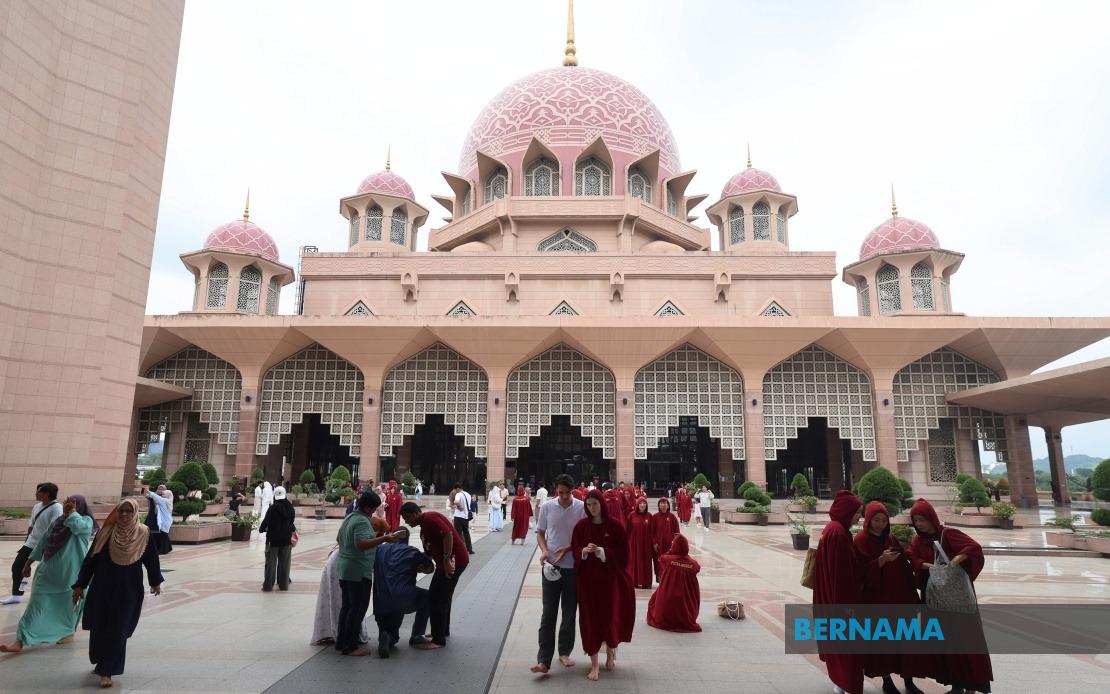
The National Maal Hijrah celebration at Putra Mosque in Putrajaya draws together thousands of dignitaries, religious leaders, and international guests to commemorate the Islamic calendar's new year. Sultan Nazrin Shah of Perak will officiate the gathering of approximately 5,000 attendees, underscoring the significance of this annual observance in Malaysia's religious and national calendar. The event represents a key moment for the Muslim community to reflect on the principles of migration and renewal that define the Hijrah tradition.
The occasion attracts Malaysia's highest-ranking government officials, demonstrating the state's commitment to Islamic affairs and cultural preservation. Deputy Prime Ministers Datuk Seri Ahmad Zahid Hamidi and Datuk Seri Fadillah Yusof are confirmed attendees, alongside multiple Cabinet ministers, diplomatic representatives from various nations, departmental heads, and senior government personnel. This concentration of leadership reflects how Maal Hijrah celebrations have become integral to Malaysia's political and religious governance landscape, bridging secular administration with Islamic observance.
A centrepiece of the ceremony involves the Sultan's royal address, which traditionally sets the tone for the nation's Islamic affairs discourse. Following this keynote address, the presentation of the National and International Tokoh Maal Hijrah Awards will take place, recognising exceptional individuals across both domestic and global contexts. These accolades carry substantial prestige within Malaysia's Islamic community and beyond, celebrating those whose contributions have significantly advanced the faith.
The award criteria reflect Malaysia's vision for Islamic excellence and leadership. Recipients must demonstrate comprehensive expertise within their professional domains, maintain exemplary personal conduct, and demonstrate tangible contributions toward strengthening Islam's position both within Malaysia and internationally. The awards serve not merely as ceremonial honours but as acknowledgments of individuals whose work spans academia, commerce, social development, and religious scholarship. This diverse recognition framework ensures that Maal Hijrah celebrations acknowledge Islam's presence across multiple dimensions of society, rather than restricting honours to traditional clerical roles.
The Department of Islamic Development Malaysia (JAKIM) has deliberately chosen this year's thematic focus to reconnect Muslims with the historical and spiritual significance of Prophet Muhammad's migration to Medina. The Hijrah marked a transformative moment in Islamic history, catalysing the establishment of the first Muslim community and laying foundations for Islamic civilisation's subsequent development. By encouraging contemporary Muslims to embrace this spirit, JAKIM seeks to inspire personal and collective transformation, positioning migration not merely as a historical event but as an ongoing spiritual principle applicable to modern challenges.
Innovative programming additions strengthen the celebration's educational dimension and encourage deeper engagement beyond ceremonial attendance. The Tausiyyah @ Maal Hijrah programme, held at Putra Mosque on the eve of the main celebration, introduces a contemplative component that distinguishes this year's observance. Participants engage in structured reflection on selected Quranic verses, moving beyond surface-level recitation to examine the wisdom, guidance, and practical applications embedded within Islamic scripture.
The programme's design incorporates performances by accomplished Quranic reciters, creating an immersive spiritual experience that appeals to both intellectual and emotional dimensions of faith. Rather than presenting Quranic study as an abstract theological exercise, the Tausiyyah format encourages participants to translate religious principles into practical daily conduct. This approach acknowledges that contemporary Muslims require not merely traditional religious knowledge but frameworks for integrating Islamic values into modern contexts—professional environments, family relationships, civic responsibilities, and personal decision-making.
The celebration's educational mission extends beyond the main ceremonial day through a structured lecture series. The National and International Tokoh Maal Hijrah Lecture, scheduled for the following day at Putrajaya Islamic Complex Auditorium, provides award recipients with a platform to share their expertise and lived experiences with broader audiences. This format transforms award recipients from passive honours recipients into active educators and mentors, extending the celebration's impact across multiple forums and audiences.
For Malaysian Muslims and Southeast Asian observers, these celebrations represent more than religious observance; they demonstrate how a modern nation-state integrates Islamic principles within governmental structures and public life. Malaysia's approach—combining high-level political participation, structured awards recognising diverse contributions, and accessible educational programming—offers a model for balancing religious authenticity with inclusive national identity. The international participation component also reinforces Malaysia's positioning as a bridge between the Islamic world and global affairs.
The emphasis on reflection and positive change embedded in this year's programming reflects evolving approaches to Islamic practice in Malaysia. Rather than focusing exclusively on ritual compliance, contemporary Maal Hijrah celebrations increasingly emphasise the transformative potential of Islamic principles applied to social advancement, intellectual development, and ethical leadership. This reframing resonates particularly with younger generations seeking practical connections between religious identity and meaningful engagement with modern societal challenges.