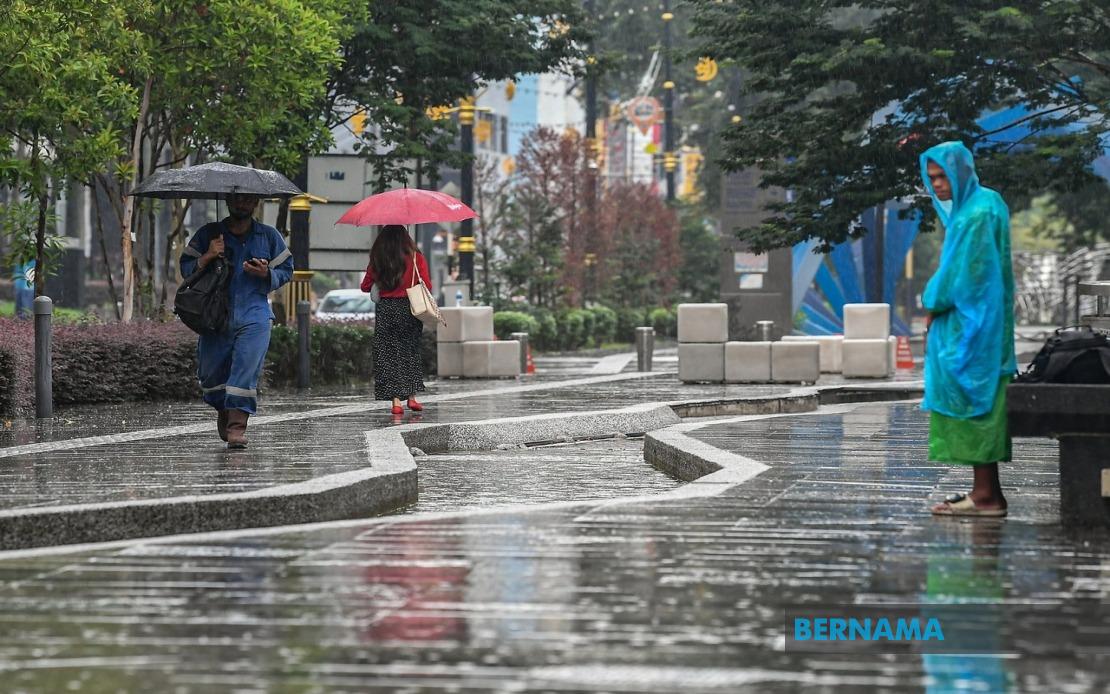
Wet weather conditions are expected to greet the Johor state election nomination process on June 27, with forecasters predicting rainfall across seven of the state's ten districts during the crucial morning hours when prospective candidates will formally register their candidacies. The Malaysian Meteorological Department has alerted election participants to brace for potentially slippery conditions and congestion at nomination centres, as supporters and campaign machinery navigate the registration period scheduled between 9 am and 10 am at 56 locations throughout the state.
According to Azlai Ta'at, Johor's MetMalaysia director, rain will particularly affect the major urban and commercial centres of Johor Bahru, Muar, Batu Pahat, Kota Tinggi, Pontian, Tangkak and Kulai. Only the districts of Segamat, Kluang and Mersing are expected to experience clear morning conditions, offering some relief to nomination centres in these areas. The meteorological assessment underscores the logistical considerations election officials and political parties must now factor into their nomination day preparations, from arranging weather-protected queuing areas to ensuring candidates and supporters can navigate safely to registration venues.
Temperature patterns across the state will add another layer of complexity to the day's proceedings. Minimum readings are anticipated to remain relatively mild, fluctuating between 24 and 25 degrees Celsius, while daytime highs will climb to between 31 and 34 degrees Celsius, with Segamat expected to record the hottest conditions at up to 34 degrees. This combination of morning rain followed by afternoon heat means that participants should prepare for rapidly changing conditions throughout the day, potentially creating uncomfortable circumstances for the large crowds expected at nomination centres.
Beyond the morning nomination window, the weather forecast becomes even more unsettled. Thunderstorms are anticipated to develop across much of the state during the afternoon hours, specifically targeting Johor Bahru, Segamat, Kluang, Kota Tinggi, Pontian, Mersing and Kulai. Meanwhile, Batu Pahat and Tangkak face additional rainfall risks, whereas Muar is expected to remain hot and dry. These afternoon storms coincide precisely with the moment campaigning officially commences, immediately following the returning officers' announcement of eligible candidates. The convergence of severe weather and the campaign launch raises concerns about the effectiveness of opening campaign events and public engagement activities that political coalitions have undoubtedly scheduled to capitalize on the nomination day momentum.
The nomination process itself represents a watershed moment in the sixteenth Johor state election, offering a clear snapshot of the competitive landscape taking shape across the state's 56 seats. Pakatan Harapan is mounting a comprehensive challenge by fielding candidates in all available seats, distributing them as 20 from PKR, 19 from Amanah and 17 from DAP, demonstrating coordinated coalition strategy. Barisan Nasional is similarly contesting all 56 seats with a traditional composition of 36 UMNO candidates, 16 MCA representatives and four MIC nominees, signalling its intent to defend its strongholds while pursuing gains.
Perikatan Nasional presents a more fragmented picture, with PAS contesting 11 seats, Bersatu 16, the Malaysian Indian People's Party five and Pejuang one. This distribution reflects the coalition's ongoing internal negotiations and territorial allocations across the state. Meanwhile, the Malaysian United Democratic Alliance is concentrating its efforts on four seats, Parti Sosialis Malaysia on one, while Parti Bersama Malaysia is making its electoral debut with an ambitious slate of 15 seats, indicating confidence in establishing itself as a new political force in Johor's competitive landscape.
The voting logistics for this election have been carefully structured by the Election Commission to manage the anticipated turnout. Early voting has been scheduled for July 7, providing flexibility for registered voters who cannot participate on polling day, while the official polling day is set for July 11. This two-stage voting arrangement becomes particularly relevant given weather concerns, as early voting may attract voters concerned about poor conditions on the main polling day, potentially influencing turnout patterns and campaign strategies.
The electorate size underscores the scale of this political exercise, with the Election Commission reporting 2,727,926 registered voters across Johor. This constituency comprises 2,703,175 ordinary voters, augmented by 12,041 military personnel and their spouses, along with 12,710 police personnel and spouses. The inclusion of uniformed service voters adds a specialized component to election administration and campaign outreach, as these voting blocs may have distinct scheduling and accessibility requirements. For political parties, understanding and mobilizing these demographic segments becomes crucial to maximizing support, particularly in a state where electoral competition remains tight.
For the broader Malaysian political context, the Johor state election assumes significance as a barometer of public sentiment and coalition viability. The state has historically served as a testing ground for political realignments, and the 2024 contest continues this tradition by featuring multiple competing coalitions and new entrants alongside established political forces. The weather disruption on nomination day, while seemingly a minor procedural matter, inadvertently highlights the operational challenges that modern electoral processes must navigate beyond the strictly political dimensions of candidate quality, policy platforms and voter preferences.
Participants are advised by meteorological authorities to remain vigilant regarding weather updates and changing conditions throughout the nomination day proceedings and beyond. The combination of morning precipitation, afternoon thunderstorms and elevated temperatures creates a challenging environment for all stakeholders. Political parties managing large numbers of supporters, returning officers coordinating nomination processes across 56 locations, and individual candidates attempting to conduct preliminary campaign activities must all adapt to these atmospheric realities. The weather forecast thus becomes an unexpected but integral component of the nomination day experience, requiring practical adjustments to established protocols and contingency planning from all involved parties.

