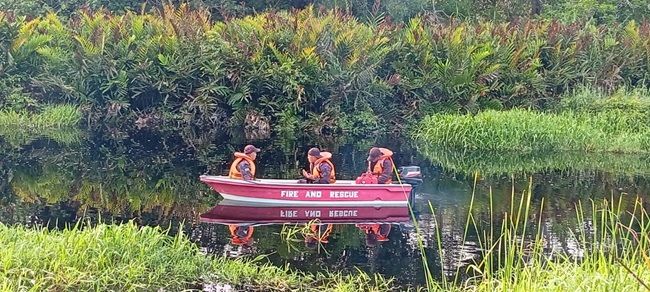
A comprehensive rescue operation spanning three days has been mounted in Brunei to locate a man believed to have fallen victim to a crocodile attack while fishing in Kampong Baru Sungai Bera, though search efforts have so far yielded no confirmed sightings of the missing individual.
The Fire and Rescue Department received the distress alert on Wednesday, 24 June, prompting an immediate response. Two fire engines carrying nine personnel, led by Acting Station Officer Mohd Zulkifli Md Tahir, were dispatched to the scene. Upon arrival, initial interviews with the victim's family indicated that the man had been in the river engaged in fishing when he encountered what relatives believed to be a crocodile attack.
The scale of the operation reflects the seriousness with which authorities are treating the incident. The search operation is now being coordinated under the command of Senior Superintendent Amirul Hadi Junaidi, the Commanding Officer of the Operations Branch. This level of command oversight underscores the urgency and complexity of the rescue mission in progress.
Multiple departments and specialist units are collaborating to cover different search methodologies and terrain. The Fire and Rescue Department has established a dedicated Tactical Command Post to coordinate activities. Their search strategy encompasses continuous river patrols using departmental boats, systematic sweeps along the riverbanks where the victim may have washed ashore, and aerial reconnaissance conducted with drone technology to cover areas difficult to access on foot or by water.
Police involvement extends beyond general support. The Royal Brunei Police Force has mobilised personnel from the Seria Police Station as well as POLMAR, the Marine Police division, bringing maritime expertise and watercraft to the operation. Additionally, the Wildlife Division has been incorporated into the search effort, bringing specialist knowledge about crocodile behaviour and habitat patterns that may assist in locating the victim or predicting where the animal may have moved.
The deployment of drone surveillance represents a modern addition to traditional search and rescue methods. These unmanned systems allow rescuers to scan expanses of river and jungle terrain that would be time-consuming and dangerous to search manually, while providing real-time aerial imagery to the command post. Such technology has proven invaluable in similar incidents across Southeast Asia where terrain and visibility present challenges to ground-based teams.
Crocodile attacks, while relatively rare in Brunei, present unique challenges for rescue operations due to the nature of saltwater and estuarine environments where these large reptiles inhabit. Sungai Bera is a significant waterway, and the involvement of the Wildlife Division suggests authorities are approaching this not merely as a search and rescue operation but also as a potential wildlife management incident. Understanding the behaviour and location of the crocodile itself may prove critical to both locating the victim and preventing future incidents.
The continuation of search efforts into the third day indicates that authorities have not yet concluded that recovery prospects have diminished significantly. Weather conditions, river currents, and tidal patterns would all factor into the decision-making process regarding where teams concentrate their efforts. The involvement of multiple agencies suggests protocols are being followed methodically despite the challenging circumstances.
For Malaysian readers, this incident serves as a reminder of the wildlife hazards present in the region's rivers and coastal areas. While fatal crocodile attacks remain uncommon in Malaysia and Brunei, they underscore the importance of exercising caution around bodies of water known to be crocodile habitat. The incident highlights how quickly a routine fishing expedition can transform into a rescue operation, and why local communities near such waterways should remain vigilant about predatory wildlife.
The collaborative response across Brunei's security and rescue services demonstrates the systematic approach taken to such emergencies. However, the absence of any significant breakthrough after three days suggests the operation may face diminishing returns without additional clues or sightings. Authorities will likely continue operations while balancing resource allocation with realistic assessment of victim survival prospects, a difficult judgment that rescue coordinators in the region are increasingly called upon to make.

