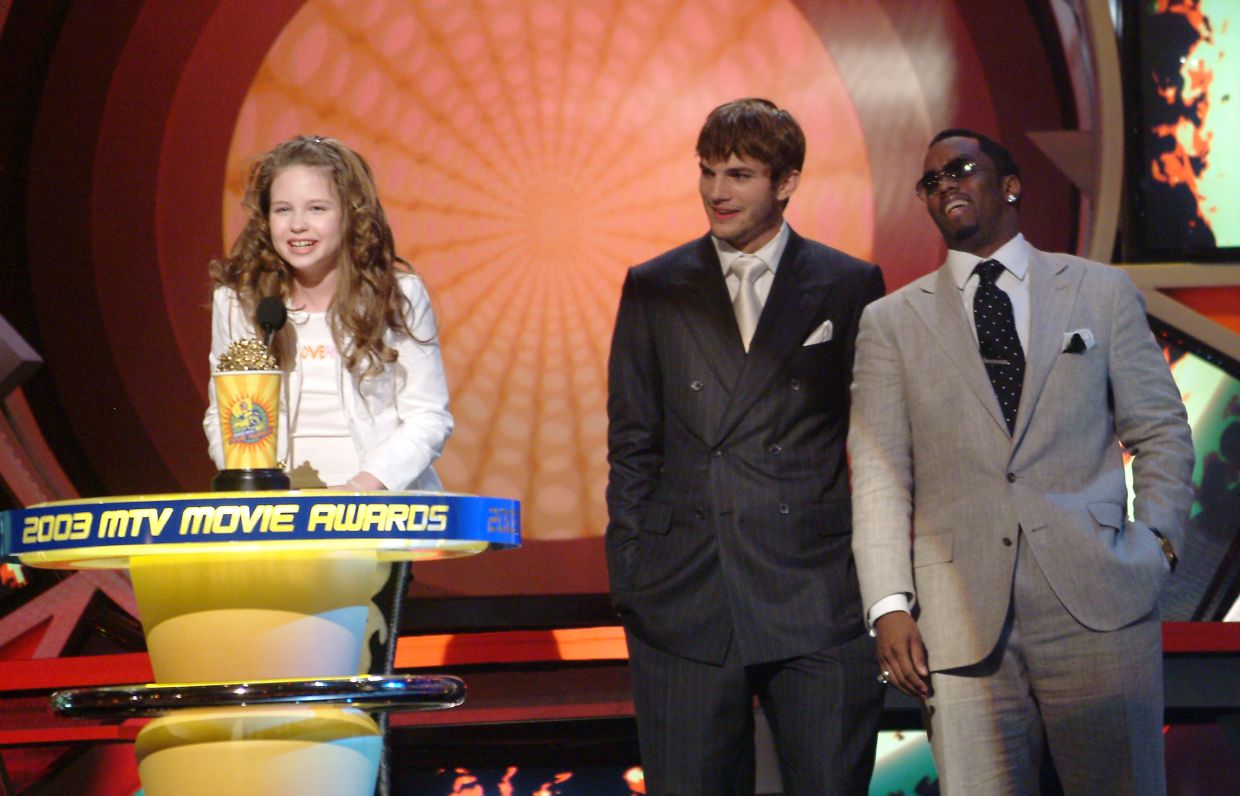
A decades-old video of music mogul Sean "Diddy" Combs engaging with child actress Daveigh Chase has surfaced online, drawing renewed scrutiny as the disgraced entertainment figure faces mounting legal troubles. The footage, recorded during the 2003 MTV Awards ceremony, captures a moment that has taken on sharply different implications in light of subsequent revelations about Combs' conduct and Chase's tragic passing this June at the age of 35. The resurfaced clip underscores the disturbing trajectory of both parties involved—one a former Hollywood fixture whose career cratered amid a federal sex trafficking conviction, the other a promising young talent whose life spiralled into addiction and homelessness.
Daveigh Chase gained widespread recognition for her haunting performance as Samara Morgan, the vengeful supernatural antagonist in "The Ring," a role that earned her significant acclaim within the horror genre and positioned her as one of Hollywood's more memorable young performers at the time. Her appearance at the 2003 MTV Awards marked a professional high point in her early career, where she received recognition for Best Villain alongside fellow presenters including actor Ashton Kutcher. During the ceremony's conclusion, as Kutcher and Combs presented Chase with her award, the then-prominent music producer approached the preteen and casually extended an invitation to join him at an exclusive after-party. The moment, captured on video and overlooked for two decades, now reads as profoundly unsettling given what has since emerged about Combs' conduct and the pattern of exploitation that characterised his inner circle.
Chase's death on June 16 at a Los Angeles hospital marked a sorrowful endpoint to a life that had deteriorated substantially over the years. Her father, John Schwallier, disclosed that his daughter succumbed to severe complications arising from bacterial meningitis coupled with a blood infection, conditions that were exacerbated by acute malnutrition. Beyond the immediate medical causes, Chase had struggled openly with substance dependency issues and had spent considerable time living rough on the streets in proximity to the hospital where she ultimately died. The circumstances of her death paint a picture of someone whose trajectory had veered dramatically from the bright promise of her childhood stardom, a trajectory that reflects broader patterns of exploitation, neglect, and vulnerability that often characterise former child actors in an industry frequently indifferent to their wellbeing.
The timing of the video's resurgence coincides with a period of unprecedented legal reckoning for Combs. In September 2024, federal authorities arrested the 55-year-old at the Park Hyatt Hotel in Midtown Manhattan as part of a comprehensive investigation into his conduct spanning years. The charges against him centred on his orchestration of what prosecutors termed "freak-off" parties—lavish, multi-day events fuelled by narcotics and characterised by commercial sexual exploitation. These gatherings allegedly involved sex workers and operated under a veneer of exclusive celebrity entertainment, functioning as venues for systematic abuse hidden behind the allure of proximity to wealth and power.
The legal machinery against Combs moved swiftly once charges crystallised. In July 2025, following a federal sex trafficking trial conducted in New York, Combs faced a jury verdict finding him guilty on two counts of transportation to engage in prostitution. The guilty finding represented a comprehensive rejection of his defence and corroborated the prosecution's narrative of systematic exploitation. Subsequently, a judge imposed a 50-month prison sentence, sending the once-celebrated producer to FCI Fort Dix in New Jersey to serve his time. For a figure who had dominated hip-hop and popular music for three decades, the fall from influence to incarceration marked one of the entertainment industry's most dramatic collapses.
Beyond the criminal proceedings, Combs confronts an avalanche of civil litigation that threatens to compound his legal and financial vulnerability. More than 100 civil lawsuits have been filed against him, predominantly alleging sexual misconduct, assault, and trafficking. These cases represent survivors and alleged victims seeking damages and accountability outside the criminal justice system. The sheer volume of litigation underscores the breadth of allegations and the number of individuals who have come forward with claims spanning years. Each case carries the potential to expose additional damaging evidence and testimony that illuminates the scope of alleged misconduct within his orbit.
The resurfaced 2003 clip gains significance not merely as a historical artefact but as a window into the casual access that powerful figures in entertainment maintained to vulnerable young people. Chase's nod of apparent assent to Combs' after-party invitation, followed by his enthusiastic response and Kutcher's apparent amusement, captures a cultural moment when such interactions appeared socially acceptable, when proximity to powerful men was treated as an unambiguous good, and when child protection mechanisms within the industry were conspicuously absent. The video encapsulates an era of permissiveness that enabled predatory behaviour to flourish largely unchecked.
For Malaysian and Southeast Asian audiences, the Combs case represents a cautionary narrative about the mythology surrounding Western celebrity and the dangers inherent in unquestioned hierarchies of power within entertainment. The entertainment industry's global reach means that figures like Combs wielded influence across regional markets, shaping cultural aspirations and normalising particular models of success and conduct. The revelation of systematic exploitation occurring behind the scenes of glamorous public personas serves as a reminder that the industry's veneer of sophistication often masks fundamental ethical failures. For young people and their families navigating the entertainment sphere across Asia, the case underscores the necessity of institutional accountability and transparency regarding safeguarding practices.
Chase's death carries particular poignancy when contextualised within the broader ecosystem of abandonment that surrounded her. The transition from celebrated child performer to homeless adult struggling with addiction represents a recognised pattern within the industry, one in which early success often correlates with later vulnerability rather than security. Industry structures frequently provide inadequate support mechanisms for former child actors transitioning to adulthood, leaving them stripped of income, institutional support, and psychological resilience once their marketability diminishes. Chase's trajectory reflects systemic failure rather than individual weakness—a failure replicated across numerous cases of child entertainers whose lives have unravelled after their period of commercial utility concluded.
The convergence of the resurfaced video and the criminal proceedings against Combs creates a narrative arc that illuminates how power operates within entertainment spheres. A casual invitation extended by a powerful figure to a child at the apex of his influence becomes, in retrospect, a troubling symbol of the asymmetries that enable exploitation. Chase's subsequent life trajectory—marked by addiction, homelessness, and premature death—unfolds against a backdrop in which systemic safeguards failed to protect her and institutional actors prioritised business interests over welfare. The video does not prove that Combs' invitation carried sinister intent; rather, it contextualises a broader pattern of conduct that finally resulted in criminal conviction, lending the historical moment added weight and discomfort for contemporary viewers who understand what subsequently unfolded.

