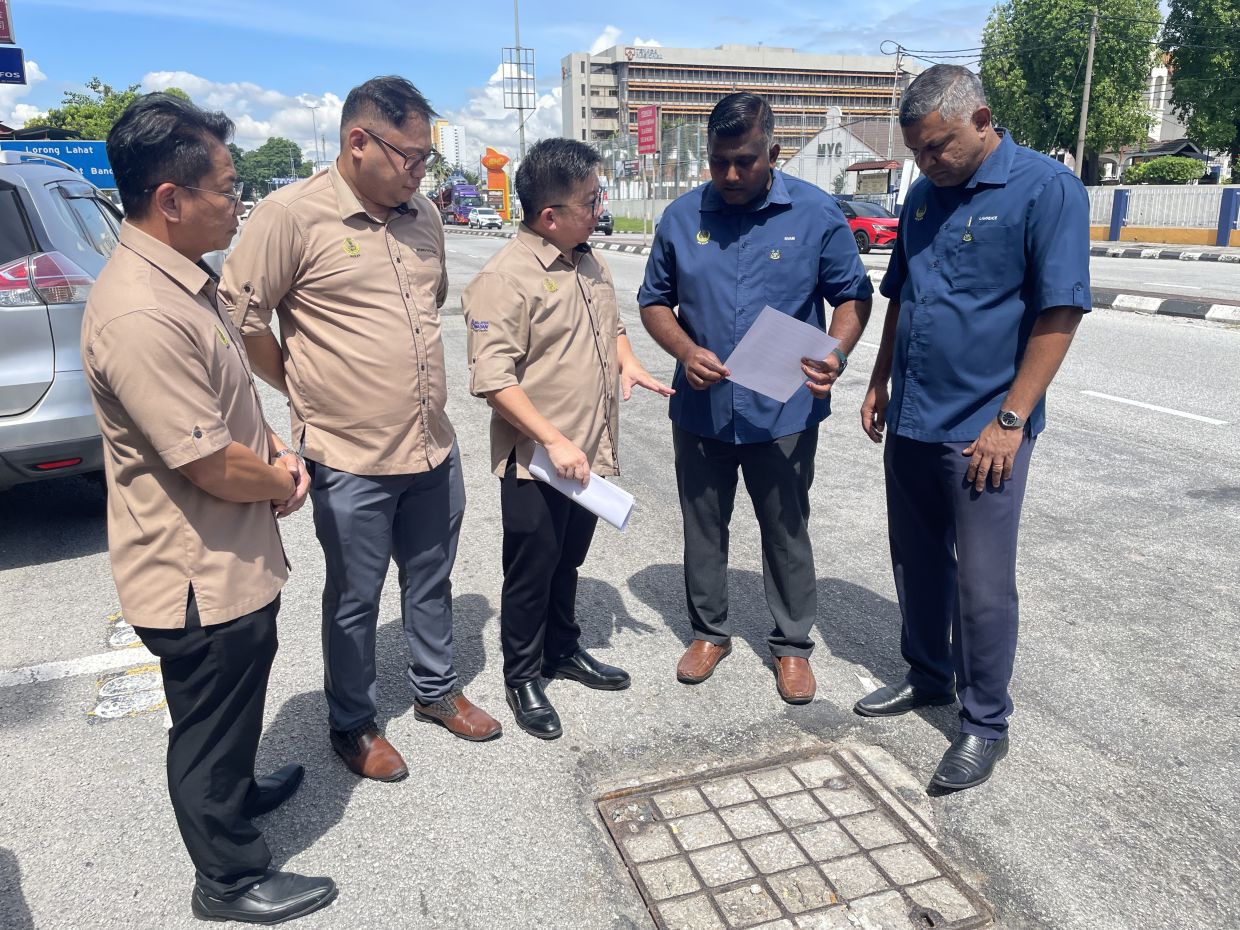
The deteriorating condition of Jalan Lahat in Ipoh is finally set to receive the attention it has long needed, with a RM2.6 million resurfacing initiative scheduled to commence in July. The project will tackle approximately 4 kilometres of roadway spanning from the Falim traffic lights to the Jalan Leong Boon Swee junction near Little India, addressing a critical section that has become increasingly problematic for motorists traversing the route daily.
The road, which stretches between the state constituencies of Buntong, Tebing Tinggi and Menglembu, has earned an unfortunate reputation for its deteriorating surface quality over recent years. According to Menglembu assemblyman Chaw Kam Foon, while Jalan Lahat extends approximately 10 to 11 kilometres in total length, this initiative will concentrate resources on the most severely affected sections, resurfacing roughly 1.9 kilometres in each direction. The funding mechanism utilises the Malaysian Road Records Information System (Marris), a dedicated framework for infrastructure improvements.
The urgency of this project became particularly acute following heightened public awareness through social media channels, where users documented the road's alarming condition. A viral video highlighting a substantial pothole on an elevated section of the thoroughfare sparked immediate concern among the commuting public, ultimately catalysing accelerated intervention from authorities. This pothole was subsequently patched in response to the public outcry, yet such temporary measures underscore the fundamental need for comprehensive resurfacing rather than band-aid solutions.
The scale of the problem affecting daily road users cannot be understated. During June alone, approximately 20 vehicles sustained tyre punctures after striking potholes along the affected stretch, imposing unexpected financial burdens on motorists and creating genuine safety hazards. For residents, schoolchildren, commercial operators, and logistics companies relying on this thoroughfare, the road's condition has represented a persistent source of frustration and genuine danger, particularly given the substantial volume of heavy vehicles and lorries utilising the route.
The approval represents the culmination of persistent advocacy efforts spanning multiple years. Councillor K. Sivam noted that requests for comprehensive resurfacing have been repeatedly submitted since 2024, with local representatives emphasising the inadequacy of prior temporary patching interventions. Such temporary repairs have consistently failed to provide lasting solutions, largely because the combination of monsoon weather patterns and the sheer traffic volume ensures that hastily patched surfaces rapidly deteriorate again. Full resurfacing became recognised as the only viable long-term remedy.
The implementation timeline reflects a measured but purposeful approach to the work ahead. The tender process is currently underway, with the commencement scheduled for July. Sivam indicated that project completion is targeted for approximately three weeks from the start date, suggesting a relatively concentrated construction period that should minimise prolonged disruption to the thousands of daily commuters who depend on this route.
Understanding the root causes of the road's degradation provides crucial context for preventing similar problems in future. Beyond ordinary wear and tear from heavy traffic, substantial damage has resulted from utility excavation works, particularly sewerage pipeline installations conducted by various service providers. Critically, restoration efforts following these excavations have frequently fallen short of acceptable standards, leaving roads inadequately reinstated and vulnerable to premature failure. This systemic issue required structural reform to prevent recurrence.
The resurfacing project extends beyond simple asphalt replacement to incorporate comprehensive remedial measures. Planned work includes levelling of manholes, elimination of road undulations that compound tyre damage and vehicle wear, and repainting of lane markings to restore clarity for road users. These complementary improvements should yield a markedly superior surface compared to the current conditions.
Crucially, authorities have implemented enhanced oversight mechanisms to prevent future deterioration stemming from utility works. The Corridor Utiliti Darul Ridzuan (KUDR) has been granted authority to monitor all future excavation activities by utility companies, with clear mandates to enforce compliance with approved restoration specifications. This governance shift represents a meaningful attempt to address the institutional failures that contributed to Jalan Lahat's current state. Companies that subsequently fail to properly reinstate roads following excavation face concrete consequences including financial penalties, compounding orders, and directives to undertake additional repair work at their own expense.
For Malaysian road users and particularly those in the Perak region, this project signals broader commitment to infrastructure maintenance and remediation. The RM2.6 million investment, while not extraordinary in absolute terms, represents targeted allocation toward resolving an acute local problem affecting substantial daily traffic volume. The combination of accelerated project timeline, comprehensive remedial scope, and enhanced future oversight establishes a model that could inform similar initiatives elsewhere across the country where road conditions have similarly deteriorated due to inadequate maintenance and poor utility restoration practices.
The resolution of Jalan Lahat's longstanding condition should provide meaningful relief to the residential and commercial communities dependent on this corridor, while also demonstrating that persistent public engagement and local advocacy can ultimately drive governmental action toward necessary infrastructure improvement.

