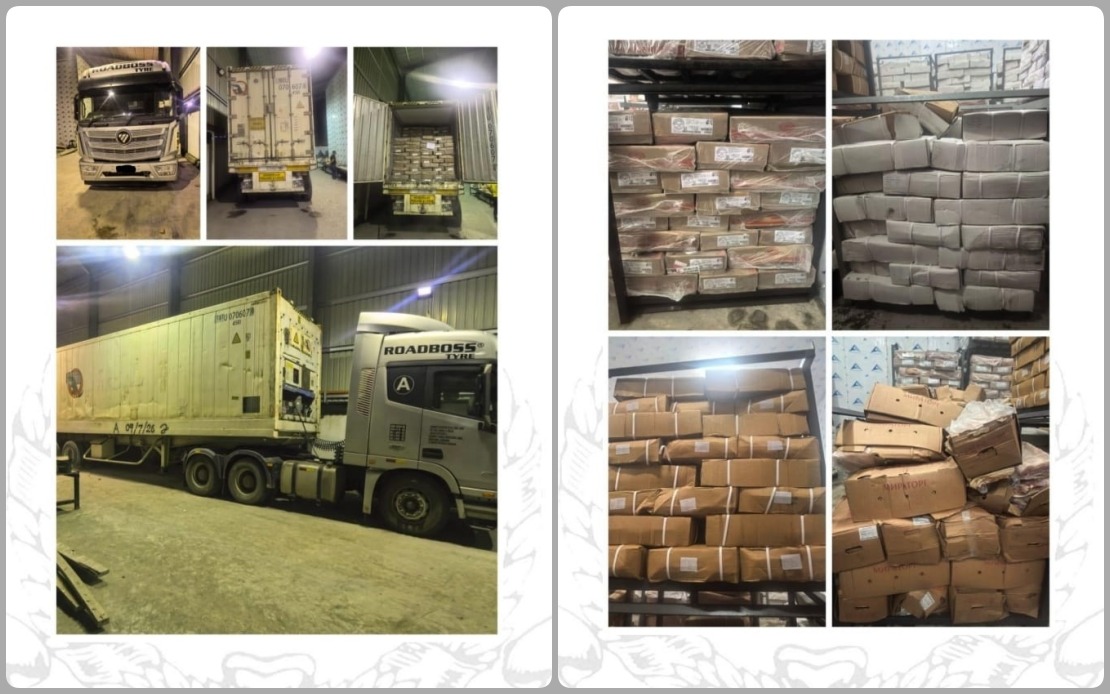
A warehouse in Miri, Sarawak became the focal point of a major food smuggling investigation when police discovered approximately RM6.19 million worth of frozen pork products that lacked the necessary import authorisation. The operation, designated Op Taring Chiller, unfolded on the night of July 9, resulting in the arrest of a local 26-year-old man and representing a significant enforcement action against illegal food trafficking in East Malaysia.
Datak Seri Mohd Yusri Hassan Basri, director of the Internal Security and Public Order Department (JKDNKA), characterised the raid as part of a broader police strategy to combat the distribution of illicit food products and the storage of frozen items with questionable halal certification. The scale of the confiscated inventory highlighted the sophisticated nature of the operation, with authorities uncovering 30,000 kilogrammes of cooked frozen pork large intestines, 18,000 kilogrammes of pork loin spanning 15 pallets, 750 kilogrammes of additional pork products, multiple pallets of bone-in pork bellies with rind, and frozen pork shoulder stock.
The enforcement effort involved coordinated action between multiple agencies, demonstrating the integrated approach Malaysian authorities have adopted to tackle organised smuggling networks. The Wildlife Crime Bureau and Special Investigation Intelligence division took the lead, working alongside Miri district police headquarters and the Miri Division of the Sarawak Veterinary Services Department. This inter-agency collaboration reflects growing recognition that food smuggling often operates alongside other illicit trade activities and requires sustained multi-level enforcement.
From a regulatory standpoint, the investigation proceeded under Sections 9(1) and 9(3) of the Veterinary Public Health Ordinance 1999, a legal framework designed to ensure imported food products meet Malaysia's stringent health and safety standards. Beyond the criminal prosecution pathway, authorities issued a RM25,000 compound notice, offering an alternative resolution mechanism that accelerates enforcement without necessarily requiring full court proceedings.
The Miri seizure represents merely one instance within a broader enforcement campaign that has intensified across Malaysia. Between January 1 and July 10, the Wildlife Crime Bureau and Special Investigation Intelligence conducted 201 separate raids nationwide, culminating in 375 individual arrests. These operations targeted a diversified portfolio of contraband, encompassing non-duty-paid merchandise, leakage of government-subsidised commodities, frozen foodstuffs, protected wildlife trafficking, and electronic waste, with total confiscations valued at RM264.86 million.
For Malaysian consumers and food importers, this enforcement action underscores the government's commitment to maintaining supply chain integrity and protecting public health through rigorous border controls. The prevalence of undocumented pork products in warehouse storage raises questions about the extent of undetected illegal food trafficking and the potential public health implications of consuming products with unverified provenance and handling history.
From a trade perspective, the Miri operation illuminates vulnerabilities in Malaysia's import authentication mechanisms, particularly along the Sarawak-Brunei-Indonesia border region where transnational smuggling networks frequently operate. Port cities and inland distribution hubs in Sarawak have historically served as transit points for contraband destined for peninsula Malaysia and Singapore, making the state a strategic enforcement priority.
The targeting of frozen pork products specifically reflects Malaysia's complex regulatory environment regarding pork importation. While non-Muslim majority states like Sarawak permit pork consumption and commerce, the absence of valid veterinary import permits indicates these products circumvented standard customs and health clearance procedures, potentially involving evasion of import duties and excise taxes. The financial implications extend beyond the seized goods themselves, encompassing lost government revenue and unfair competition against legitimate food importers operating under full regulatory compliance.
The suspect's apprehension at a relatively junior operational level raises broader questions about the supply chain architecture supporting such large-scale smuggling networks. A warehouse containing RM6.19 million in inventory typically represents intermediate distribution rather than retail-level activity, suggesting connections to larger trafficking organisations with established logistics capabilities and buyer networks further down the supply chain.
Malaysian authorities have signalled their determination to escalate enforcement intensity, with senior police leadership emphasising enhanced intelligence gathering and integrated operations to dismantle organised smuggling enterprises. The RM264.86 million in nationwide seizures during the first half of 2024 demonstrates substantial law enforcement output, though assessment of effectiveness requires evaluating these figures against estimated total smuggling volumes entering Malaysian territory.
For regional context, food smuggling represents a persistent challenge across Southeast Asia as price differentials between countries and inconsistent regulatory frameworks create persistent incentives for traffickers. Malaysia's relatively higher food prices compared with neighbouring countries make it an attractive target market for contraband, particularly for protein products subject to tariffs or price controls.
Looking forward, the Miri operation illustrates that despite robust enforcement, significant quantities of undocumented food still reach Malaysian warehouses. Policymakers may need to evaluate whether additional preventive measures—such as enhanced scanning technology at borders or stricter liability provisions for warehouse operators—could further constrain illegal imports before they establish foothold in distribution networks.

