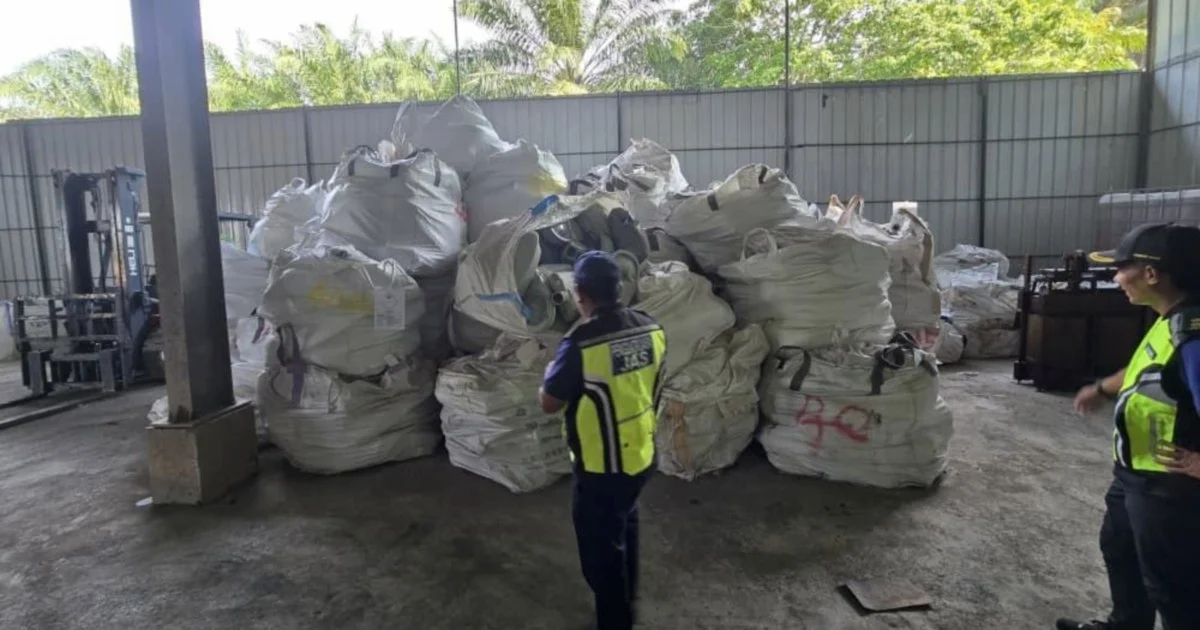
Authorities have uncovered a substantial illegal electronic waste operation in the industrial area of Gambang, Kuantan, resulting in the seizure of contraband materials valued at approximately RM6.4 million. Personnel from the General Operations Force conducted the surprise raid on the unlicensed facility, where they discovered and confiscated various categories of e-waste and related equipment stored at the site.
The discovery represents a significant enforcement achievement for Malaysian authorities grappling with the mounting problem of illegal e-waste trafficking and improper disposal across the country. Electronic waste—encompassing discarded computers, mobile phones, circuit boards, and other technological refuse—contains hazardous materials including lead, mercury, and cadmium that pose severe environmental and public health risks when processed through unregulated channels. The operation demonstrates ongoing efforts to dismantle supply chains that feed the informal recycling sector, which frequently operates without environmental safeguards or proper handling protocols.
Following the raid, a factory manager associated with the facility was taken into custody for further investigation. Authorities have not yet released details regarding the specific nature of charges or the expected trajectory of legal proceedings, though the magnitude of the seizure suggests a comprehensive inquiry into the operation's scope, duration, and distribution networks. The detention indicates that investigators are probing deeper into the business structure and identifying individuals who may have played roles in procuring, processing, or selling the contraband materials.
The Gambang industrial zone, situated roughly 25 kilometres from central Kuantan, has long been targeted by environmental enforcement agencies as a concentration point for manufacturing activities. Its proximity to logistics corridors and distribution networks makes it strategically significant for understanding how illegally imported e-waste and smuggled goods move through Pahang and surrounding regions. The facility's operation appears to have escaped detection until the GOF raid, suggesting either sophisticated concealment methods or gaps in surveillance protocols that enforcement agencies are now reassessing.
Malaysia's struggle with e-waste management reflects broader Southeast Asian challenges as economic development accelerates electronic consumption without corresponding improvements in collection and recycling infrastructure. The nation processes both domestically generated waste and illegally imported materials from developed countries seeking cost-effective disposal solutions. Authorities estimate that Malaysia receives thousands of tonnes of undocumented e-waste annually, with much of it destined for informal processing operations that prioritise extraction of valuable metals and components over environmental protection.
The environmental implications of such operations extend far beyond individual factory sites. Uncontrolled dismantling and processing of electronics in unventilated spaces expose workers to toxic fumes and contaminated dust. Leachate from improperly stored materials infiltrates groundwater systems, affecting agriculture and drinking water supplies. The broader ecosystem suffers as heavy metals accumulate in soil and waterways, biomagnifying through food chains and concentrating in human tissues over time. Such ecological damage often proves difficult and expensive to remediate, creating long-term liabilities that communities bear for decades.
This enforcement action underscores the increasing sophistication of cross-border criminal networks trafficking in prohibited materials. Operators exploiting regulatory gaps between nations establish transit hubs in countries like Malaysia with less stringent border controls, using the nation as a processing and re-export point. International agreements including the Basel Convention attempt to regulate hazardous waste movement, yet enforcement remains inconsistent across signatory nations, creating opportunities for circumvention through falsified documentation and deliberate misclassification of cargo.
From a regulatory perspective, the seizure highlights the ongoing tension between manufacturers' responsibility for end-of-life product management and the realities of enforcement capacity. Extended producer responsibility schemes require companies to manage waste streams from their products, yet illegal importation circumvents these obligations entirely. Malaysia's Department of Environment has advocated for stronger penalties and resource allocation to inspectorates, yet budgetary constraints and jurisdictional complexities—involving federal, state, and local authorities—often fragment enforcement efforts.
The incident carries implications for regional supply chains and consumer behaviour. As Southeast Asian nations develop manufacturing capabilities and consumer electronics markets expand, the volume of domestically generated e-waste will increase substantially. Without investment in formal collection and recycling infrastructure, enforcement alone cannot address the problem. Policymakers across the region are increasingly recognizing that creating economic incentives for proper disposal—through deposit systems, extended producer responsibility with meaningful penalties, and subsidized formal recycling services—represents a more sustainable approach than interdiction.
Investigations are continuing as authorities work to determine the origin of the seized materials, identify customers and distributors, and assess potential connections to organised trafficking networks. The case may illuminate how illicit materials transit through Malaysian ports and industrial zones, providing intelligence that could reshape enforcement strategies. Industry observers note that successful dismantling of major operations frequently leads to detection of upstream smuggling networks and downstream buyers, potentially triggering cascading investigations across multiple jurisdictions.
The broader significance of this operation lies in its demonstration that enforcement agencies possess capability to locate and suppress illegal operations when resources and intelligence converge. However, single enforcement actions, while valuable for public relations and immediate impact, represent tactical successes rather than systemic solutions. Addressing Malaysia's e-waste challenges comprehensively requires parallel investment in legitimate recycling infrastructure, public awareness campaigns, stricter import controls, and regional cooperation to address the transnational nature of the problem.

