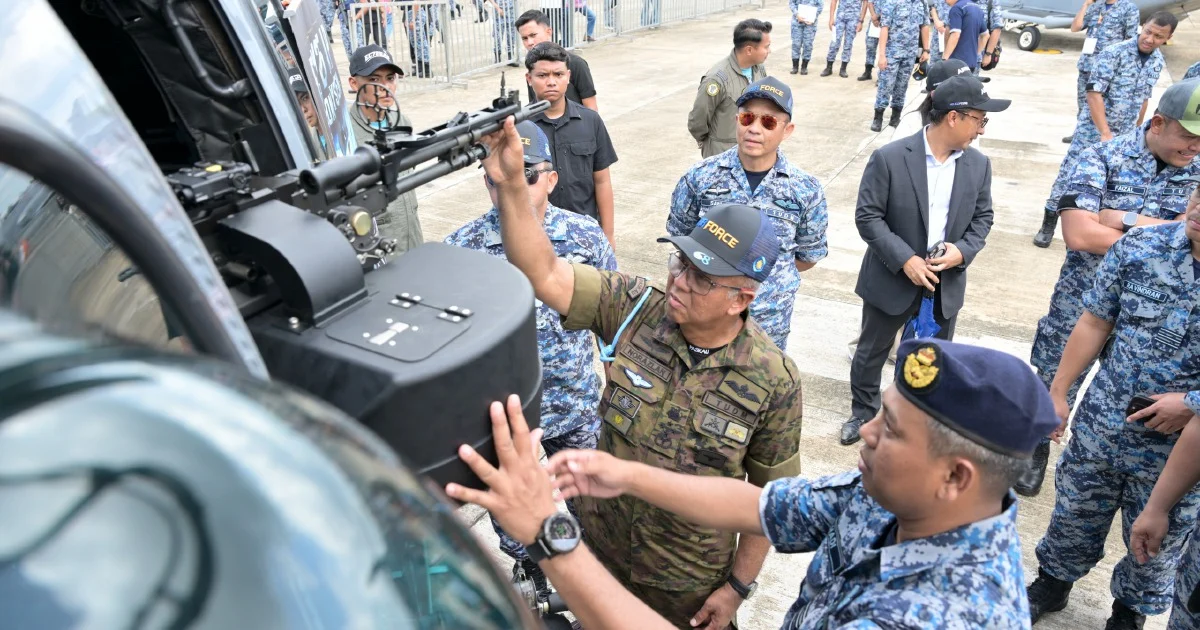
The Royal Malaysian Air Force has taken a significant step forward in modernising its aerial rescue capabilities by equipping its EC725 helicopter fleet with upgraded weapons systems designed specifically for combat search and rescue missions. The enhancement represents a strategic investment in the service's ability to operate effectively in high-threat environments where personnel recovery operations demand both speed and protective firepower.
The EC725 platform, which has formed the backbone of Malaysia's dedicated search and rescue operations for over a decade, was originally designed as a transport and utility helicopter with limited offensive capacity. The recent weaponisation upgrade addresses a critical operational gap that military planners identified during previous rescue missions in challenging security situations. By integrating modern armament systems, the RMAF now possesses a more capable platform capable of providing suppressive fire and active defence during sensitive personnel recovery operations.
Combat search and rescue represents one of the most demanding mission profiles in modern military aviation. When downed pilots or isolated military personnel require extraction from hostile or contested territory, rescue helicopters face multiple threats ranging from small arms fire to more sophisticated anti-aircraft weapons. The standard transport configuration of the EC725, while excellent for humanitarian and routine military logistics operations, left crews vulnerable during high-risk extractions. This firepower upgrade directly addresses that vulnerability by enabling rescue teams to establish protective fire superiority around extraction zones.
The RMAF's decision to enhance the EC725's combat capability reflects broader regional security considerations that extend beyond Malaysia's borders. Southeast Asia's maritime domain, complex geography, and transnational security challenges mean that air force personnel may occasionally require recovery from difficult terrain or areas where non-state actors operate. Having rescue helicopters equipped with modern defensive and suppressive weaponry provides operational flexibility and significantly improves the likelihood of successful personnel recovery under adverse circumstances. This capability also enhances Malaysia's ability to contribute to regional military cooperation and multinational operations that may require rescue support.
The specific weapons systems integrated into the upgraded EC725s reflect careful consideration of the helicopter's operational envelope and the tactical requirements of combat rescue scenarios. Helicopter-mounted weapons must be carefully balanced against the aircraft's other mission requirements, including carrying rescue personnel, medical equipment, and extracted survivors. The upgrade programme appears to have prioritised systems that offer effective area suppression while maintaining the helicopter's core transport and recovery functions, ensuring that the platform remains versatile across multiple operational scenarios.
From a broader military modernisation perspective, this upgrade demonstrates the RMAF's commitment to evolving its capabilities in line with contemporary operational demands. Rather than retiring aging platforms or waiting for entirely new aircraft acquisitions, the service has identified an opportunity to extend the operational relevance of existing assets through targeted capability enhancement. This pragmatic approach to defence spending reflects resource constraints common across the region while acknowledging that modern military operations increasingly demand multi-role platforms capable of handling complex, dynamic situations.
The integration of new weapons systems into operational helicopter fleets also raises important questions about training, maintenance, and doctrine development. RMAF crews will require comprehensive training on the new systems, both in aircraft handling with additional weight and complexity, and in tactical employment of these weapons during rescue operations. This training development represents a substantial but necessary investment that extends well beyond the initial hardware installation. Maintenance personnel must also develop competency with the new systems, potentially requiring partnerships with the equipment manufacturers and allied air forces with similar platforms.
Regionally, this enhancement to Malaysia's rescue capabilities has implications for military cooperation and interoperability within Southeast Asia. Several ASEAN nations operate similar helicopter platforms or maintain their own search and rescue programmes. The RMAF's experience with this upgrade programme could provide valuable lessons for partner nations considering similar enhancements. Additionally, equipped with more capable rescue assets, Malaysia becomes a more valuable contributor to regional humanitarian assistance and disaster relief operations, where military helicopters frequently play crucial roles.
From an operational perspective, the enhanced EC725s strengthen Malaysia's ability to respond to maritime emergencies across the South China Sea and the Strait of Malacca. Commercial and military aircraft operating over these busy waterways occasionally require urgent rescue support, and the upgraded helicopters provide assured rescue capability backed by credible defensive firepower. This capability enhancement underscores Malaysia's commitment to maintaining security and safety across its area of responsibility, a responsibility that carries particular weight given the strategic importance of regional shipping lanes.
The upgrade also reflects evolving threats in the operating environment. Non-state actors across the region have increasingly acquired small arms and improvised weapons that pose genuine risks to low-flying aircraft. By equipping rescue helicopters with modern defensive systems, the RMAF ensures that crews can effectively counter these threats while maintaining focus on the critical mission of personnel recovery. This evolution in threat response demonstrates how even established military platforms can be adapted to address emerging security challenges through intelligent modernisation rather than platform replacement.
Looking forward, the success of this EC725 enhancement programme may inform future RMAF decisions regarding other helicopters and transport aircraft in the fleet. As defence budgets remain constrained and existing platforms continue to offer useful service life, strategic upgrades represent an efficient path toward maintaining operational relevance. The RMAF's investment in combat rescue capability through the EC725 upgrade exemplifies this approach—taking existing assets and enhancing them to meet contemporary mission demands while maintaining flexibility across multiple operational scenarios.

