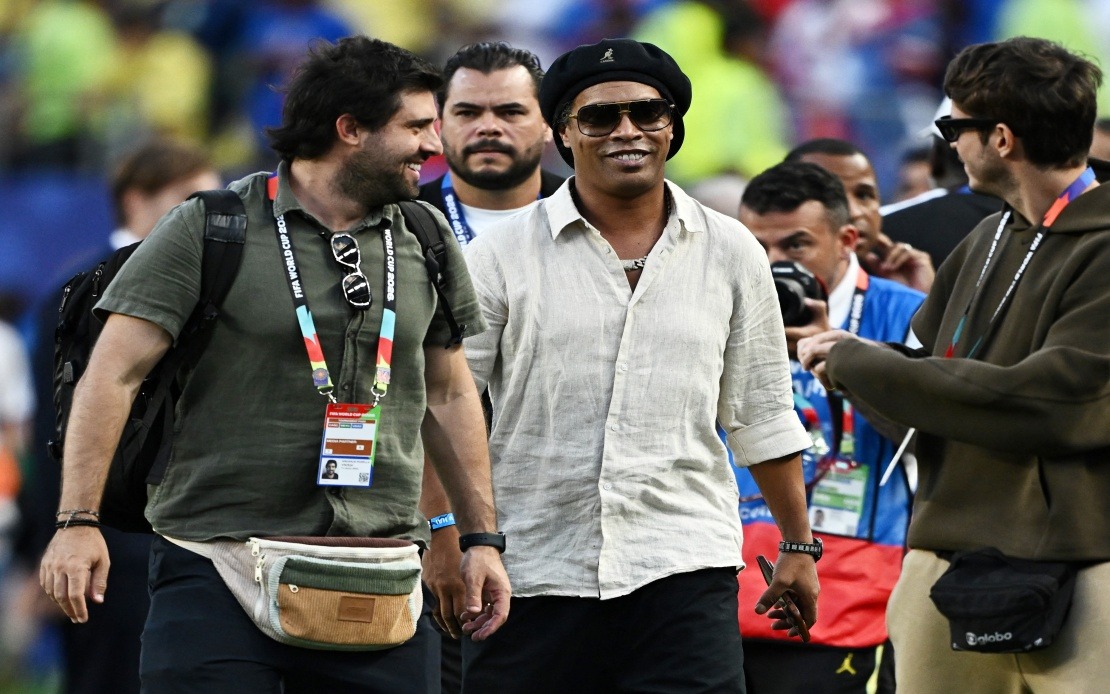
Ronaldinho's remarkable career may not be over yet. The legendary Brazilian footballer is poised to pen a contract with Ravenna, an Italian third-division club, in what would constitute an extraordinary return to competitive football at the age of 46. German Press Agency reported the development, citing Italian sports outlet Gazzetta dello Sport as the source, with further details expected to emerge from an announcement in Miami scheduled for Tuesday. The exact nature of his involvement—whether as a playing member of the squad or in another capacity—remains shrouded in uncertainty, though club officials have hinted that participation on the pitch cannot be entirely dismissed.
Ronaldinho's interest in joining Ravenna appears driven by a personal connection with the club's ownership. In statements attributed to the two-time World Footballer of the Year, he expressed enthusiasm about working alongside Ignazio Cipriani, the club's proprietor who has built a substantial business empire in the hospitality sector. The prospect of collaborating with Cipriani and his family structures seems to have motivated the legendary playmaker to pursue this unconventional arrangement. His quoted remarks about rekindling his love for the beautiful game—"I can't wait to dance with the ball again and write a new story"—suggest genuine passion rather than a purely financial transaction, though such ventures at his age invariably raise eyebrows among football observers.
Ravenna's leadership has adopted a characteristically coy stance regarding Ronaldinho's role. Ariedo Braida, the club's vice-president, told ANSA news agency that playing time remains an open question while simultaneously suggesting that his champion pedigree transcends conventional age considerations. The ambiguity in the club's messaging hints at a promotional opportunity as much as a sporting one—the arrival of someone of Ronaldinho's stature could significantly elevate the profile of a third-division institution. Italian football's lower divisions have increasingly sought high-profile veterans in recent years, recognising the commercial and media value they bring to modest clubs operating in competitive but commercially constrained circumstances.
The prospect of Ronaldinho stepping onto a football pitch again almost nine years after his last professional appearance would represent one of sport's most unlikely narratives. His final competitive match occurred in 2015 playing for Rio de Janeiro's Fluminense, followed by two seasons in India's Premier Futsal League before his official retirement in 2017. The intervening years have seen the Brazilian icon largely retreat from professional football, occasionally appearing at charity events and exhibitions but steering clear of sustained competitive environments.
Ronaldinho's CV remains among football's most glittering, spanning multiple continents and winning the sport's most coveted honours. He lifted the World Cup with Brazil in 2002, establishing himself as the tournament's driving force through his creativity and technical mastery. His four-year stint at Barcelona from 2004 to 2008 produced a Champions League triumph in 2006 alongside La Liga success, cementing his status among the modern era's greatest talents. His 2013 Copa Libertadores victory with Atletico Mineiro in Brazil demonstrated his continued relevance even as his peak years receded, winning South America's premier club competition at age 33.
The broader context of veteran comebacks in European football suggests varied outcomes. Some former champions have successfully managed brief returns to the pitch, leveraging experience and technical sophistication to compensate for diminished physical capacity. Others have found the gap between memory and reality a humbling experience. For Ronaldinho specifically, the question extends beyond simple fitness metrics—at 46, even playing in lower-division Italian football demands sustained cardiovascular output and tactical positioning that differ substantially from exhibition matches or training environments.
For Malaysian and Southeast Asian football enthusiasts, Ronaldinho's potential resurrection carries particular resonance. The Brazilian's playing style—emphasising skill, unpredictability, and entertainment—influenced generations of young players across the region who grew up emulating his flair. His presence in European football, even in the third division, maintains his visibility among Asian audiences and could contribute to Ravenna's international broadcasting appeal. Italian third-division matches typically attract modest television audiences, but Ronaldinho's involvement could substantially increase viewership in Asian markets where nostalgia for his prime years remains strong.
The Ravenna situation also illustrates evolving dynamics within professional football's lower tiers. Clubs operating outside Europe's elite competitions increasingly pursue veteran signings as mechanisms for generating revenue through merchandise, broadcast rights, and stadium attendance. This strategy acknowledges that contemporary supporters value narrative and celebrity as much as competitive excellence. Ronaldinho's signing, whether he plays or not, becomes a story that travels far beyond Ravenna's relatively modest stadium in the Emilia-Romagna region.
From a financial perspective, Ravenna's investment in Ronaldinho likely represents a calculated risk. The club gains promotional value, potential media revenue, and the possibility of increased supporter engagement without necessarily betting the organisation's stability on his playing contributions. Should he feature regularly, the competitive benefits would constitute an unexpected bonus rather than the primary objective. This pragmatic approach characterises how lower-division European clubs increasingly position themselves as the professional sport landscape evolves and expands globally.
The announcement scheduled for Miami provides an intriguing detail that underscores Ronaldinho's enduring international profile. Rather than unveiling the move through traditional Italian media channels, the club has opted for a North American stage, suggesting a sophisticated understanding of global sports marketing. This geographical choice reflects how contemporary football transcends geographical boundaries, with major announcements calibrated for maximum worldwide media exposure regardless of the actual location of the clubs involved.
Ultimately, Ronaldinho's potential Ravenna adventure represents more than an ageing legend chasing nostalgia, though that element undoubtedly exists. It reflects contemporary football's expanded opportunities for athletes to remain connected to professional competition even when physical decline has rendered their return to elite levels implausible. Whether he actually takes the pitch remains genuinely uncertain, but his presence at a third-division Italian club already constitutes a significant story that extends well beyond Ravenna's modest profile into the global sporting consciousness.

