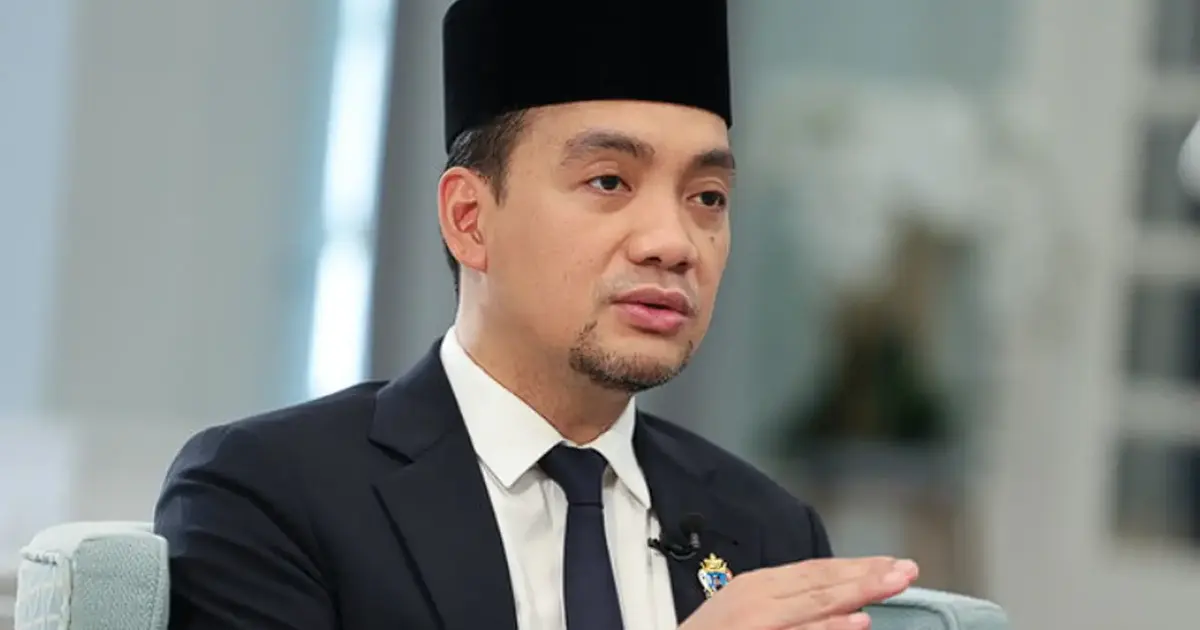
Johor's caretaker menteri besar Onn Hafiz has moved to clarify the role of royal authority in the dissolution of the state assembly, distinguishing between the formal constitutional machinery and any suggestion of political intervention by the palace. Speaking in response to scrutiny surrounding the process, Onn Hafiz emphasised that the granting of royal assent represents a standard constitutional function integral to Malaysia's system of governance, not an unusual exercise of palace influence over political affairs.
The clarification arrives amid broader discussions about the mechanisms by which state assemblies are dissolved and the respective roles of executive leadership and the monarchy within the constitutional framework. In Malaysia's federal structure, the powers and procedures governing state-level governance are defined within the Federal Constitution and individual state constitutions, which spell out the conditions and processes for legislative dissolution. The requirement for royal assent reflects the ceremonial and constitutional position of state rulers within their respective jurisdictions, a tradition maintained across all Malaysian states regardless of the political complexion of their governments.
Onn Hafiz's remarks underscore an important distinction that often becomes obscured in public discourse: the difference between a monarch's exercise of constitutionally mandated powers and the monarch's political interference in the substantive direction of government. By framing the royal assent as a procedural obligation rather than a discretionary intervention, the menteri besar is articulating that the palace is fulfilling its designated constitutional role, not overstepping into policy or political decision-making domains that belong to elected representatives.
The context of these remarks points to a deeper conversation about constitutional monarchy in Malaysia. The system depends on a careful balance wherein rulers maintain ceremonial and formal authority while elected governments exercise executive and legislative powers. When dissolution processes involve royal assent, this typically reflects the need for formal validation rather than substantive approval or rejection of the dissolution itself. The distinction may seem technical, but it carries significant implications for understanding how Malaysia's constitutional democracy functions at the state level.
In Johor specifically, the state has a well-established tradition of constitutional governance that predates the nation's independence. The Johor sultanate has long maintained its role as a constitutional monarchy within the state, with the Sultan serving as head of state while menteri besars, elected through the assembly, exercise executive authority. This arrangement has created a framework where the palace's formal powers—such as granting assent to legislative measures—operate within boundaries established by constitutional convention and written law.
The timing of Onn Hafiz's clarification is worth noting given the heightened sensitivity around questions of palace involvement in Malaysian politics across both federal and state levels. Recent years have witnessed increased public interest in understanding the precise constitutional limits of royal prerogative, driven by various political developments and constitutional questions that have captured national attention. In this climate, elected officials have greater incentive to publicly affirm their understanding of constitutional boundaries and to distinguish between legitimate palace functions and inappropriate political interference.
For Malaysian readers accustomed to parliamentary and constitutional terminology, Onn Hafiz's language serves an educational purpose as well. The menteri besar is essentially restating that constitutional monarchy requires the monarch to exercise certain formal powers—signing legislation, granting assents, issuing proclamations—as part of the machinery of state. These powers, when exercised according to constitutional prescription, do not constitute political interference even though they formally involve the palace in governmental processes. The distinction preserves both the dignity and appropriate constitutional role of the monarchy while maintaining the principle that elected representatives bear primary responsibility for political direction.
This matter also reflects broader Southeast Asian patterns regarding constitutional monarchy and state governance. Across the region, various nations maintain formal roles for monarchs within parliamentary or semi-parliamentary systems. Understanding these distinctions becomes particularly important for Malaysian citizens seeking to engage thoughtfully with questions about constitutional governance and the proper distribution of authority between different branches and levels of government.
The position articulated by Onn Hafiz also carries implications for how Johor conducts future electoral processes and constitutional operations. By firmly locating the royal assent within ordinary constitutional procedure, the menteri besar is essentially signalling that there need be no special concern or controversy attending the palace's formal approval of state assembly dissolution. This framing aims to depoliticise what is, in constitutional terms, a routine administrative and ceremonial process, thereby preventing unnecessary questions about palace propriety from intruding into what should remain a straightforward procedural matter.
For the broader Malaysian polity, these clarifications from senior elected officials serve an important function in maintaining public understanding of constitutional norms. When menteri besars, chief ministers, and other senior figures take time to explain the constitutional basis for various governmental processes, they contribute to a more informed citizenry capable of distinguishing between legitimate constitutional mechanisms and genuine overreach. This public education becomes especially valuable in moments of political transition or uncertainty, when questions about proper procedure and appropriate authority naturally arise.

