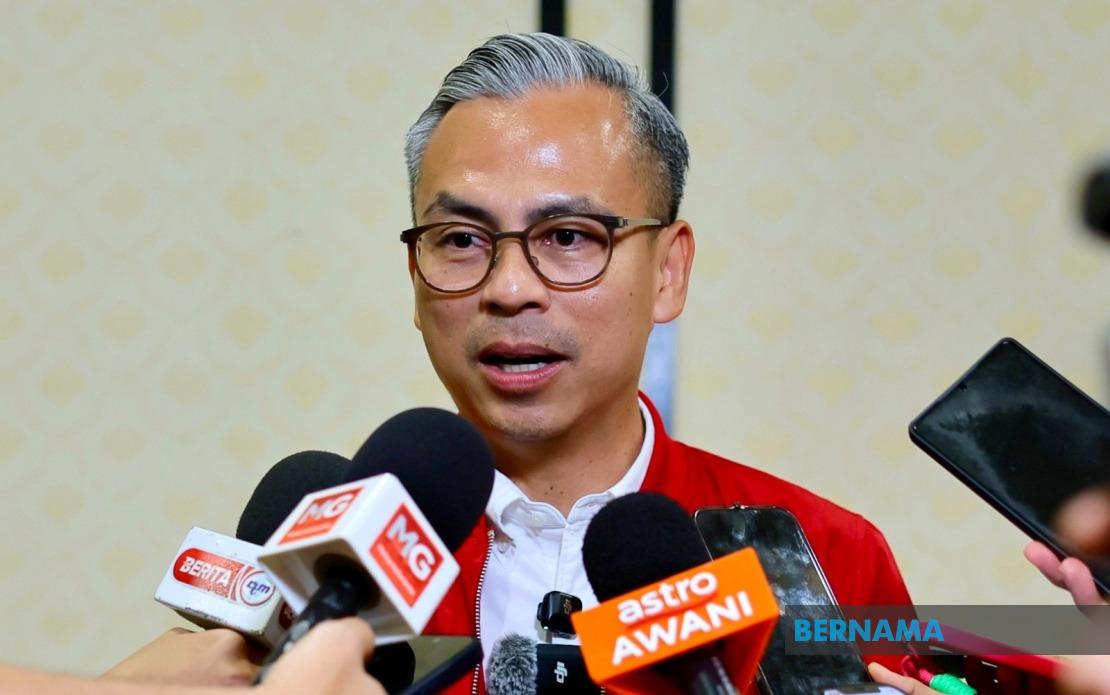
Communications Minister Datuk Fahmi Fadzil has extended an invitation for Johor Menteri Besar Datuk Onn Hafiz Ghazi to participate in a televised dialogue with Pakatan Harapan's Dr Maszlee Malik, with Radio Televisyen Malaysia offering to broadcast the exchange live. The proposal comes as the Johor state election campaign intensifies ahead of the July 11 polling date, with early voting scheduled for July 7.
Fahmi emphasised that the dialogue platform would focus substantively on Johor's development trajectory and long-term vision rather than devolving into partisan point-scoring. Speaking to journalists in Muar, he indicated flexibility regarding the timing and location of such a discussion, suggesting that Johor Bahru or other mutually convenient venues could host the event. This approach seeks to establish a framework for constructive engagement between competing political visions without the acrimony that sometimes characterises electoral contests.
The Communications Minister's overture addresses recent criticism from certain quarters suggesting that Pakatan Harapan should first formally announce its Menteri Besar candidate before committing to any debate platform. However, Fahmi's position reframes the conversation around the capacity of potential leaders to engage meaningfully with opposing perspectives. He underscored that willingness to confront differing viewpoints and handle professional disagreement constitutes a fundamental leadership quality essential for steering a state's development agenda.
Fahmi also acknowledged Dr Maszlee's initiative in convening discussions with 41 young voters to explore the state's aspirations and development priorities. This recognition highlights a broader campaign strategy within Pakatan Harapan focused on grassroots engagement and youth participation in determining Johor's political direction. The emphasis on youth involvement carries particular weight given that younger voters represent an increasingly influential demographic in Malaysian electoral contests.
The Puteri Wangsa state seat contest encompasses a crowded field of candidates competing for voter support. Beyond Maszlee's candidacy for Pakatan Harapan, the seat features Barisan Nasional's Teow Chia Ling, Nicholas Paul Vincent representing Parti Bersama Malaysia, MUDA's Rashifa Aljunied, and independent candidate Wang Wee Seong. This multi-cornered competition reflects the fragmentation of opposition politics in Johor, where several political entities are bidding for relevance against both the incumbent Barisan coalition and Pakatan Harapan's established structure.
In the Machap constituency, the contest takes a different form, with sitting Menteri Besar Onn Hafiz facing a direct challenge from Pakatan Harapan's Nor Hafiz Roslan. This particular race carries elevated significance because it directly determines who steers Johor's state apparatus over the next five-year term. The contest between these two candidates will likely receive substantial media attention and campaign resources from both coalitions.
Fahmi's appeal to young voters addressed practical concerns surrounding the mid-month polling date, urging them to prioritise their civic duty despite potential logistical inconveniences. This messaging acknowledges that July's scheduling could present challenges for certain voter cohorts, yet frames electoral participation as a fundamental responsibility. The young voter demographic remains strategically important for Pakatan Harapan, which has increasingly emphasised appeals to generational change and fresh approaches to governance.
The offer of an RTM platform carries institutional weight within Malaysia's media landscape. State broadcaster RTM traditionally maintains editorial guidelines emphasising balanced coverage during election periods, lending credibility to any dialogue conducted under its auspices. This differs from private broadcaster arrangements, which might face perceptions of partisan inclination depending on ownership structures. By anchoring the proposed dialogue to a state institution, Fahmi's proposal attempts to establish legitimacy and neutrality around the exchange.
The strategic timing of this proposal merits consideration. With the election campaign already underway and polling day less than two weeks distant, the window for organising such an event remains constrained. Whether Onn Hafiz accepts the invitation could signal his confidence in defending his record and engaging directly with opposition critiques. Conversely, declining might invite questions about willingness to defend his tenure and vision for the state's future development.
For Malaysian and Southeast Asian observers, the Johor election represents a significant electoral test within Malaysia's complex federal system. Johor constitutes one of the country's most developed and economically significant states, and its governance direction influences broader regional economic patterns. The outcome will also provide indicators regarding voter sentiment toward competing coalitions across a state where both Barisan Nasional and Pakatan Harapan maintain substantial organisational capacity.
The emphasis on substantive policy dialogue rather than inflammatory campaigning reflects emerging expectations around electoral conduct in Malaysia. Whether candidates accept invitations to structured, platform-based discussions increasingly becomes a measure of their credibility and leadership credentials. Such dialogues, when successfully executed, can elevate campaign discourse and provide voters with genuine comparative information regarding competing visions for the state's future.
Fahmi's position as both Communications Minister and Pakatan Harapan Communications Director places him at the intersection of governmental and partisan roles. This positioning allows him to mobilise state resources—RTM's broadcast platform—while ostensibly serving broader public interest through facilitating informed electoral discussion. The framing of the dialogue as non-partisan development-focused exchange attempts to navigate potential conflicts inherent in this dual positioning.

