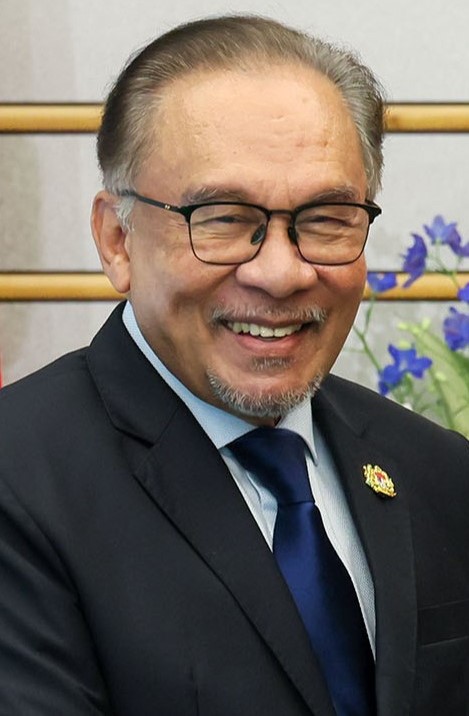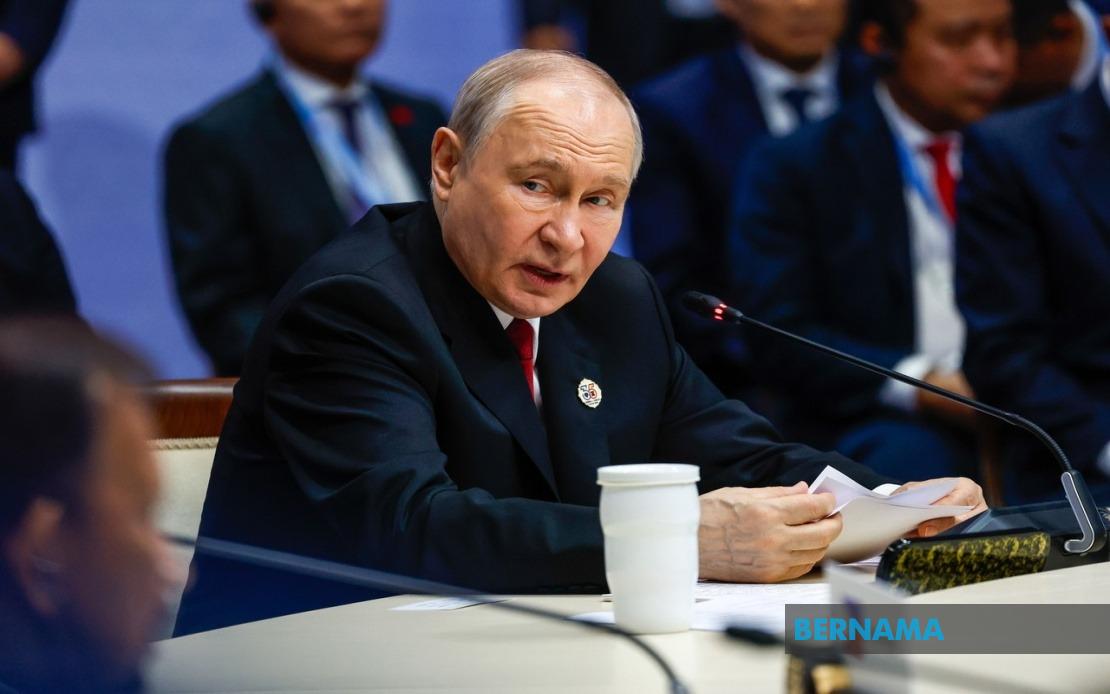
President Vladimir Putin opened a commemorative summit in Kazan marking three and a half decades of Russia-ASEAN collaboration, framing the relationship as a crucial stabilizing force for the Asia-Pacific region during a period of considerable geopolitical uncertainty. The gathering brought together leaders from across Southeast Asia, including Philippine President Ferdinand Marcos Jr, who holds the current ASEAN chairmanship, and Malaysian Prime Minister Datuk Seri Anwar Ibrahim, to reflect on shared achievements and chart future cooperation.
The bilateral relationship formally commenced in 1991 when Russia established its first official ties with ASEAN in Kuala Lumpur, following the Soviet Union's dissolution. What began as a foundational connection gradually deepened over the subsequent quarter-century, eventually reaching its present elevated status as a comprehensive strategic partnership designated in 2018. This progression reflects genuine mutual interest rather than perfunctory engagement, with Russia achieving full ASEAN Dialogue Partner status by 1996—a classification that demonstrated growing confidence in the relationship's potential.
Russia's diplomatic pitch to ASEAN rests on several concrete pillars that resonate with Southeast Asian priorities. Energy cooperation stands foremost, as ASEAN nations continue to navigate complex energy security challenges in an era of volatile fossil fuel markets and the urgent imperative to diversify supply sources. Technology and agricultural expertise represent additional strengths Russia brings to regional partnerships, whilst higher education opportunities appeal to ASEAN governments seeking to develop human capital. These practical dimensions distinguish Russia's engagement from more politically fraught relationships in the region, offering tangible benefits that transcend ideological divisions.
Putin emphasised that the partnership operates within a framework grounded in internationally recognised legal principles and shared material interests rather than transactional convenience. This positioning carries particular significance given current global divisions, as Russia seeks to maintain viable partnerships outside the Western sphere of influence whilst ASEAN navigates its traditional policy of non-alignment. The Russian president characterised the relationship as contributing to development of what he termed a balanced security architecture—language that subtly references alternative regional arrangements beyond Western-dominated structures.
The substantive scope of Russia-ASEAN cooperation extends across remarkably diverse domains. Security collaboration encompasses everything from intelligence sharing to maritime security initiatives, matters of increasing salience as regional tensions mount. Trade and investment ties, whilst modest compared to ASEAN's engagement with China or developed Western economies, nonetheless represent meaningful economic interchange. Agricultural cooperation taps Russian expertise in temperate-zone production, whilst digitalisation initiatives address Southeast Asia's rapid technological advancement. These multifaceted connections create genuine interdependencies that buttress diplomatic relationships.
The timing of the commemorative summit reflects both sides' determination to strengthen ties amid widening global divisions. ASEAN faces mounting pressure from major powers to adopt positions on various geopolitical flashpoints, from Ukraine to Taiwan to South China Sea disputes. Russia, confronted with Western sanctions and diplomatic isolation following its 2022 invasion of Ukraine, actively seeks sympathetic partners capable of maintaining engagement without facing comparable international pressure. Southeast Asia's continued diplomatic neutrality and strategic autonomy make it an increasingly valuable partner for Moscow.
For ASEAN nations themselves, the relationship offers strategic diversification benefits. Rather than defaulting to Washington, Beijing, or Tokyo for all critical partnerships, Southeast Asian governments can draw on Russian capabilities in specific sectors. Energy security holds particular relevance, as traditional suppliers face constraints and alternative sources become strategically valuable. Russia's agricultural production, technological capabilities in select sectors, and educational offerings provide options that reduce dependence on any single partner—a cornerstone principle of ASEAN's long-standing diplomatic philosophy.
The summit's agenda encompassed reviewing three decades of achievements whilst examining future trajectories. Expanded cooperation in food security emerged as a notable priority, addressing regional vulnerabilities highlighted by recent global supply chain disruptions. Digital transformation initiatives align with ASEAN's collective vision of technological advancement and competitive integration into global digital economies. Scientific and technological exchange programmes reflect both parties' recognition that innovation drives contemporary development and prosperity.
However, the partnership must navigate significant headwinds. Western sanctions against Russia complicate commercial transactions and limit technological collaboration in some sensitive domains. ASEAN's commitment to international law principles creates tension with Russia's current geopolitical trajectory, particularly regarding Ukraine. Several ASEAN members maintain close security relationships with Western nations, potentially constraining alignment on contentious issues. These structural constraints mean the partnership, whilst genuine, operates within defined parameters rather than developing into comprehensive alliance.
For Malaysian observers and policymakers, the Russia-ASEAN relationship's trajectory warrants careful attention. Malaysia, as a significant ASEAN player with substantial energy interests, benefits from engagement diversification and Russian energy cooperation. The relationship also demonstrates ASEAN's continuing capacity to maintain principled non-alignment whilst hosting major power partnerships—a capability increasingly tested in contemporary strategic competition. Understanding Russia's regional engagement patterns helps Malaysian decision-makers calibrate their own diplomatic positioning.
The commemorative summit represents more than ceremonial acknowledgment of past ties. It signals mutual commitment to deepening collaboration across economic, security, scientific, and cultural dimensions despite the fractious international environment. For Russia, engaged in prolonged confrontation with Western institutions, ASEAN partnerships represent vital alternative avenues for maintaining global influence and accessing Southeast Asian resources and markets. For ASEAN, Russian engagement preserves the principle of strategic autonomy and ensures access to capabilities and expertise that complement existing partnerships with other major powers.
Looking forward, the partnership's evolution will likely follow pragmatic rather than ideological trajectories. Specific sectoral cooperation—energy, agriculture, technology—will probably expand regardless of broader geopolitical shifts, as these collaborations generate mutual benefits difficult to abandon for political reasons. Cultural and educational exchanges foster long-term understanding that transcends momentary diplomatic tensions. Meanwhile, security cooperation will develop selectively, with emphasis on non-controversial domains whilst more contentious areas proceed cautiously, reflecting ASEAN's fundamental commitment to regional stability and non-confrontation with any power.
The 35-year partnership demonstrates that strategic relationships in Asia-Pacific need not follow exclusively Western-centric patterns to prove stable and mutually beneficial. Russia and ASEAN have constructed durable ties grounded in specific complementarities and shared interests rather than ideological alignment or exclusive security commitments. As global competition intensifies and regional powers seek strategic flexibility, this model of pragmatic partnership offers lessons for navigating complex contemporary geopolitics whilst preserving core principles of non-alignment and mutual respect.