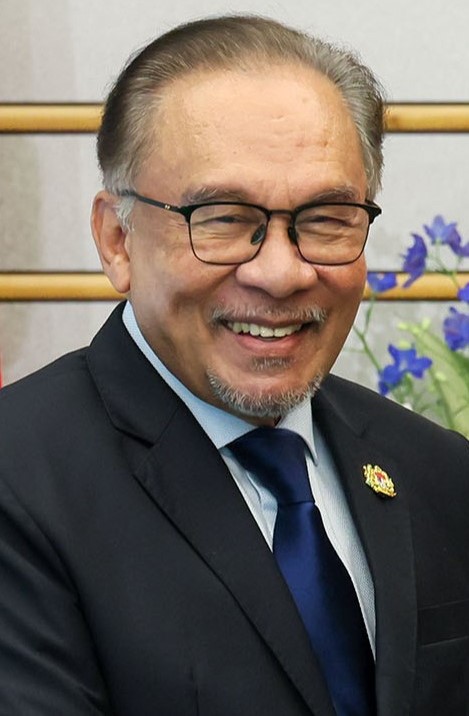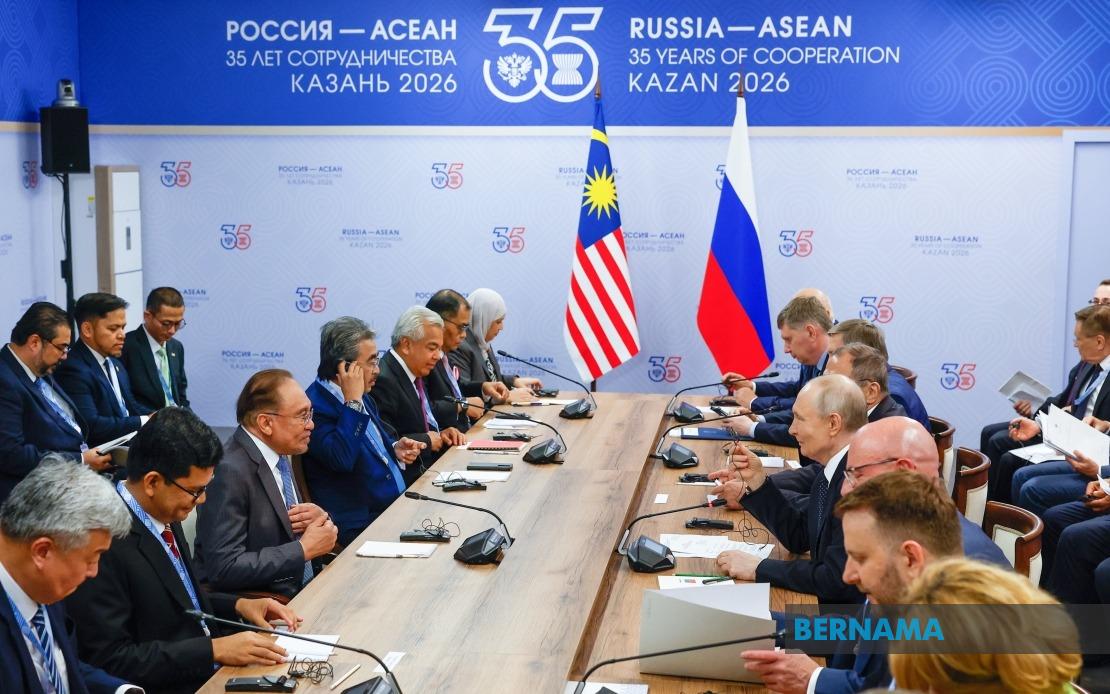
Vladimir Putin voiced optimism about Russia's partnership with Malaysia during a bilateral meeting with Prime Minister Datuk Seri Anwar Ibrahim at the ASEAN-Russia Commemorative Summit in Kazan on June 18, highlighting the momentum both nations have built ahead of a significant diplomatic milestone. The Russian leader characterised the relationship as resting on firm ground, with structured mechanisms in place to advance shared interests across multiple sectors and organised frameworks designed to translate political goodwill into tangible collaborative outcomes.
The approaching 60th anniversary of diplomatic relations in 2026 provides both countries with an opportunity to reflect on their trajectory whilst charting a course for deeper engagement. Putin emphasised that Moscow and Kuala Lumpur have accumulated what he termed "substantive positive experience" in their dealings, suggesting that decades of bilateral contact have created trust and familiarity that can serve as a foundation for expanded cooperation. This framing places the relationship within a longer historical context, distinguishing it from newer partnerships that lack such depth.
The institutional architecture underpinning Russia-Malaysia ties demonstrates the seriousness with which both sides approach their relationship. Regular contact channels operate through government ministries, specialised agencies, and parliamentary exchanges, ensuring that cooperation spans administrative levels and includes elected representatives. An intergovernmental commission dedicated to economic, scientific, technical, and cultural collaboration oversees the practical implementation of joint initiatives, preventing bilateral agreements from remaining merely symbolic gestures.
Trade performance has emerged as a concrete indicator of relationship health. The 12.9 per cent increase in bilateral trade recorded in 2025 suggests that economic complementarities continue to drive commercial activity between the two nations. For Malaysia, Russia represents a significant market for commodities and manufactured goods, while Russian exports provide access to energy products and raw materials. This mutual economic stake creates incentives for both governments to maintain stable, predictable relations despite broader geopolitical tensions that sometimes complicate Moscow's ties with Western nations.
Beyond commerce, Putin identified education, scientific research, technological development, tourism, and cultural exchange as priority areas warranting expanded investment. These sectors address human-to-human connections rather than purely state-level interactions, suggesting a vision of partnership that extends beyond government officials and corporate boardrooms to encompass students, researchers, artists, and ordinary citizens. Such cultural and educational dimensions help insulate bilateral ties from purely transactional considerations and create constituencies within both societies with a vested interest in maintaining friendly relations.
Malaysia's continuing support for the Russia-ASEAN strategic partnership carries particular significance within the broader context of Moscow's efforts to maintain relevance in Southeast Asia amid rising Chinese influence and deepening Western engagement with the region. Putin acknowledged Malaysia's diplomatic contributions, noting that the nation hosted the first-ever summit-level meeting between Russia and the entire ASEAN grouping in 2005—a watershed moment that established the framework for Moscow's engagement with a bloc of over 600 million people. Malaysia's subsequent role as ASEAN chair underscored its capacity to shape regional diplomatic agendas and Moscow's appreciation for Kuala Lumpur's willingness to facilitate Russian engagement at the multilateral level.
The principles Putin invoked—mutual respect and genuine consideration of each nation's interests—reflect an approach that seeks to distinguish Russia-Malaysia relations from partnerships involving explicit hierarchies or presumed spheres of influence. For a middle-power nation like Malaysia, such language carries weight, signalling that Moscow views its Southeast Asian counterpart as a legitimate player with valid concerns rather than as a subsidiary actor in larger geopolitical competitions. This rhetoric appeals to Malaysian audiences and policymakers who jealously guard their nation's autonomy and resist any suggestion of dependence on external powers.
Putin's reference to previous encounters with Malaysian leaders and his request that Anwar convey greetings to His Majesty Sultan Ibrahim, King of Malaysia, reflects diplomatic courtesy whilst also reinforcing the relationship's continuity across different administrations. These personal touches underscore that Russia-Malaysia engagement transcends particular political figures or electoral cycles, embedding the relationship within institutional structures capable of weathering domestic political changes. For Malaysian readers, such gestures symbolise international respect and Malaysia's standing as a nation whose leadership merits direct communication with major world powers.
The Kazan summit setting itself carries strategic implications. Russia's organisation of a commemorative gathering with ASEAN signals Moscow's determination to remain an active participant in regional affairs, countering any narrative suggesting Russian marginalisation in Asian affairs. Malaysia's prominent attendance and bilateral engagement with Putin demonstrate Kuala Lumpur's balanced approach to major powers, maintaining substantive relationships with Russia whilst simultaneously engaging the United States, China, India, and others. This hedging strategy reflects Malaysia's historical diplomatic tradition and its recognition that regional stability depends upon multiple great powers maintaining constructive engagement.
For Southeast Asia more broadly, the Russia-Malaysia relationship illustrates how middle powers can develop multifaceted partnerships with major global actors without becoming entangled in exclusive alliances. The emphasis on trade, educational exchange, and cultural ties creates resilient foundations that can withstand periods of international tension. Malaysia's willingness to host Russian engagement and support the Russia-ASEAN framework demonstrates that regional nations need not choose between Western partnerships and maintaining pragmatic relations with Moscow.
Looking forward, the 60th anniversary in 2026 will likely provide an occasion for both nations to announce expanded bilateral initiatives and renewed commitments. Trade targets, educational scholarships, scientific research collaborations, and possibly defence engagement may feature in anniversary celebrations. From Malaysia's perspective, such developments offer opportunities to diversify its international partnerships whilst maintaining strategic autonomy. Russia, meanwhile, views the relationship as a valuable foothold in a region increasingly central to global economic and geopolitical dynamics, where sustained diplomatic presence and substantive engagement remain essential for maintaining influence and relevance.