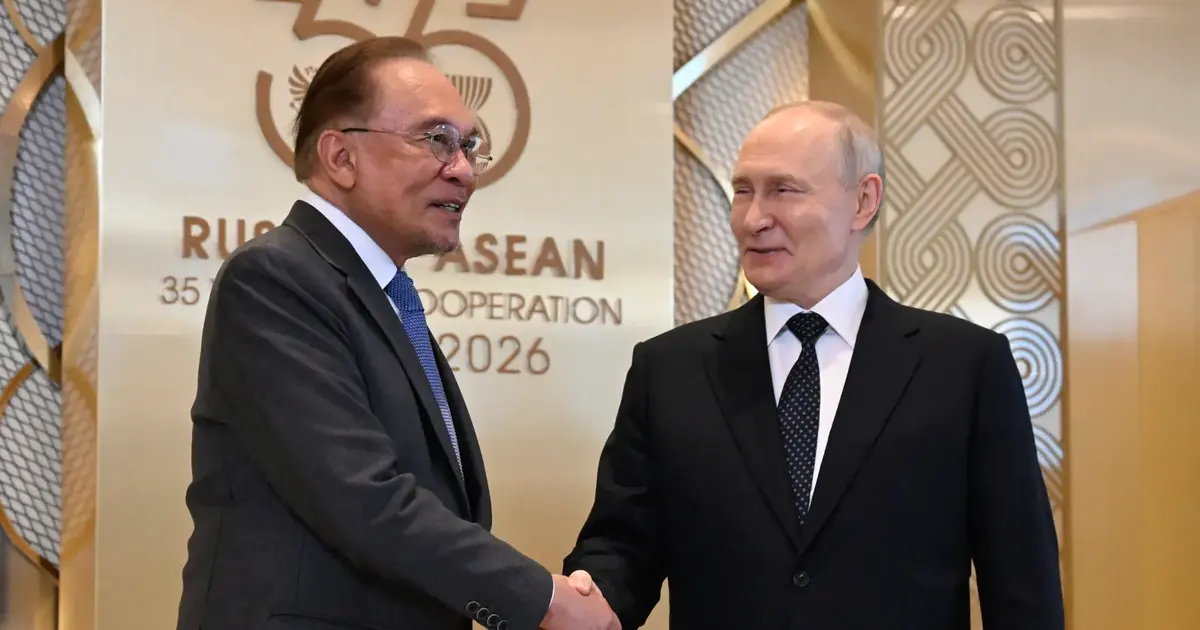
Prime Minister Anwar Ibrahim has announced that Russia has committed to supplying Malaysia with consistent quantities of oil and gas over the next two decades, a significant development for Southeast Asia's energy security amid global supply uncertainties. The assurance underscores Malaysia's efforts to diversify its energy sources and establish long-term strategic partnerships beyond traditional Middle Eastern suppliers, particularly as regional demand for hydrocarbons remains robust despite the global energy transition.
The commitment carries substantial implications for Malaysia's downstream industries and power generation sector, which together consume considerable volumes of crude oil and liquefied natural gas. By locking in supplies from Russia—one of the world's largest energy producers—Malaysia can better forecast energy costs and plan industrial expansion with greater certainty, a critical advantage for manufacturers competing in price-sensitive sectors across Southeast Asia. The arrangement also provides a hedge against supply disruptions from other regions, a lesson Malaysia learned keenly during previous geopolitical tensions affecting Middle Eastern exports.
Anwar made the announcement during his diplomatic engagement with Turkmenistan, signalling Malaysia's broader strategy to strengthen ties with energy-rich Central Asian nations and leverage those connections for mutual economic benefit. Turkmenistan, which sits atop vast natural gas reserves and serves as a crucial transit hub for regional energy flows, represents an emerging partner for Malaysian interests seeking to expand influence along the Belt and Road corridor and beyond. This positioning reflects Malaysia's sophisticated approach to balancing relationships across diverse geopolitical blocs while maintaining pragmatic commercial interests.
The energy agreement arrives as Malaysia grapples with managing domestic energy costs while supporting industrial competitiveness. With manufacturing sectors ranging from petrochemicals to semiconductor production requiring stable, affordable energy inputs, the two-decade supply guarantee provides rare clarity for long-term business planning. Companies operating in Malaysia's export-oriented industries can now factor more predictable energy price trajectories into investment decisions, potentially spurring fresh capital deployment in energy-intensive sectors.
Beyond energy security, Anwar outlined parallel objectives to leverage Malaysia's improved regional standing for commercial advantage. The Prime Minister indicated that his engagement with Central Asian partners would specifically target opportunities to increase Malaysian exports to major East Asian markets including China, Japan and South Korea. This reflects recognition that proximity to energy suppliers and transit nations can translate into preferential market access and enhanced logistics networks—advantages that Malaysia seeks to monetise through enhanced trade relationships across the region.
Malaysia's own exports, particularly in electronics, electrical goods and petroleum products, face intense competition from regional neighbours and global suppliers. By cultivating stronger relationships with Central Asian nations and their connections to major consumer markets, Malaysia positions itself as a more attractive trading partner with differentiated supply chain advantages. Japanese and South Korean manufacturers operating in Malaysia, for instance, could benefit from improved access to Central Asian raw materials and markets, creating positive feedback loops for local manufacturing hubs.
The timing of these energy and trade initiatives reflects broader strategic calculations within Malaysian foreign policy. As geopolitical tensions shape regional alignments and traditional supply chains face disruption, nations pursuing non-aligned or multi-aligned strategies—like Malaysia—enjoy particular advantages in negotiating favourable terms with multiple powers. Russia, despite international sanctions and limited engagement with Western markets, maintains strong commercial interest in Southeast Asian partners who maintain independent foreign policies.
For Malaysia's energy sector specifically, the arrangement complements domestic policies aimed at ensuring reliable electricity supply during peak demand periods while managing the transition toward renewable energy. Although Malaysia possesses modest domestic oil and gas reserves concentrated in Peninsular Malaysia and offshore Sabah and Sarawak, domestic production cannot satisfy the nation's growing energy appetite. Import partnerships therefore remain essential infrastructure for national planning, making long-term supply guarantees from major producers strategically valuable.
The energy security dimension also carries geopolitical weight within Southeast Asia's complex regional dynamics. Malaysia's ability to secure supply certainty from multiple sources—traditional Middle Eastern partners, Central Asian suppliers, and potentially others—strengthens its position relative to neighbours who may depend more heavily on individual suppliers or face greater price volatility. This diversification enhances Malaysia's ability to maintain its historical role as a stable, reliable operating environment for international business.
Looking forward, the successful negotiation of long-term energy supply agreements demonstrates Anwar's administration's capacity to conduct strategic international negotiations that yield tangible economic benefits. As Malaysia navigates evolving global energy markets characterised by energy transition pressures, geopolitical fragmentation, and supply chain reorganisation, securing durable partnerships with major producers provides crucial ballast. The simultaneous pursuit of export expansion opportunities suggests a government actively working to translate diplomatic relationships into commercial advantages for Malaysian enterprises and workers.
The announcement will likely receive positive reception among Malaysia's energy-intensive industries, particularly in petrochemicals, refining and power generation, where supply security and cost predictability drive investment decisions. Manufacturers operating in Malaysia's export sectors may view the energy certainty as enabling factor for long-term expansion plans, though actual benefits will depend on how supply agreements translate into domestic pricing mechanisms and availability guarantees. Industrial associations and chambers of commerce have historically emphasised energy security as prerequisite for sustained manufacturing competitiveness in Malaysia's regional context.

