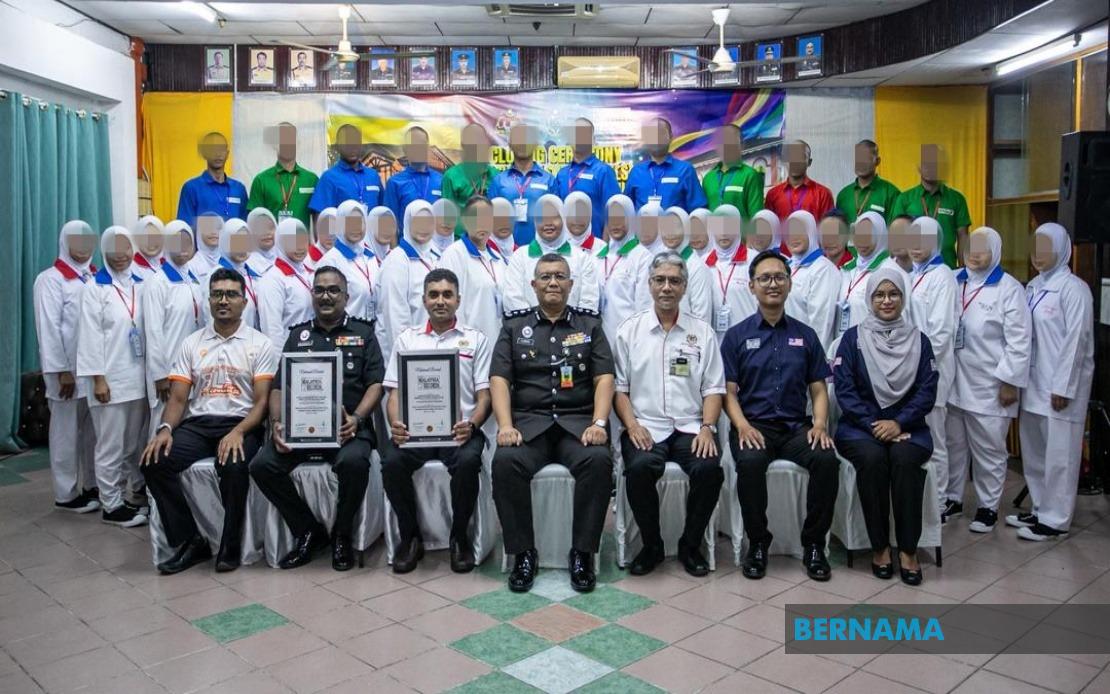
The Malaysian Prisons Department has achieved a notable recognition through the Malaysia Book of Records for organising a comprehensive Basic Life Support and Automated External Defibrillator training programme involving 42 inmates at Batu Gajah Correctional Centre. Home Minister Datuk Seri Saifuddin Nasution Ismail publicly commended the initiative on June 25, signalling government endorsement of rehabilitation-focused strategies within Malaysia's correctional system.
Saifuddin's remarks underscore a fundamental philosophical shift in how modern correctional institutions frame their purpose. Rather than viewing prisons exclusively as punitive facilities where sentences are served, the minister emphasised the evolving role of Malaysian prisons as genuine rehabilitation centres capable of transforming lives and reintegrating individuals into society. This reframing carries significant implications for how policymakers, the public, and detainees themselves perceive the justice system's long-term objectives and outcomes.
The life-saving skills training programme represents more than just technical instruction in emergency medical procedures. By equipping incarcerated individuals with recognised, certified competencies in Basic Life Support and defibrillator operation, the Batu Gajah facility addresses a critical gap: providing tangible, marketable skills that enhance employment prospects upon release. This practical dimension transforms the training from mere institutional activity into genuine preparation for reintegration, directly supporting the stated goal of enabling former detainees to become productive community members.
Beyond the immediate technical competencies, Saifuddin highlighted the deeper value proposition embedded in such programmes. The training environment cultivates humanitarian values, personal discipline, individual responsibility, and self-confidence—intangible but essential qualities that fundamentally reshape prisoner psychology and behaviour. These character-building elements represent the philosophical foundation that distinguishes rehabilitation from punishment, offering a pathway for personal transformation rather than mere time-serving.
The Malaysia Book of Records recognition carries symbolic weight within Malaysia's correctional narrative. Official recognition validates the Batu Gajah initiative as exemplary, potentially inspiring similar programmes across other correctional facilities nationwide. The record-setting achievement of training 42 inmates simultaneously demonstrates scalability and institutional capacity, suggesting that rehabilitation-focused programming is not merely aspirational rhetoric but operationally feasible within existing prison infrastructure.
From a Southeast Asian perspective, Malaysia's emphasis on rehabilitation aligns with contemporary international prison reform trends. Many regional countries have grappled with overcrowded facilities, high recidivism rates, and the human and economic costs of purely punitive incarceration. By showcasing evidence-based programmes that genuinely equip prisoners with life skills and values transformation, Malaysia positions itself as progressive within regional correctional frameworks, potentially influencing policy conversations across the Association of Southeast Asian Nations.
The success of this programme carries direct implications for Malaysian communities. Prisoners who emerge from correctional facilities equipped with recognised life-saving skills and reinforced character values present lower recidivism risks, contributing to enhanced community safety and social stability. When formerly incarcerated individuals secure employment through newly acquired qualifications, they reduce dependence on social services and criminal alternatives, generating positive economic and social externalities that benefit families and neighbourhoods.
Saifuddin's articulation of the Prison Department's core philosophy—rehabilitation rather than mere punishment—establishes clear institutional direction for correctional administrators and policymakers. This philosophical clarity should guide resource allocation, staff training, and programme development across the system. When top leadership consistently reinforces rehabilitation as central to the mission, frontline prison staff are empowered to prioritise dignity, human development, and meaningful intervention over purely custodial management.
The minister's expression of hope that similar high-impact programmes will expand signals governmental commitment to systematic reform. This aspiration, however, requires sustained investment in staff training, educational materials, external partnerships, and institutional infrastructure. For Malaysian policymakers, the challenge lies in translating philosophical commitment into consistent, adequately-funded programming across all correctional facilities, ensuring that rehabilitation opportunities are not limited to showcase facilities but embedded throughout the system.
The recognition of Batu Gajah Correctional Centre's achievement also reflects broader institutional confidence that prisoners are capable of responsibility, learning, and positive contribution. This fundamental respect for human dignity, even within a custodial setting, creates psychological and social conditions more conducive to genuine behavioural change than purely punitive approaches. When institutions treat prisoners as individuals capable of development rather than as irredeemable cases, the probability of successful reintegration increases substantially.
Looking forward, the success of life-saving skills training opens possibilities for expanding vocational and technical programming within Malaysian correctional facilities. Industries ranging from construction to hospitality to healthcare maintenance require workers with certifications and demonstrated competency. By systematically providing prisoners with industry-recognised qualifications, Malaysian prisons could become productive talent pipelines that simultaneously serve institutional needs, generate prisoner income through work programmes, and enhance post-release employment prospects.
The Malaysia Book of Records recognition ultimately serves as external validation of what practitioners and progressive policymakers have long understood: that correctional institutions need not choose between custody and rehabilitation. The Batu Gajah example demonstrates that security and human development are complementary rather than competing objectives, and that well-designed programming can simultaneously maintain institutional order while transforming individual lives. This balanced approach represents the direction Malaysian corrections should pursue.

