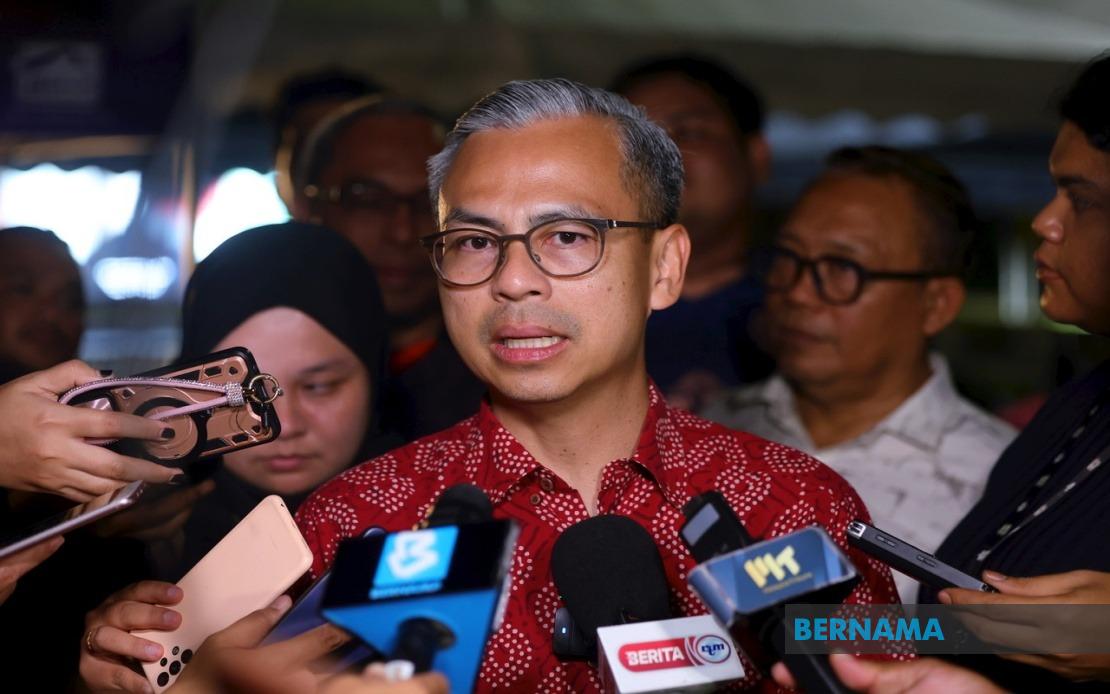
The opposition coalition Pakatan Harapan has mounted a sharp rebuke against Kedah Menteri Besar Datuk Seri Muhammad Sanusi Md Nor, with party communications director Datuk Seri Fahmi Fadzil alleging that his recent statements on racial matters exemplify a troubling pattern within PAS of weaponising communal sensitivities for electoral gain. Speaking at a campaign event in Jempol on July 25, Fahmi framed Sanusi's controversial remarks as symptomatic of broader divisive impulses within the Islamic party's leadership, suggesting that such rhetoric undermines the country's long-standing commitment to national cohesion.
Sanusi had sparked controversy during a joint Barisan Nasional and Perikatan Nasional forum in Negeri Sembilan on July 24 by asserting that Malaysia represents "Tanah Melayu" exclusively for Malays, while other ethnic groups possess alternative homelands such as India and China. The statement, made by Sanusi in his capacity as central PAS election director, triggered immediate censure from government-aligned quarters who viewed it as inflammatory and contrary to Malaysia's constitutional framework and founding principles of harmonious multiculturalism.
Fahmi's response positioned the controversy within a broader narrative of PAS behavioural patterns. He referenced previous inflammatory statements attributed to PAS president on immigration matters, suggesting that Sanusi's recent intervention follows an established trajectory of using ethnic grievances as mobilising devices. The Communications Minister argued that constructive politics requires leaders to champion unity while acknowledging Malaysia's inherent diversity, rather than pursuing strategies designed to fragment constituencies along communal lines. His pointed observation that such attitudes remain "fairly widespread" within PAS indicated an attempt to establish this as a systemic institutional weakness rather than an isolated gaffe.
Fahmi further contextualised his critique within the contemporary political landscape. He emphasised that Malaysia has maintained independence for several decades and recently celebrated National Month, circumstances he argued should impel all political actors toward reconciliation rather than sectarian positioning. The implicit suggestion was that Sanusi's comments represented an anachronistic and counterproductive approach ill-suited to a mature, independent nation. Fahmi's tone oscillated between cautionary advice and resigned pessimism, explicitly stating his hope that Sanusi would reassess his approach while simultaneously expressing scepticism about the likelihood of such recalibration.
Beyond Sanusi's remarks, Fahmi challenged another controversial statement from MARA chairman Datuk Dr Asyraf Wajdi Dusuki, who had suggested that Democratic Action Party secretary-general Anthony Loke might become Negeri Sembilan Menteri Besar should incumbent Datuk Seri Aminuddin Harun face electoral defeat. Fahmi contended that Asyraf Wajdi's assertion contradicted the Negeri Sembilan Constitution, which has long stipulated that the Menteri Besar position must be reserved for Malays. This claim served a dual purpose: it allowed Fahmi to demonstrate PH's constitutional literacy while simultaneously portraying the government coalition's figures as reckless or deliberately provocative in making statements unsupported by institutional arrangements.
The broader electoral context for these exchanges centres on the impending Negeri Sembilan state election, where the ruling Pakatan Harapan administration seeks to defend its position against combined Barisan Nasional and Perikatan Nasional opposition. Fahmi seized the opportunity to contrast what he characterised as PH's inclusive governance record with what he presented as the opposition's reliance on ethno-communal grievance narratives. He expressed confidence in Aminuddin's stewardship, portraying the incumbent as having delivered substantive benefits across all demographic communities without regard to ethnic or religious affiliation.
Fahmi also addressed demographic projections advanced by former Rembau MP Khairy Jamaluddin, who had suggested that Malay voter support for PH in Johor stood at approximately 10 percent. Rather than contesting the accuracy of Khairy's assessment directly, Fahmi argued that political dynamics and voter behaviour vary significantly across different states. He implied that Negeri Sembilan's electoral trajectory might diverge substantially from Johor's pattern, anchoring his optimism in the incumbent administration's purported track record of effective administration benefiting all population segments.
Separately, Fahmi dismissed speculation surrounding early elections prompted by Umno deputy president Datuk Seri Mohamad Hasan's suggestion that the sixteenth general election might occur by year's end. Fahmi disclosed that no such matter had featured in Cabinet deliberations, characterising Tok Mat's statement as a personal observation rather than an expression of government policy. He positioned the federal administration's priorities elsewhere, emphasising that Prime Minister Datuk Seri Anwar Ibrahim and his cabinet remained focused on economic stabilisation and recovery from geopolitical disruptions in West Asia. The implicit suggestion was that premature electoral speculation represented an unwelcome distraction from substantive governance challenges.
The political dynamics revealed through these exchanges illustrate the intensifying contestation between government and opposition blocs in advance of the Negeri Sembilan election. PAS, operating as part of Perikatan Nasional, appears positioned to mobilise Malay-Muslim constituencies through appeals to communal interest, a strategy that Fahmi and PH characterise as divisive and constitutionally problematic. The government coalition's counter-strategy involves positioning itself as the custodian of inclusive, multiethnic governance and constitutional propriety, while painting opposition figures as reckless provocateurs willing to breach institutional norms for electoral advantage.
For Malaysian observers, these exchanges reveal persistent fault lines in national political discourse surrounding the relationship between ethnic identity, constitutional protections, and inclusive governance. Fahmi's criticisms suggest that PH strategy entails presenting itself as the responsible steward of constitutional federalism and multiculturalism, while casting PAS and its allies as dangerous to national cohesion. Conversely, opposition figures appear determined to maintain salience on issues of Malay and Muslim communal interest, presumably betting that such positioning resonates more powerfully with target demographics than appeals to abstract notions of unity. The Negeri Sembilan election will provide an initial test of which approach commands greater electoral appeal.

