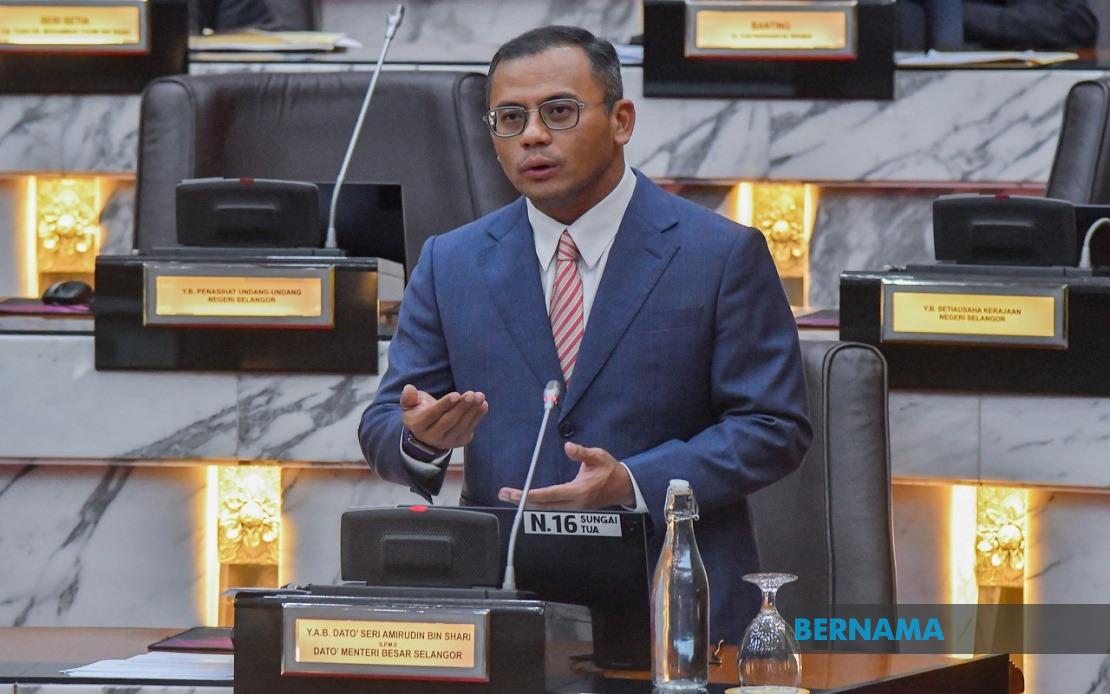
Selangor's Menteri Besar Datuk Seri Amirudin Shari has issued a directive requiring all local authorities in the state to conduct a comprehensive assessment of public transport accessibility infrastructure, signalling heightened concern over gaps in connectivity that have drawn considerable attention on social media platforms. The move represents an acknowledgement that current first-mile and last-mile connectivity between transport hubs and surrounding residential and commercial areas remains inadequate, creating friction in the state's broader mobility ambitions.
During a debate in the State Legislative Assembly, Amirudin confirmed that the Selangor government stands prepared to inject additional financial resources to strengthen pedestrian facilities and ensure that commuters enjoy safer, more comfortable pathways linking them to transit points. This commitment reflects a recognition that infrastructure alone does not drive public transport adoption; the quality and accessibility of the connecting routes fundamentally influence whether residents choose buses, trains, and other shared mobility options over private vehicles.
The issue has gained traction particularly around the Light Rail Transit Line 3 (LRT3), where residents and stakeholders have voiced frustration about inadequate pedestrian access and poor connectivity to surrounding neighbourhoods. These grievances, amplified through social media platforms including X and Threads, have compelled state officials to prioritise the matter, underlining how digital discourse now shapes the policy agenda in Malaysian governance.
Amirudin stressed that local authorities must adopt a more proactive stance, actively engaging council members and community stakeholders rather than waiting for complaints to accumulate online before responding. This framing positions the review as a cultural shift toward preventive governance—encouraging municipal bodies to anticipate problems and solicit feedback systematically rather than reactively addressing viral social media posts. The emphasis reflects an implicit critique of bureaucratic inertia and suggests that institutional reform is as crucial as capital investment.
The state has tasked Ng Sze Han, chairman of the Selangor Investment, Trade and Mobility Committee, with coordinating comprehensive consultations with all public transport operators across the state. These discussions will aim to produce a detailed service mapping document that identifies geographical and temporal gaps in coverage, pinpointing neighbourhoods and timeframes where connectivity is deficient. Such a baseline assessment is essential for targeted intervention, allowing the state to concentrate resources on the most problematic areas rather than applying blanket solutions.
Subsidies will play a central role in closing these gaps, with the state government leveraging financial support to incentivise operators to expand service hours, extend routes, and improve frequency in underserved zones. However, Amirudin cautioned that subsidies alone prove insufficient if operators do not align their scheduling and operations to genuinely serve commuters. This observation reflects a mature understanding of market dynamics: operators may pocket subsidies without materially improving service, leaving residents with no real incentive to abandon private vehicles. The state's willingness to condition subsidy disbursement on demonstrable service improvements signals a more disciplined approach to public expenditure.
The connectivity challenge extends beyond mere convenience; it represents a fundamental barrier to achieving Selangor's broader objective of increasing public transport ridership as a percentage of total journeys. When first-mile and last-mile gaps persist, commuters face an unattractive choice: spend considerable time walking to distant transit points or drive directly to their destination. Improving these connectors directly enables the state's modal shift goals, reducing traffic congestion, lowering transport costs for lower-income residents, and supporting environmental sustainability targets.
For Malaysian policymakers observing Selangor's approach, this episode illustrates both the promise and the complexity of mobility governance. While the state has demonstrated clarity in diagnosis and willingness to commit resources, success will depend on sustained coordination between transport operators, municipal authorities, and state officials. Implementation challenges are substantial: pedestrian infrastructure improvements require land acquisition, design approvals, and construction oversight; operator scheduling adjustments demand regulatory engagement and careful financial balancing; and measurement of outcomes requires rigorous monitoring against baseline data.
Moreover, Selangor's experience highlights how social media has democratised policy feedback in Malaysia. The viral circulation of connectivity complaints has effectively bypassed traditional administrative channels and forced senior officials to publicly commit to remedial action. This development reflects broader changes in governance culture, where digital transparency and responsiveness increasingly influence political legitimacy. Officials can no longer ignore accumulating grassroots complaints; they must visibly acknowledge problems and articulate concrete solutions.
The review also carries implications for other Malaysian states grappling with similar urban mobility challenges. Kuala Lumpur, Penang, and Johor have invested substantially in rapid transit infrastructure in recent years, yet many of these projects face comparable first-mile and last-mile deficiencies. Selangor's systematic approach—mapping gaps, engaging operators, deploying subsidies conditionally, and improving pedestrian infrastructure—offers a replicable model for neighbouring jurisdictions. The state's emphasis on proactive stakeholder engagement and preemptive problem-solving rather than reactive crisis management suggests a template for more responsive urban governance across the region.
Looking ahead, success will hinge on whether Ng Sze Han's consultations produce actionable recommendations and whether local authorities translate these findings into concrete improvements within a reasonable timeframe. Residents and civil society groups will likely monitor progress closely, using social media to track whether promised infrastructure enhancements and service expansions materialise. The state's credibility in future mobility policy will depend substantially on its ability to convert this high-profile commitment into tangible improvements in the lived experience of Selangor commuters.

